



Dofollow vs. Nofollow Backlinks: What’s the Difference and Which Matters for SEO?

Dofollow vs nofollow backlinks are not simply a case of one being good and the other being bad. A standard link, often called a “dofollow” link, can be considered as a ranking signal. A nofollow link tells search engines not to treat the link as a normal endorsement. However, both can bring referral traffic, visibility, and brand awareness.
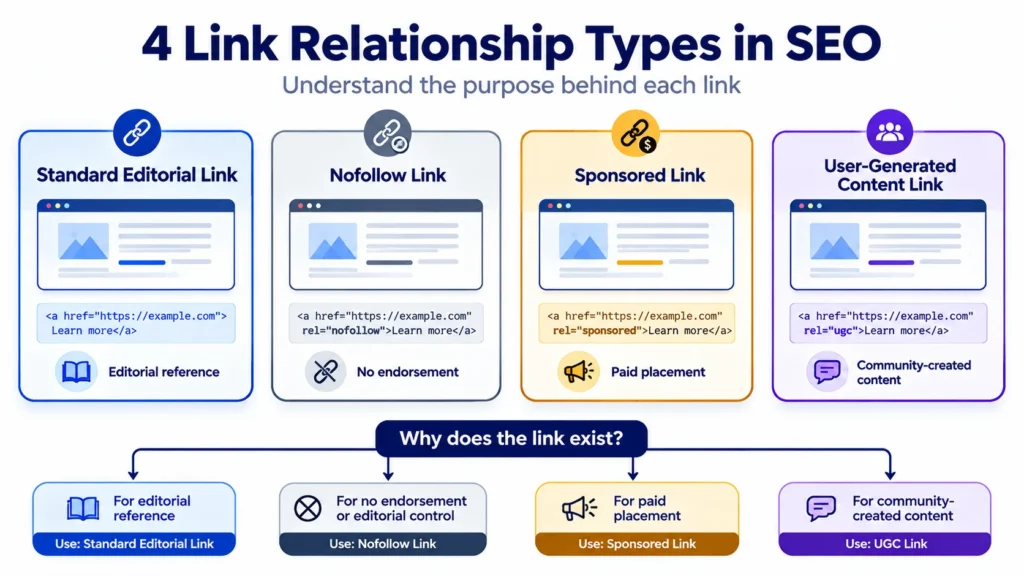
The correct choice depends on why the link exists. For example, a natural editorial reference is different from a paid placement or a user-posted comment. Therefore, website owners should use the appropriate link attribute instead of chasing dofollow links blindly.
For more practical insights on SEO, startups, and digital growth, visit StartupMandi Global.
What Is a Dofollow Backlink?
A dofollow backlink is the informal SEO name for a normal link from one website to another. “Dofollow” is not an official HTML attribute. Instead, SEO professionals use the term to describe a link without rel="nofollow", rel="sponsored", or rel="ugc".
Here is a basic standard link :
xml<a href="https://example.com/seo-guide">
  Read the SEO guide
</a>
When a publisher adds a normal editorial link, it may be considered as a signal of relevance, context, and trust. For example, a business publication may naturally link to a useful guide about startup marketing.
However, a dofollow link does not guarantee higher rankings. Search engines also evaluate content quality, relevance, page experience, technical SEO, and many other signals.
Socium Media explains that standard links are normally dofollow by default. It also notes that you do not need to add rel="dofollow" to create one.
How Do Dofollow & Nofollow Backlinks Affect SEO?
A normal link can help search engines understand the connection between two pages. It may also help crawlers discover the destination page.
Additionally, a relevant editorial backlink can contribute to the authority of the linked page. Yet the value depends on the source, context, placement, anchor text, and usefulness of the destination.
In short, a standard link may support SEO, but quality matters more than the label alone.
What Is a Nofollow Backlink?
A nofollow backlink is a link that includes the rel="nofollow" attribute. This attribute tells search engines that the publisher does not want to treat the link as a normal endorsement.
Here is a simple example :
xml<a href="https://example.com/seo-guide" rel="nofollow">
  Read the SEO guide
</a>
Nofollow links are useful in dofollow vs nofollow backlinks when you want to mention a website without fully supporting or associating yourself with it. They are also commonly used for untrusted links, comments, forums, and some commercial relationships.
Google recommends using rel="nofollow" when other relationship attributes do not apply and you do not want Google to associate your site with the linked page.
Are Nofollow Links Worthless Compared To Dofollow Backlinks?
No. Nofollow links can still provide valuable benefits. They may send referral visitors, increase brand exposure, help people discover your content, and create opportunities for natural links later.
For example, a nofollow link from a popular industry publication may send highly interested readers to your website. Those readers may share your content or mention your brand elsewhere.
Therefore, do not judge a backlink only by whether it is dofollow or nofollow in dofollow vs nofollow backlinks. Audience relevance and referral potential also matter.
How Do Dofollow And Nofollow Backlinks Differ?
The main difference is how the link communicates its relationship to search engines. A standard link may be considered as a normal editorial reference. A nofollow link signals that the publisher does not want to give the same type of endorsement.
| Factor | Standard link, often called dofollow | Nofollow link |
|---|---|---|
| Official HTML attribute | No rel restriction | rel="nofollow" |
| Main purpose | Normal editorial reference | Link without full endorsement |
| Ranking treatment | May be considered as a ranking signal | Treated by Google as a hint |
| Referral traffic | Possible | Possible |
| Brand visibility | Possible | Possible |
| Common use | Trusted editorial content | Untrusted, unendorsed, or controlled links |
| Main caution | Must still be natural and relevant | Should not be treated as useless |
The word “dofollow” can be confusing because websites do not need to add rel="dofollow". In most cases, a link is considered standard when no restrictive relationship attribute is present.
“Use
nofollowonly when you don’t trust the source, and not for every external link on your site.”
Are Dofollow Backlinks Better Than Nofollow Backlinks?
Dofollow links may provide stronger direct SEO value when they come from relevant, trusted, and editorially independent websites. However, this does not mean every dofollow link is valuable.
A link from an unrelated or spam-filled website may be less useful than a nofollow link from a respected publication. The nofollow link may still bring qualified visitors and improve brand recognition.
When Are Dofollow Links Useful?
A normal link may be suitable when :
- You trust the linked website.
- The content is relevant to your readers.
- The link is a natural editorial reference.
- You are not receiving payment or compensation for the link.
- The destination page genuinely adds useful information.
For example, a startup publication may use a normal link when citing a credible industry report. The link helps readers verify the information and explore the source.
When Are Nofollow Links Useful?
A nofollow link may be suitable when :
- You do not fully trust or endorse the destination.
- The link appears in a comment or forum post.
- The content is user-generated.
- The link relationship is unclear.
- Another specific attribute does not apply.
The goal is not to maximize one link type. The goal is to describe the relationship accurately.
When Should You Use Sponsored Links?
Use rel="sponsored" for links connected to advertising, sponsorships, affiliate arrangements, or other compensation.
Example :
xml<a href="https://example.com/product" rel="sponsored">
  View the product
</a>
Google specifically recommends the sponsored attribute for advertisements and paid placements.
A paid link is not automatically a problem. The risk arises when a link is purchased to manipulate search rankings and is not properly qualified.
What Counts As a Paid Link?
A link may be considered paid or sponsored when you receive :
- Money for publishing the link.
- Free products or services in exchange for coverage.
- Affiliate compensation.
- Other benefits connected to including the link.
- Payment for a guest article or sponsored placement.
In these cases, transparency protects both the publisher and the audience. It also helps search engines understand the commercial relationship.
When Should You Use UGC Links?
Use rel="ugc" for links created by users. UGC means user-generated content.
Typical examples include:
- Blog comments.
- Discussion forums.
- Community posts.
- Public profiles.
- User-submitted reviews.
- Question-and-answer pages.
Example :
xml<a href="https://example.com/resource" rel="ugc">
  View the resource
</a>
Google recommends marking links in user-generated content with rel="ugc". You can also combine attributes when necessary, such as rel="ugc nofollow".
This approach helps publishers separate their own editorial links from links added by visitors.
How Do You Choose The Right Attribute In Dofollow VS Nofollow Backlinks?
Choosing the right attribute becomes easier when you ask one simple question: Why does this link exist?
| Question | Recommended attribute |
|---|---|
| Is it a normal editorial reference? | Standard link |
| Is it paid or compensated? | rel="sponsored" |
| Was it created by a user? | rel="ugc" |
| Do you not trust or endorse it? | rel="nofollow" |
| Do multiple relationships apply? | Combine relevant values |
For example, an affiliate link created by the website owner may use rel="sponsored". A promotional link added by a forum member may use rel="ugc".
You should not add nofollow to every external link. Instead, use it when you do not want to associate your website with the destination or when another relationship attribute does not fit.
How Can You Check A Link Type?
You can check a link manually through your browser. This is useful when reviewing a small number of links.
How long does a basic link audit take?
- Times Needed : Days: 01, Hours: 02, Minutes: 30
- Estimated Cost : Currency: USD, Price: 0–50
- Description : Inspect important links, identify their relationship attributes, and record whether each link is editorial, sponsored, user-generated, or untrusted.
- Tools Name : Chrome DevTools, Google Sheets, Google Search Console, Ahrefs or Moz
- Materials Name : Backlink export, link audit sheet, website access, attribute checklist
What steps should you follow in Dofollow VS Nofollow Backlinks?
- Open the linking page : Visit the page containing the backlink you want to review.
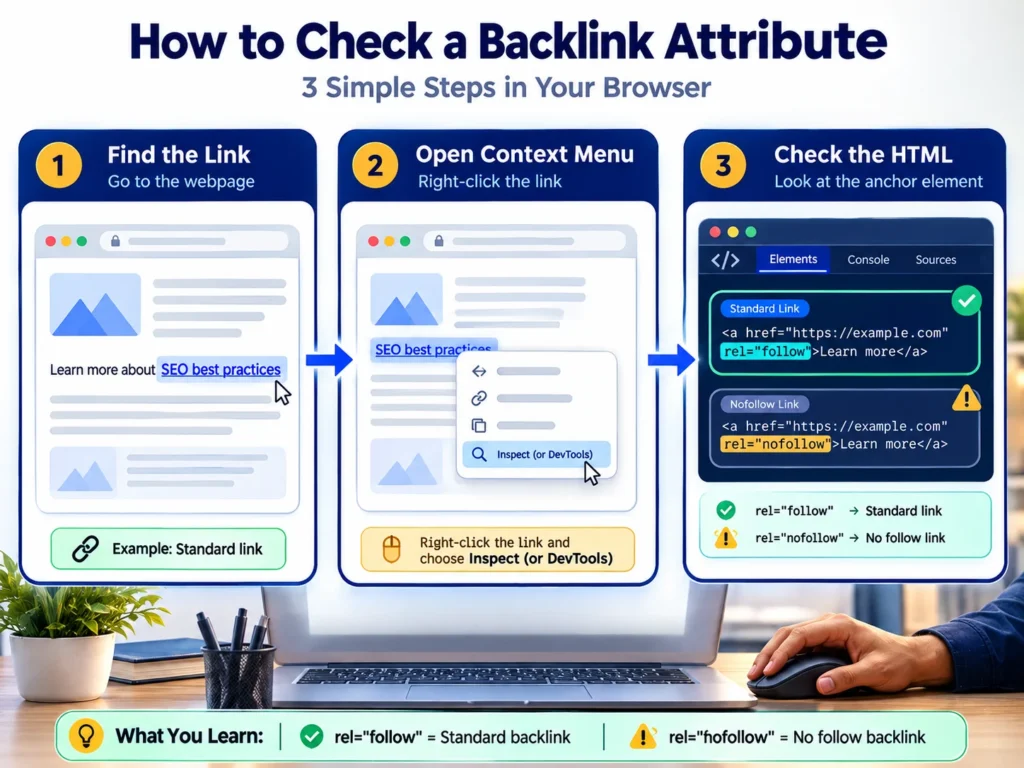
- Inspect the hyperlink : Right-click the link and select “Inspect” or “Inspect Element.”
- Check the
relattribute : Look fornofollow,sponsored, orugcin the HTML. - Review the context : Confirm that the link is relevant, natural, and useful to readers.
- Record your findings : Add the source, attribute, destination, and notes to a tracking sheet.
If the link does not contain a restrictive rel value, it is commonly described as a standard or dofollow link. However, browser inspection only shows the page’s current HTML. For larger audits, use a trusted backlink analysis tool.
How Can You Use Both Link Types In Dofollow VS Nofollow Backlinks?
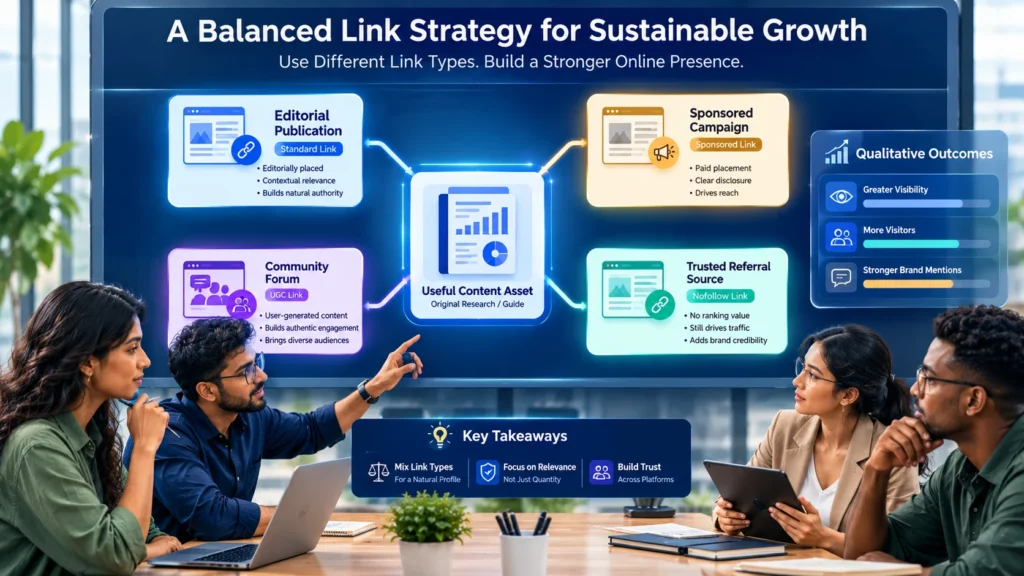
A healthy link strategy should focus on earning useful references instead of trying to control every backlink type. In general, standard links can support authority, relevance, and connections between related topics. Meanwhile, nofollow links can still bring referral traffic, brand visibility, and natural exposure to new audiences.
Neil Patel’s comparison presents dofollow and nofollow backlinks as complementary parts of an SEO strategy. It also highlights the value of referral traffic and maintaining a natural-looking link profile. Therefore, do not dismiss a nofollow link simply because it may not pass the same ranking signals as a standard link.
Instead, evaluate each link based on its source, context, audience, and ability to bring meaningful visitors. A balanced strategy should also include sponsored and user-generated links with the correct attributes. Over time, these different link types can work together to strengthen your website’s visibility and credibility.
What Should A Balanced Strategy Include?
- Create original research, tools, templates, and practical guides.
- Earn normal editorial links through useful content.
- Accept nofollow links when they bring relevant audiences.
- Mark paid relationships with
rel="sponsored". - Mark comments and forum links with
rel="ugc". - Track referral traffic, brand mentions, and conversions.
- Avoid buying links for ranking purposes.
A link profile does not need a fixed percentage of dofollow and nofollow links. There is no universal ratio that guarantees success.
Instead, focus on whether the links are relevant, natural, diverse, and useful to your audience.
What Link-Building Practices Should You Avoid?
Google defines link spam as creating links mainly to manipulate search rankings. Its examples include buying or selling ranking-focused links, excessive link exchanges, automated link creation, and other manipulative practices.
Avoid these common mistakes :
- Buying links that are intended to pass ranking value.
- Publishing repetitive guest posts on unrelated websites.
- Using automated services to create backlinks.
- Repeating the same exact-match anchor text.
- Adding links to spam-filled directories.
- Exchanging links at scale only for SEO.
- Assuming a high third-party authority score proves quality.
Paid links can be used for advertising. However, qualify them with rel="sponsored" or rel="nofollow" as appropriate. Google states that properly qualified paid links do not violate its link-spam policy.
FAQ
A standard link, often called dofollow, does not use a restrictive rel attribute. A nofollow backlink uses rel="nofollow" to signal that the publisher does not want to treat it as a normal endorsement.
Yes. Nofollow links can bring referral traffic, improve brand visibility, support discovery, and expose your content to new audiences. Their value is not limited to direct ranking signals.
They are not treated like normal editorial links. Google describes nofollow as a hint, so you should not assume that every nofollow link passes ranking credit or that Google ignores every one completely.
No. “Dofollow” is an informal SEO term for a normal link without a restrictive relationship attribute.
rel="sponsored"?Use rel="sponsored" for paid placements, advertisements, affiliate links, or other compensated relationships.
rel="ugc"?Use rel="ugc" for links created by users in comments, forums, profiles, reviews, and other community content.
Right-click the link, choose “Inspect,” and look for rel="nofollow" in the HTML. If it is absent, the link may be a standard link unless another restrictive attribute is present.
No. A relevant nofollow link from a trusted publication may bring more useful visitors than an unrelated standard link. Relevance, trust, context, and audience fit matter most.
What Are The Key Takeaways?
- Dofollow is an informal term, not an official HTML attribute.
- Standard links may be considered as ranking signals when they are relevant and natural.
- Nofollow links can still support traffic, exposure, and brand discovery.
- Use
rel="sponsored"for paid or compensated links. - Use
rel="ugc"for user-created links. - Use
rel="nofollow"when you do not trust or endorse a destination. - No fixed dofollow-to-nofollow ratio is required.
- Choose attributes based on the link’s purpose, not ranking myths.
What Should You Do Next?
First, select your five most important pages, such as your homepage, service pages, and highest-performing blog posts. Next, review the backlinks pointing to those pages and record each source, link placement, anchor text, and rel attribute. Then, check your outbound links across the website. Make sure paid and affiliate links use suitable attributes, while comments, forums, and other user-generated links are marked appropriately. In addition, review whether each link is relevant, trustworthy, and helpful to readers.
Finally, focus on earning useful editorial references. Publish content that answers real questions, includes original insights, and gives publishers a clear reason to cite it. Over time, track referral traffic, brand mentions, new referring domains, and engagement to understand which efforts are producing the best results.
Conclusion
Dofollow vs nofollow backlinks should not be treated as a simple competition. A standard link may support ranking signals and authority. A nofollow link may still generate referral traffic, visibility, and valuable brand exposure.
The best approach is to use the correct attribute for each relationship. Use standard links for genuine editorial references, sponsored for paid placements, ugc for user-created content, and nofollow when you do not want to endorse a source.
For more relevant insights on SEO, business, and digital growth, visit StartupMandi Global. You can also review the Dofollow & Nofollow Backlink Comparison for another practical explanation.
Resources For Further Research
- Google Search Central: Qualify Outbound Links — official guidance for
nofollow,sponsored, andugc. - Google Search Central: SEO Link Best Practices — guidance on crawlable links and appropriate use of
nofollow. - Google Search Central: Spam Policies — official information about link spam and paid links.
- Socium Media: Dofollow VS Nofollow Backlinks — beginner-friendly comparison and inspection advice.
- Neil Patel: Dofollow VS Nofollow Backlink Benefits — practical discussion of traffic, visibility, and link balance.



Clear and useful tips here. One AI image studio I use is Luna Lisa Alpha