



How to Earn Backlinks Naturally: 8 Strategies That Work

How to earn backlinks naturally? The answer is to create useful content, find relevant websites, and build genuine relationships. Natural backlinks come from editorially given links, not from mass submissions or paid schemes.
In addition, high-quality backlinks often appear within helpful articles, resource pages, and expert commentary. As a result, they feel natural to readers and provide real value instead of simply existing for SEO. In 2026, natural backlinks also support visibility in AI-generated answers. Mentions, co-citations, and topic associations help AI systems understand what your brand is about. Therefore, a strong backlink profile can improve both traditional search rankings and AI-driven discovery. However, building these links takes time and consistent effort.
For more relevant topics and practical insights, visit StartupMandi Global.
What Is a Natural Backlink?
A natural backlink is a link that another website gives to your content because it genuinely adds value. The publisher chooses to link without payment, automation, or manipulation.
In other words, the link exists because the publisher believes it will help their audience, not simply to manipulate search rankings. As a result, these links tend to be more stable, more credible, and more useful over time. Ahrefs identifies five general concepts for evaluating link quality: authority, relevance, anchor text, placement, and destination. For example, a link from a well-respected industry publication may carry more weight than one from an unrelated directory. Similarly, a link placed within the main body of an article is usually more valuable than one buried in a footer or sidebar.
Therefore, when evaluating a backlink opportunity, consider the website’s reputation, topic fit, link context, and the usefulness of your destination page.
Why Do Natural Backlinks Matter?
Natural backlinks can support authority, content discovery, referral traffic, and brand visibility. A link from a relevant publication may also introduce your business to a new audience.
In addition, backlinks can help search engines find and understand your pages. Google explains that links can help determine page relevance and discover new pages to crawl. It also recommends descriptive anchor text that gives readers and search engines useful context. However, backlinks are only one part of SEO. Search engines also evaluate content quality, technical performance, search intent, internal linking, and user experience. Therefore, do not rely on backlinks alone. Instead, combine them with helpful content, a clear website structure, and a strong user experience.
As a result, your pages will have a better chance of ranking and staying visible over time.
How Can Original Research Earn Backlinks?
Original research earns backlinks because it provides facts that other creators can cite. Industry surveys, data studies, and benchmarks give writers definitive answers to common questions.
For example, Semrush’s study on the impact of AI search on SEO traffic has attracted more than 9,000 backlinks from over 1,300 unique domains. Those links place Semrush in conversations about AI search alongside the specific insights the study uncovered.
How Should You Publish Research?
- Choose a timely question your industry wants answered.
- Collect data through surveys, interviews, experiments, or internal research.
- Publish clear methodology, dates, sample size, and limitations.
- Create a report, visual summary, charts, and media pitch.
- Contact journalists and publishers who cover the subject.
- Offer expert commentary and easy-to-cite findings.
- Track links, mentions, referral traffic, and media coverage.
A strong research asset should be accurate, easy to understand, visually clear, and simple to cite.
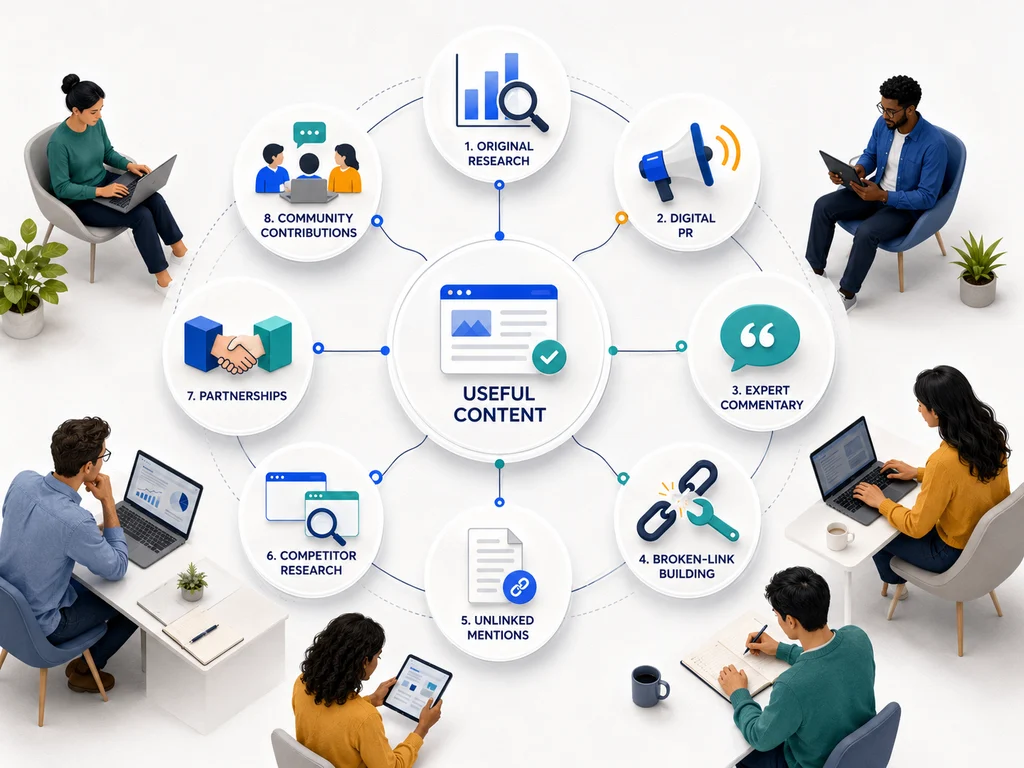
Which Strategies Help To Earn Backlinks?
Prioritize relevance and usefulness over backlink volume.
Create original research, tools, templates, and useful guides.
Use digital PR to turn data into media-worthy stories.
Find broken links and offer closely matched replacements.
Reclaim unlinked brand mentions and lost backlinks.
Study competitor links to find relevant content opportunities.
Contribute expert commentary to industry publications.
Build relationships with partners, associations, and communities.
Measure referral traffic, visibility, conversions, and link quality.
Avoid paid, automated, unrelated, and manipulative link schemes.
How Does Digital PR Earn Backlinks?
Digital PR builds backlinks by turning original data, expert commentary, or timely research into stories that journalists want to cover.
First, choose a question that matters to your industry. Then collect data through surveys, interviews, experiments, or internal research. Finally, package the findings into a clear report, short summary, charts, and media pitch.
What Should A Digital PR Asset Include?
- A clear research question.
- Transparent methodology and collection dates.
- Sample size and relevant audience details.
- Key findings presented in simple language.
- Charts that journalists can understand quickly.
- Limitations that prevent overclaiming.
- Contact information for expert clarification.
A strong pitch should lead with the most interesting finding. It should also explain why the story matters to the journalist’s audience.
However, media coverage is never guaranteed. Focus on making the story useful and credible rather than promising a specific number of links.
How Can Expert Commentary Help Earn Backlinks?
Expert commentary involves answering questions from journalists, publishers, or industry writers. Your response may be included in an article with a mention or backlink.
In addition, expert commentary helps you build relationships with media professionals and positions you as a trusted source in your field. As a result, even if a particular response does not immediately produce a backlink, it can lead to future opportunities, brand mentions, and increased visibility. For example, a journalist writing about startup funding trends may quote your insights and include a link to your research or website. Similarly, industry publications often seek expert opinions for trend reports, roundups, and analysis pieces.
Therefore, prepare clear, concise, and specific responses that directly address the journalist’s question. Moreover, always explain your relevant experience briefly so publishers understand why your perspective is valuable.
How Should You Write A Response?
- Answer the journalist’s exact question.
- Lead with your most useful insight.
- Include one specific example or observation.
- Explain your relevant experience briefly.
- Keep the response concise and easy to quote.
- Reply quickly when deadlines are short.
Links are not guaranteed. However, strong commentary can build relationships, mentions, citations, and future media opportunities.
How Does Broken-Link Building Work?
Broken-link building involves finding a dead or outdated link on a relevant website. You then suggest your own resource as a replacement. This method works because you are helping the publisher repair an existing page. As a result, your outreach feels helpful instead of promotional. Moreover, you are not sending an unrelated sales pitch.
First, find a broken link on a page that matches your topic. Next, check what the original content was about. Then, create or select a replacement that closely matches the original intent. For example, if the broken link pointed to a beginner’s SEO guide, offer another beginner-focused guide, not a product page. In this way, the publisher can easily see that your suggestion improves their page.
Finally, send a short, polite message explaining the broken link and your replacement. Because you are solving a problem, many publishers are more willing to consider your request.
How Can You Reclaim Unlinked Mentions?
An unlinked brand mention occurs when a website names your company, product, founder, or research without linking to your website. This is often a warm outreach opportunity. The publisher already knows your brand, so you do not need to introduce it from the beginning.
How Should You Reclaim A Mention?
- Search for your brand and product names online.
- Separate linked and unlinked mentions.
- Check whether the source is relevant and active.
- Choose the most useful page to link.
- Thank the publisher for mentioning your brand.
- Ask politely whether they would add a relevant link.
- Track responses and completed updates.
Not every mention will become a backlink. Even so, unlinked coverage can still improve brand recognition and create future relationships.
How Can Competitor Research Help To Earn Backlinks?
Competitor backlink research can reveal websites that already link to content in your industry. These sites may become prospects if your resource offers a clear improvement.
However, do not copy competitor links without understanding why they were earned.
What Can You Learn From Competitor Links?
- Which publishers cover your subject.
- What content formats earn references.
- Which research or statistics attract citations.
- What gaps exist in your own content.
- Which websites link to several competitors.
- What anchor text and pages receive attention.
A website linking to multiple competitors may be a warmer prospect. It already shows interest in your topic. Therefore, create a stronger resource before reaching out. Explain the specific way your content improves the publisher’s page.
How Can Partnerships And Communities Help Earn Backlinks?
Partners, associations, suppliers, integration providers, and relevant communities can create natural link opportunities.
For example, a technology partner may maintain a partner directory. An industry association may publish a member page. A community may reference your guide when it directly answers a question.
What Should You Avoid?
Do not add links to communities without contributing useful information. Unhelpful promotion can damage your reputation and may violate community rules. Likewise, do not create partner pages only to exchange links. The relationship and audience value should come first. Google warns against excessive link exchanges and partner pages created mainly for cross-linking.
How Do You Run A 30-Day Campaign?
- Times Needed : Days: 30, Hours: 02, Minutes: 00
- Estimated Cost : Currency: USD, Price: 0–300
- Description : Create one linkable asset, find relevant publishers, conduct useful outreach, and track links, mentions, referral traffic, and business results.
- Tools Name : Google Search, Google Sheets, Google Search Console, Ahrefs or Semrush
- Materials Name : Linkable asset, prospect list, outreach email, tracking sheet
What Should You Do Each Week To Earn Backlinks?
- Choose a target page : Select one important page that deserves more visibility. Improve its accuracy, examples, structure, and usefulness.
- Create a linkable asset : Build a report, checklist, chart, tool, or guide that publishers can reference.
- Find relevant prospects : Identify journalists, websites, resource pages, partners, and communities that cover your topic.
- Send personalized outreach : Explain the exact value your resource adds. Avoid sending mass emails.
- Measure and improve : Track responses, earned links, referring domains, referral visits, mentions, and conversions.
How Should You Measure Backlink Results?
A backlink campaign should be measured through SEO, audience, and business metrics.
| Metric | What it shows |
|---|---|
| Referring domains | Number of distinct websites linking to you |
| Referral sessions | Visitors arriving through backlinks |
| Engagement | Whether visitors find the page useful |
| Organic impressions | Changes in search visibility |
| Organic clicks | Search visits to the target page |
| Brand mentions | Growth in awareness and citations |
| Conversions | Leads, sign-ups, sales, or other goals |
| Link status | Whether earned links remain active |
A link can be successful even if it does not immediately improve rankings. It may bring qualified visitors, introduce your brand to publishers, or create future opportunities.
Which Tactics Should You Avoid?
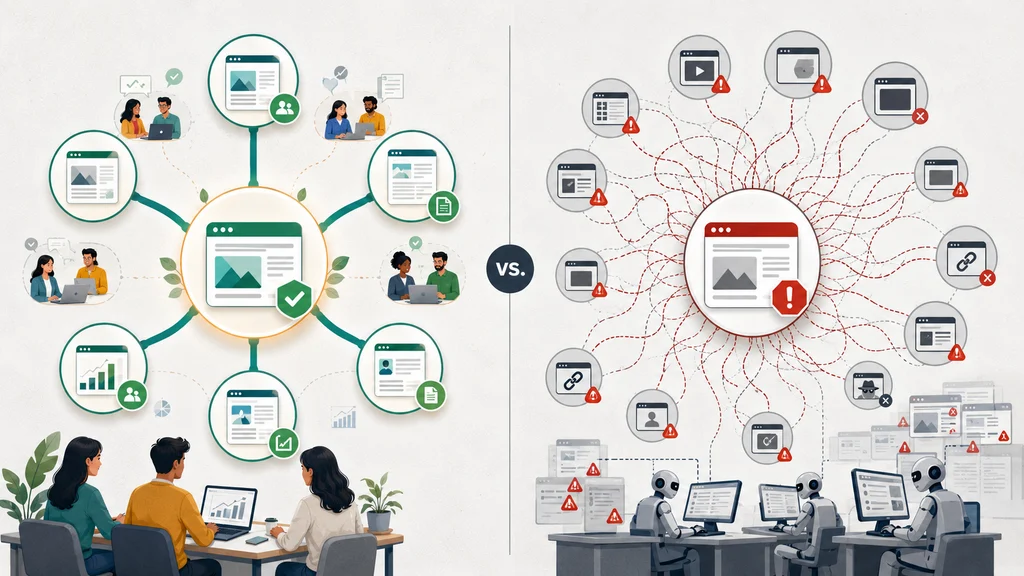
Avoid tactics that create links mainly to manipulate search rankings.
- Buying links that pass ranking value without proper qualification.
- Using automated tools to create backlinks.
- Submitting your website to unrelated directories.
- Repeating exact-match anchor text unnaturally.
- Publishing low-quality guest articles at scale.
- Exchanging links excessively.
- Adding promotional links to unrelated community discussions.
Google’s spam policies apply to traditional search and generative AI features. Sites that violate these policies may rank lower or disappear from search results.
In contrast, earning links through useful content, transparent research, and genuine editorial relationships is a more sustainable approach.
FAQ
The strongest strategies include original research, digital PR, linkable tools, broken-link building, unlinked mention reclamation, expert commentary, competitor research, and relevant partnerships.
Start by creating one useful resource. Then find a small list of relevant websites, partners, and communities that could benefit from it. Personalized outreach is more effective than mass submissions.
Some opportunities, such as broken links or unlinked mentions, may produce results within days. Digital PR, original research, and relationship-based outreach may take weeks or months.
There is no universal target. Focus on earning relevant links from credible sources rather than meeting an arbitrary monthly number.
Yes, when it involves original content, a relevant audience, and genuine editorial value. It becomes risky when used as a mass link-placement system.
Yes. They can bring referral traffic, exposure, brand mentions, and future link opportunities, even when they may not pass normal ranking signals.
Paid links intended to manipulate rankings can violate Google’s spam policies. Paid relationships should be disclosed and use suitable attributes, such as rel="sponsored" or rel="nofollow".
A high-quality backlink is relevant, naturally placed, credible, useful to readers, and connected to a page that genuinely supports the surrounding content.
What Are The Key Takeaways?
- Create value before requesting links.
- Original research, tools, templates, and data visualizations can become strong linkable assets.
- Digital PR works best when data is timely, credible, and easy to cite.
- Broken-link building helps publishers repair useful pages.
- Unlinked mentions and lost backlinks provide warmer outreach opportunities.
- Competitor research can reveal relevant prospects and content gaps.
- Guest posting should prioritize expertise and audience value.
- Measure referral traffic, mentions, conversions, and link quality.
- Avoid automated, paid, unrelated, and manipulative link schemes.
What Should You Do Next To Earn Backlinks?
Begin with one important page on your website. Improve its content and create one supporting asset, such as a research summary, checklist, chart, or practical tool.
Next, identify five relevant publishers or websites. Contact them only when your resource genuinely adds value to their readers.
Finally, review your results after 30–60 days. Look beyond backlink totals and examine referral visits, brand mentions, new relationships, organic visibility, and conversions.
Conclusion
The best way to earn backlinks naturally is to create genuine value before asking for attention. Original research, digital PR, broken-link outreach, expert commentary, partner relationships, and unlinked mention reclamation can all support a strong campaign.
However, no tactic works without relevance. Publishers link to resources that help their readers, answer real questions, or provide information they cannot easily create themselves. Choose one strategy and test it for 30 days. Then improve your approach using real results instead of assumptions.
For more practical insights on SEO, business, and digital growth, visit StartupMandi Global. You can also explore Semrush’s Guide to Getting Backlinks for additional ideas.
Resources For Further Research
Google Search Central : SEO Link Best Practices — official guidance on crawlable links, descriptive anchor text, link relevance, and content discovery.
Google Search Central : Spam Policies — official information about link spam, paid links, excessive link exchanges, automated backlinks, and manipulative outreach.
Semrush: How to Get Backlinks in 2026 — practical strategies for unlinked mentions, broken links, competitor research, partnerships, resource pages, media requests, podcasts, guest posts, and citation-worthy content.
Coursera : Link Building Course — foundational training on link-building concepts, strategies, and ethical practices for beginners.
Shopify : Building Backlinks for Ecommerce — ecommerce-focused backlink strategies, examples, and practical tips for online stores.