



Types of Backlinks in SEO: The Complete Guide for 2026

Types of backlinks in SEO can be classified by link attribute (dofollow, nofollow, sponsored, UGC), by how they are earned (natural, manual, self-created), and by source or format (editorial, guest post, directory, social, and more). The most valuable types are usually relevant, editorially given dofollow links from trustworthy websites.
In addition, understanding backlink types helps you build a safer, more relevant, and more effective link profile. As a result, you can focus on earning editorially given, relevant links while avoiding manipulative or spammy link schemes. In 2026, backlinks continue to matter for rankings, authority, and AI-driven discovery. Mentions, co-citations, and topic associations help AI systems understand what your brand is about. Therefore, a strong backlink profile can improve both traditional search rankings and AI-driven discovery. However, building these links takes time and consistent effort.
For more relevant topics and practical insights, visit StartupMandi Global.
What Is a Backlink?
A backlink is a link from one website to another. The recipient site is said to have received the backlink. The site doing the linking is hosting an outbound link. Backlinks are important for search engine optimization because they tell search engines that a page or website is high quality and deserving of visibility.
In other words, backlinks act as third-party signals of trust, authority, and relevance. As a result, they can support rankings, referral traffic, and brand awareness. However, not all backlinks carry the same weight. Search engines also evaluate the linking site’s credibility, topical relevance, link placement, anchor text, and overall content quality. Moreover, backlinks help search engines discover new pages and understand how websites relate to one another. Therefore, a well-structured backlink profile can improve both crawlability and contextual understanding. In addition, backlinks often bring direct referral visitors who may become subscribers, customers, or future link partners.
Consequently, earning high-quality backlinks remains a core part of most SEO strategies. At the same time, focusing solely on link quantity without considering relevance or user value can create risk. For this reason, it is essential to understand the different types of backlinks in SEO and how each type fits into a sustainable, long-term approach.
How Can You Classify Types Of Backlinks In SEO?
Backlinks can be classified through three clear lenses :
- Link attributes : dofollow, nofollow, sponsored, UGC.
- How they are earned : natural, manual outreach, self-created.
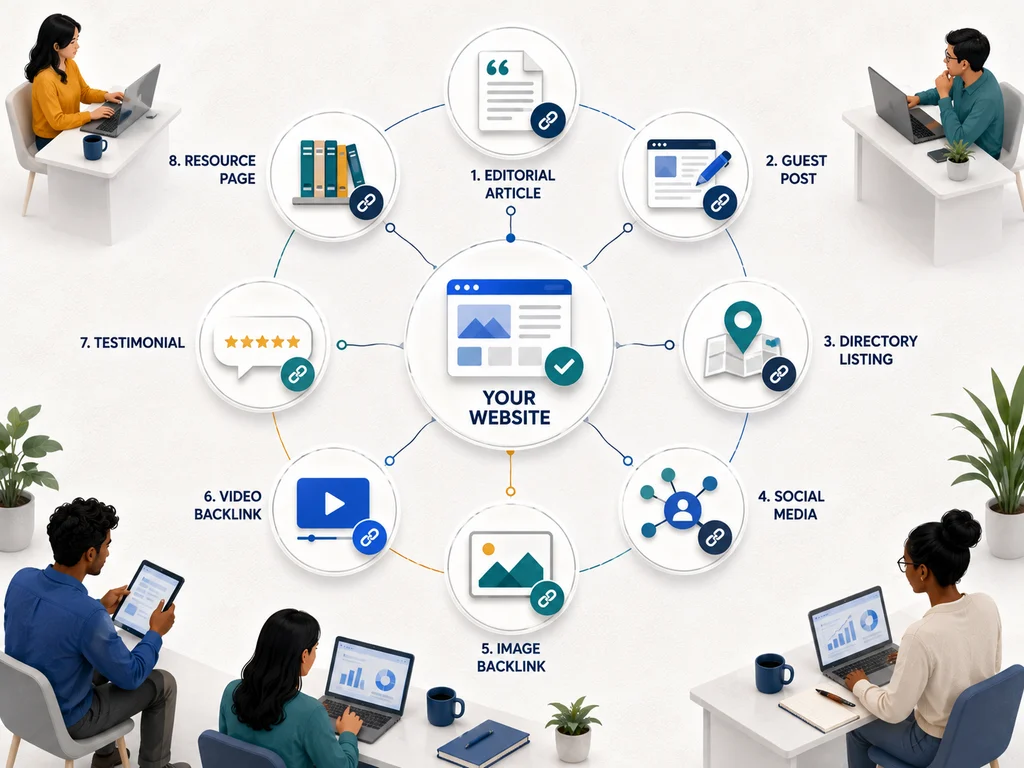
- Where they appear : editorial, guest post, directory, social, image, video, testimonial, resource page, and more.
Therefore, you can classify almost any link you encounter using this framework.
What Are the Four Link Attribute Types Of Backlinks?
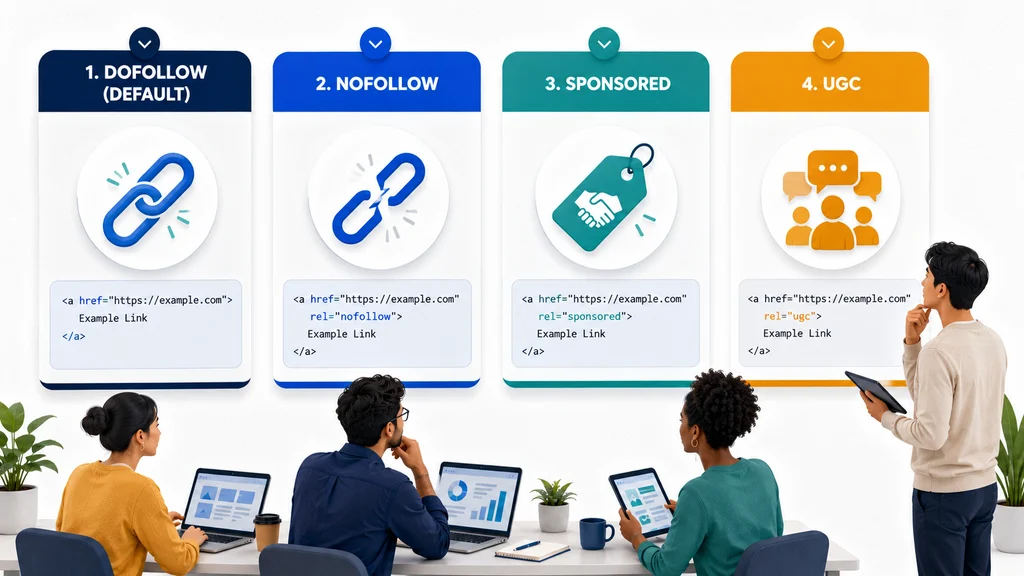
Every backlink carries one of four attributes : dofollow (default, passes ranking value), nofollow (explicitly withheld), sponsored (paid placements), or UGC (user content).
Google treats rel="nofollow", rel="ugc", and rel="sponsored" as hints, not strict directives. While direct PageRank transfer is restricted, Google may still crawl the link, index the target page, and use anchor text signals for topical categorization.
| Attribute | Typical use | Ranking treatment |
|---|---|---|
| Dofollow (default) | Normal editorial reference | May be considered as a ranking signal |
| Nofollow | Untrusted or unendorsed links | Treated by Google as a hint |
| Sponsored | Paid or compensated placements | Treated as a hint, should be disclosed |
| UGC | User-generated content (comments, forums) | Treated as a hint, low risk |
Which Types Of Backlinks Matter?
- Dofollow backlinks (default, can pass ranking signals).
- Nofollow backlinks (explicitly withheld, may still bring traffic).
- Sponsored links (paid placements, should be disclosed).
- UGC links (user-generated content, such as comments and forums).
- Editorial backlinks (naturally earned within useful content).
- Guest post backlinks (contributed articles with author links).
- Directory and business listing backlinks (local and niche directories).
- Social, image, video, testimonial, and resource page backlinks.
- Avoid PBNs, link farms, and manipulative link schemes.
- Prioritize relevance and usefulness over backlink volume.
What Are Dofollow Backlinks?
A dofollow backlink is the informal SEO name for a normal link without a restrictive rel attribute. “Dofollow” is not an official HTML attribute. Instead, SEO professionals use the term to describe a link without rel="nofollow", rel="sponsored", or rel="ugc".
Here is a basic standard link :
xml<a href="https://example.com/seo-guide">
  Read the SEO guide
</a>
When a publisher adds a normal editorial link, it may be considered as a signal of relevance, context, and trust. However, a dofollow link does not guarantee higher rankings. Search engines also evaluate content quality, relevance, page experience, technical SEO, and many other signals.
What Are Nofollow Backlinks?
A nofollow backlink is a link that includes the rel="nofollow" attribute. This attribute tells search engines that the publisher does not want to treat the link as a normal endorsement.
Here is a simple example :
xml<a href="https://example.com/seo-guide" rel="nofollow">
  Read the SEO guide
</a>
Nofollow links are useful when you want to mention a website without fully supporting or associating yourself with it. They are also commonly used for untrusted links, comments, forums, and some commercial relationships.
However, nofollow links can still bring referral traffic, exposure, brand mentions, and future link opportunities. Therefore, do not dismiss them as worthless.
What Are Sponsored Links?
Use rel="sponsored" for links connected to advertising, sponsorships, affiliate arrangements, or other compensation.
Example :
xml<a href="https://example.com/product" rel="sponsored">
  View the product
</a>
Google specifically recommends the sponsored attribute for advertisements and paid placements.
A paid link is not automatically a problem. The risk arises when a link is purchased to manipulate search rankings and is not properly qualified. In fact, paid placements, sponsorships, and affiliate partnerships are common and legitimate parts of digital marketing. However, search engines expect these commercial relationships to be transparent. Therefore, links that involve compensation should use rel="sponsored" or, in some cases, rel="nofollow" to clearly indicate their nature.
What Are UGC Types Of BackLinks?
Use rel="ugc" for links created by users. UGC means user-generated content.
Typical examples include :
- Blog comments.
- Discussion forums.
- Community posts.
- Public profiles.
- User-submitted reviews.
- Question-and-answer pages.
Example :
xml<a href="https://example.com/resource" rel="ugc">
  View the resource
</a>
Google recommends marking links in user-generated content with rel="ugc". You can also combine attributes when necessary, such as rel="ugc nofollow".
This approach helps publishers separate their own editorial links from links added by visitors.
How Are Backlinks Earned Naturally?
Natural backlinks are links that another website gives to your content because it genuinely adds value. The publisher chooses to link without payment, automation, or manipulation.
In other words, the link exists because the publisher believes it will help their audience, not simply to manipulate search rankings. As a result, these links tend to be more stable, more credible, and more useful over time. Moreover, natural backlinks often come from pages that already attract organic traffic, which can amplify both visibility and referral visits. However, earning natural backlinks usually requires consistent effort. For example, you may need to publish original research, practical guides, useful tools, or data-driven insights that others want to reference.
Therefore, while natural backlinks cannot be forced directly, you can create conditions that make them more likely. At the same time, avoid tactics that attempt to disguise manipulative links as natural, as these can create long-term risk. For this reason, focus on building genuinely helpful content and relationships, and let natural backlinks follow as a byproduct of real value.
Which Natural Types Of Backlinks Matter?
- Editorial backlinks within useful articles.
- Guest post backlinks from relevant publications.
- Resource page backlinks from curated lists.
- Testimonial and review backlinks from genuine customers.
- Podcast, webinar, and video backlinks from appearances.
- Image and infographic backlinks from shared visuals.
- Unlinked brand mentions converted into links.
What Are Manual Outreach Backlinks?
Manual outreach backlinks are links you earn by contacting relevant websites, journalists, or communities. These include guest posts, link insertions, broken-link replacements, and unlinked mention reclamation.
However, outreach should be personalized and value-focused. Mass emails and unrelated requests often fail or create risk.
Which Manual Types Of Backlinks Work?
- Guest post backlinks on relevant blogs.
- Link insertions into existing articles.
- Broken-link building with closely matched replacements.
- Unlinked brand mention reclamation.
- Competitor backlink research and targeted outreach.
- Digital PR pitches with original data or expert commentary.
As a result, manual outreach can be effective when it solves a problem or adds value.
What Are Self-Created Backlinks?
Self-created backlinks are links you add yourself through profiles, directories, forums, comments, or social platforms. These can be useful when they are relevant and non-spammy. However, self-created links should not be your primary strategy. Overuse can appear manipulative. In fact, search engines may devalue or ignore large volumes of low-quality, self-created links, especially when they are placed solely for SEO purposes.
Moreover, self-created backlinks often carry less trust than editorially given links. For example, a link from a reputable industry directory or a well-maintained business listing can support local visibility and brand consistency. In contrast, mass-created profile links, comment spam, or irrelevant forum posts are unlikely to help and may even create risk.
Therefore, use self-created backlinks selectively and strategically. First, ensure each link serves a real purpose, such as improving discoverability, supporting local SEO, or providing genuine value in a community discussion. Next, prioritize quality over quantity and avoid automated or bulk link creation. Finally, balance self-created links with higher-trust tactics, such as earning editorial backlinks, contributing guest posts, and building citation-worthy content.
Which Self-Created Types Of Backlinks Are Safe?
- Business listing and directory backlinks (relevant, reputable).
- Social media profile and post backlinks.
- Forum and community backlinks (when genuinely helpful).
- Profile creation on relevant platforms.
- Web 2.0 and content-sharing platforms.
Which Backlink Sources Matter Most?
Backlink sources can include editorial articles, guest posts, directories, social platforms, images, videos, testimonials, resource pages, podcasts, webinars, and more. However, not all sources are equally valuable. Relevance, trust, audience fit, and editorial context matter most. In fact, a single backlink from a highly relevant, trusted publication can be more impactful than dozens of links from low-quality or unrelated sites. Moreover, search engines evaluate the surrounding content, link placement, and overall page quality when assessing a backlink’s value.
Therefore, prioritize sources that align closely with your niche, target audience, and business goals. At the same time, avoid chasing links from sources that exist primarily for link placement rather than genuine user value. As a result, your backlink profile will appear more natural, credible, and sustainable over time.
Which Source Types Should You Prioritize?
- Editorial backlinks from relevant publications.
- Guest post backlinks from trusted blogs.
- Resource page backlinks from curated lists.
- Testimonial and review backlinks from genuine customers.
- Podcast, webinar, and video backlinks from appearances.
- Image and infographic backlinks from shared visuals.
As a result, prioritize sources that align with your audience and goals.
Which Backlink Types Should You Avoid?
Avoid tactics that create links mainly to manipulate search rankings.
- PBN (private blog network) backlinks.
- Link farm and automated backlink schemes.
- Excessive reciprocal link exchanges.
- Low-quality directory and article directory backlinks.
- Manipulative guest-post links at scale.
- Widget and footer links created mainly for SEO.
- Paid links intended to pass ranking value without disclosure.
Google’s spam policies apply to traditional search and generative AI features. Sites that violate these policies may rank lower or disappear from search results. In contrast, earning links through useful content, transparent research, and genuine editorial relationships is a more sustainable approach.
How Should You Measure Your Backlink Profile?
A backlink profile should be measured through SEO, audience, and business metrics.
| Metric | What it shows |
|---|---|
| Referring domains | Number of distinct websites linking to you |
| Referral sessions | Visitors arriving through backlinks |
| Engagement | Whether visitors find the page useful |
| Organic impressions | Changes in search visibility |
| Organic clicks | Search visits to the target page |
| Brand mentions | Growth in awareness and citations |
| Conversions | Leads, sign-ups, sales, or other goals |
| Link status | Whether earned links remain active |
A link can be successful even if it does not immediately improve rankings. It may bring qualified visitors, introduce your brand to publishers, or create future opportunities.
FAQ
Backlinks can be classified by link attribute (dofollow, nofollow, sponsored, UGC), by how they are earned (natural, manual, self-created), and by source or format (editorial, guest post, directory, social, image, video, testimonial, resource page, and more).
The most valuable types are usually relevant, editorially given dofollow links from trustworthy websites. However, nofollow, sponsored, and UGC links can still provide visibility, referral traffic, and brand mentions.
Yes. They can bring referral traffic, exposure, brand mentions, and future link opportunities, even when they may not pass normal ranking signals.
The rel="sponsored" attribute identifies paid or compensated placements. It should be used for advertisements, affiliate links, and other commercial relationships.
The rel="ugc" attribute identifies user-generated content, such as comments, forum posts, reviews, and community contributions.
Inspect the HTML of the link to check for rel attributes. Use SEO tools to analyze referring domains, anchor text, and link placement.
Avoid PBNs, link farms, automated schemes, excessive reciprocal exchanges, low-quality directories, manipulative guest posts, and undisclosed paid links.
There is no universal target. Focus on earning relevant links from credible sources rather than meeting an arbitrary monthly number.
What Are The Key Takeaways?
- Understand backlink types through three lenses: attributes, earning method, and source.
- Dofollow links may pass ranking signals, but nofollow, sponsored, and UGC links still matter.
- Natural editorial backlinks are the gold standard for SEO.
- Manual outreach can work when it is personalized and value-focused.
- Self-created links should be relevant, non-spammy, and limited.
- Prioritize relevance, trust, audience fit, and editorial context.
- Avoid PBNs, link farms, and manipulative link schemes.
- Measure referral traffic, mentions, conversions, and link quality.
What Should You Do Next?
Begin with one important page on your website. Improve its content and create one supporting asset, such as a research summary, checklist, chart, or practical tool.
Next, identify five relevant publishers or websites. Contact them only when your resource genuinely adds value to their readers.
Finally, review your results after 30–60 days. Look beyond backlink totals and examine referral visits, brand mentions, new relationships, organic visibility, and conversions.
Conclusion
The best way to build a strong backlink profile is to understand the different types of backlinks in SEO and focus on earning editorially given, relevant links. Dofollow, nofollow, sponsored, and UGC attributes each serve different purposes. Natural, manual, and self-created backlinks each have their place when used appropriately.
However, no tactic works without relevance. Publishers link to resources that help their readers, answer real questions, or provide information they cannot easily create themselves. Choose one strategy and test it for 30 days. Then improve your approach using real results instead of assumptions.
For more practical insights on SEO, business, and digital growth, visit StartupMandi Global. You can also explore SE Ranking’s Guide to Backlink Types for additional ideas.
Resources For Further Research
SE Ranking : 20+ Types of Backlinks That Impact Your SEO — detailed breakdown of backlinks by link-building process, page position, and link attribute, with practical examples and risk levels.
Safari Digital : 23 Types of Backlinks That Impact Your SEO — in-depth look at editorial, guest post, directory, social, PBN, and other backlink types with SEO impact notes.
Dofollow.com : Types of Backlinks in SEO — explanations of dofollow vs nofollow, contextual vs non-contextual, editorial, guest bio, badge, testimonial, and more.
Semrush : How to Get Backlinks in 2026 — practical strategies for unlinked mentions, broken links, competitor research, partnerships, resource pages, media requests, podcasts, guest posts, and citation-worthy content.
Ahrefs : Backlink Checker — inspect a domain’s top backlinks, referring domains, and anchor text distribution for research and competitor analysis.