

Backlink Building Strategies: 12 Proven Ways to Earn Quality Links in 2026

Backlink building strategies help websites earn links from other relevant sites. The strongest methods do not rely on mass emails or random directory submissions. Instead, they combine useful content, original research, digital PR, expert insights, and genuine relationships.
In 2026, quality link building also supports brand visibility across traditional search and AI-powered discovery. However, no strategy guarantees rankings or a fixed number of links. The goal is to create something useful enough for publishers to reference.
For more practical topics and startup insights, visit StartupMandi Global.
What Are Backlink Building Strategies?
Backlink building is the process of earning links from external websites to your own pages. These links can help search engines discover content and understand relationships between topics. Backlinks can also send referral visitors to your website. For example, a business publication may link to your research report. Readers can then follow that link to learn more.
However, backlink building strategies are not simply about collecting URLs. A good strategy considers the source website, audience, context, anchor text, and destination page. Majestic describes link building as a combination of creating useful content and promoting it to earn organic references. It also emphasizes reputation, authority, and topical relevance.
“Backlinks are never about you and your needs for a link. Your focus should be their needs: the users reading your article.”
Why Do Quality Backlinks Matter?
Quality backlinks can support authority, content discovery, referral traffic, and brand visibility. A link from a relevant publication may also introduce your business to a new audience.
Google explains that links can help search engines understand a page’s relevance and discover new pages to crawl. In addition, descriptive anchor text gives readers and search engines more context about the linked content. For example, anchor text such as “beginner’s SEO guide” is clearer than using vague words like “click here.” As a result, readers know what to expect before opening the link.
However, backlinks are only one part of SEO. Search engines also consider content quality, technical performance, search intent, internal linking, page speed, and user experience. Therefore, combine backlink building with helpful content and a well-organized website for stronger, long-term results.
What Makes A Backlink Valuable?
A valuable backlink usually has these qualities :
| Quality factor | What it means |
|---|---|
| Relevance | The linking website covers a related topic |
| Trust | The source has a credible reputation |
| Context | The link appears within useful content |
| Placement | Readers can notice and understand the link |
| Audience fit | Visitors may genuinely care about your page |
| Destination quality | The linked page answers a real need |
Therefore, one relevant link can be more useful than many unrelated links. Link quality is more important than link volume.
How Can You Create Linkable Assets As Backlink Building Strategy?
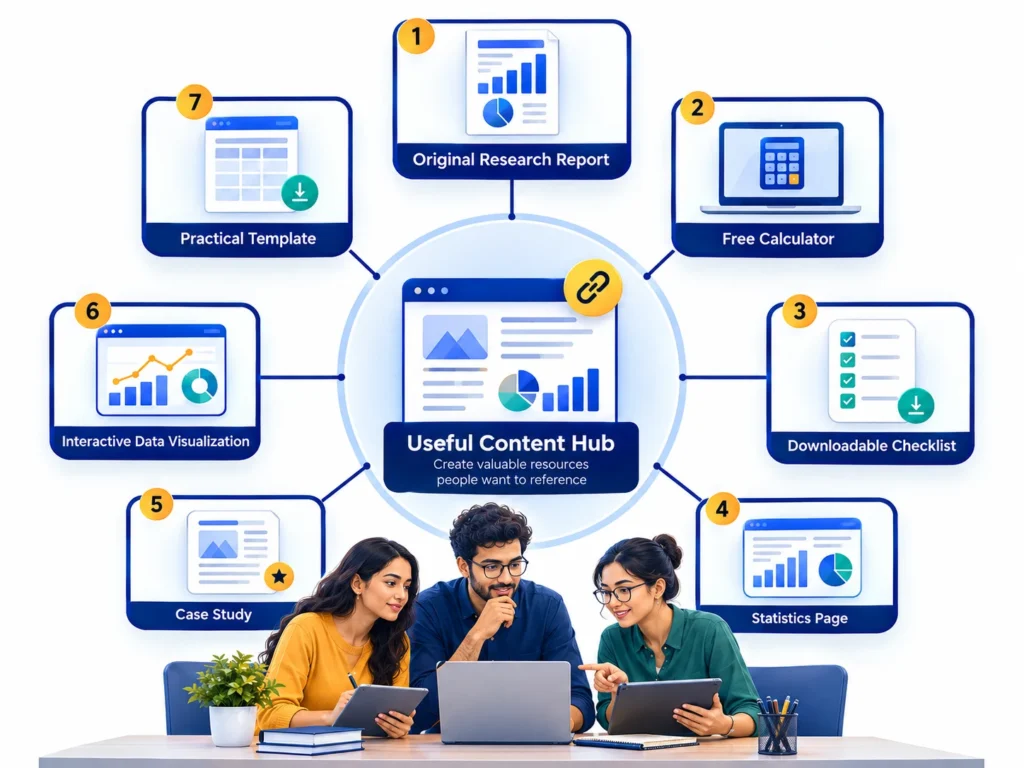
Linkable assets are resources that publishers want to reference. They may include original data, practical tools, statistics pages, templates, or visual guides.
The best asset answers a common question or solves a specific problem. For instance, a free calculator can help users complete a task. A research report can give journalists original information to cite.
Which Assets Attract Links?
- Original research reports.
- Industry surveys and statistics pages.
- Free calculators and interactive tools.
- Checklists, templates, and downloadable guides.
- Detailed case studies with real results.
- Original data visualizations and charts.
- Comprehensive comparison pages.
Semrush identifies original data, statistics pages, free tools, and calculators as useful forms of linkable content. One example in its research, Bankrate’s calculator, had attracted 893 backlinks from 200 referring domains according to Semrush’s database. This is a tool-specific observation, not a universal benchmark.
Next, promote the asset to people who already write about the subject. Useful content still needs visibility before publishers can discover it.
How Does Digital PR Strategy Help in Building Backlinks?
Digital PR builds backlinks by turning original data, expert commentary, or timely research into stories that journalists want to cover.
First, choose a question that matters to your industry. Then collect data through surveys, interviews, experiments, or internal research. Finally, package the findings into a clear report, short summary, charts, and media pitch.
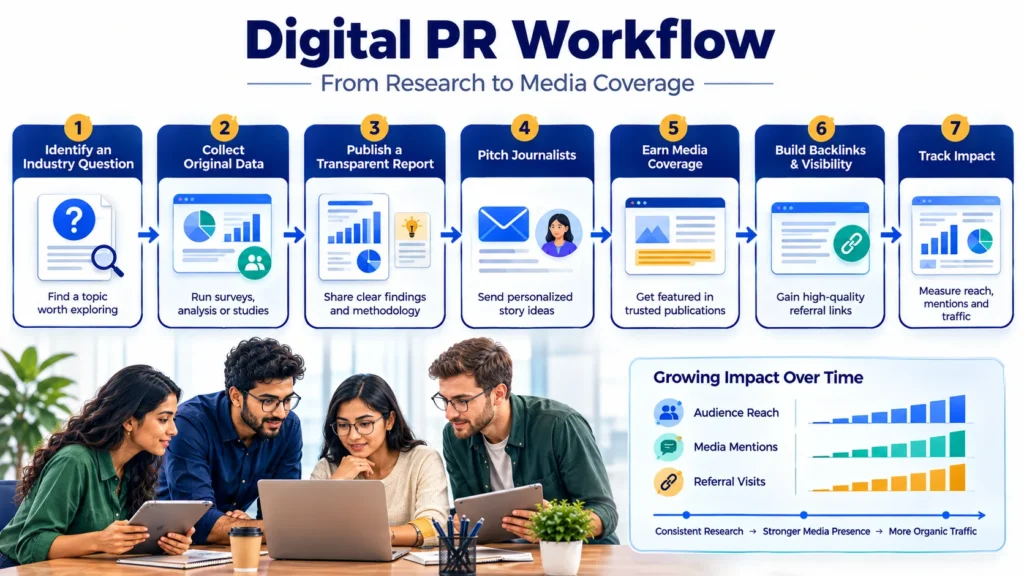
What Should A Digital PR Asset Include?
- A clear research question.
- Transparent methodology and collection dates.
- Sample size and relevant audience details.
- Key findings presented in simple language.
- Charts that journalists can understand quickly.
- Limitations that prevent overclaiming.
- Contact information for expert clarification.
A strong pitch should lead with the most interesting finding. It should also explain why the story matters to the journalist’s audience. Moz recommends using fresh data, a compelling narrative, and relevant journalist outreach when developing digital PR campaigns. However, media coverage is never guaranteed. Focus on making the story useful and credible rather than promising a specific number of links.
How Does Broken-Link Work In Building Backlink?
Broken-link backlink building strategies involves finding a dead or outdated link on a relevant website. You then suggest your own resource as a replacement. This method works because you are helping the publisher repair an existing page. You are not sending an unrelated promotion.
What Steps Should You Follow?
- Find relevant articles, resource pages, or guides.
- Check whether an external link is broken.
- Identify the original topic and search intent.
- Create or select a closely matching replacement.
- Contact the publisher with the exact broken URL.
- Explain why your replacement helps readers.
- Track whether the link is updated.
The replacement must closely match the original content. For example, replace a broken beginner’s SEO guide with another beginner-focused guide, not a sales page.
Semrush recommends verifying that a page is genuinely broken before contacting the publisher. Temporary access errors do not always mean that a page has permanently disappeared.
How Can You Reclaim Unlinked Mentions?
An unlinked brand mention occurs when a website names your company, product, founder, or research without linking to your website. This is often a warm outreach opportunity. The publisher already knows your brand, so you do not need to introduce it from the beginning.
How Should You Reclaim A Mention?
- Search for your brand and product names online.
- Separate linked and unlinked mentions.
- Check whether the source is relevant and active.
- Choose the most useful page to link.
- Thank the publisher for mentioning your brand.
- Ask politely whether they would add a relevant link.
- Track responses and completed updates.
Not every mention will become a backlink. Even so, unlinked coverage can still improve brand recognition and create future relationships.
How Can You Recover Lost Backlinks?
Lost backlinks are links that previously pointed to your website but later disappeared. They may be removed because a page was updated, a URL changed, or a website redesigned. These opportunities can be easier than cold outreach because the publisher has already linked to you once.
What Should You Check First?
- Confirm that the linking page is still live.
- Check whether the page remains relevant.
- Find out whether your destination URL still works.
- Review whether the link was replaced or simply removed.
- Update your resource if the content has changed.
- Send a brief and respectful restoration request.
Do not ask for a lost link when your page no longer fits the article. Relevance should guide the decision.
How Can Competitor Research Help In Building Backlink Strategy?
Competitor backlink research can show you which websites already link to content in your industry. As a result, these websites may become useful prospects for your own outreach if your resource offers something valuable.
For example, a competitor may have earned a link because it published original research, created a helpful tool, or answered a specific question better than other pages. Therefore, do not copy competitor links blindly. Instead, study why each link was earned and identify ways to create something more useful, more current, or easier for readers to understand.
In addition, remove irrelevant or low-quality opportunities from your list. Focus on publishers whose audience, subject, and editorial standards match your content.
What Can You Learn From Competitor Links?
- Which publishers cover your subject.
- What content formats earn references.
- Which research or statistics attract citations.
- What gaps exist in your own content.
- Which websites link to several competitors.
- What anchor text and pages receive attention.
A website linking to multiple competitors may be a warmer prospect. It already shows interest in your topic. Therefore, create a stronger resource before reaching out. Explain the specific way your content improves the publisher’s page.
Is Guest Posting Still Useful?
Guest posting can work when you contribute original, useful content to a relevant publication. The main goal should be helping the host audience and demonstrating genuine expertise. It becomes risky when you publish repetitive articles on unrelated websites or use guest posts mainly to place keyword-heavy links.
What Makes Guest Posting Safer As A Strategy For Backlink Building?
- Choose publications with real editorial standards.
- Confirm that their audience matches yours.
- Pitch an original topic or fresh angle.
- Follow the publication’s contributor guidelines.
- Use links only when they help readers.
- Avoid repeating the same article across websites.
- Disclose sponsored arrangements when required.
Some publications may mark guest-post links as nofollow. That link can still provide visibility, authority, and referral traffic. Google identifies paid links, excessive link exchanges, automated link creation, low-quality directories, and manipulative guest-post links as examples of link spam.
How Can Expert Commentary Earn Links?
Expert commentary involves answering questions from journalists, publishers, or industry writers. Your response may be included in an article with a mention or backlink. To stand out, avoid vague statements. Instead, provide a specific answer, a useful example, and a practical implication.
How Should You Write A Response?
- Answer the journalist’s exact question.
- Lead with your most useful insight.
- Include one specific example or observation.
- Explain your relevant experience briefly.
- Keep the response concise and easy to quote.
- Reply quickly when deadlines are short.
Links are not guaranteed. However, strong commentary can build relationships, mentions, citations, and future media opportunities.
How Can Partnerships And Communities Help In Backlink Building?
Partners, associations, suppliers, integration providers, and relevant communities can create natural link opportunities. For example, a technology partner may maintain a partner directory. An industry association may publish a member page. A community may reference your guide when it directly answers a question.
What Should You Avoid?
Do not add links to communities without contributing useful information. Unhelpful promotion can damage your reputation and may violate community rules. Likewise, do not create partner pages only to exchange links. The relationship and audience value should come first. Google warns against excessive link exchanges and partner pages created mainly for cross-linking.
How Do You Run A 30-Day Campaign On Backlink Building Strategies?
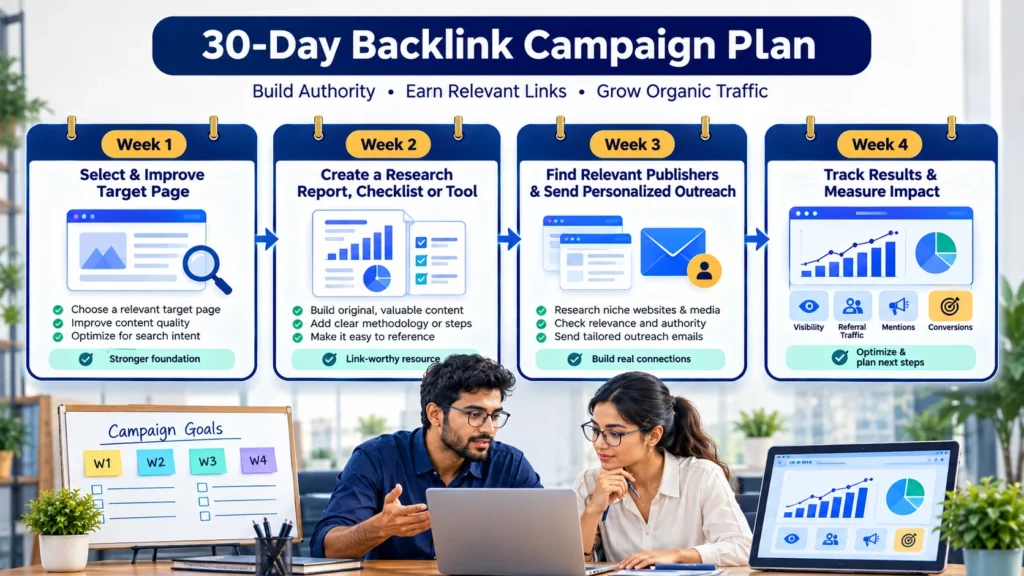
- Times Needed : Days: 30, Hours: 02, Minutes: 00
- Estimated Cost : Currency: USD, Price: 0–300
- Description : Create one linkable asset, find relevant publishers, conduct useful outreach, and track links, mentions, referral traffic, and business results.
- Tools Name : Google Search, Google Sheets, Google Search Console, Ahrefs or Semrush
- Materials Name : Linkable asset, prospect list, outreach email, tracking sheet
What Should You Do Each Week?
- Choose a target page : Select one important page that deserves more visibility. Improve its accuracy, examples, structure, and usefulness.
- Create a linkable asset : Build a report, checklist, chart, tool, or guide that publishers can reference.
- Find relevant prospects : Identify journalists, websites, resource pages, partners, and communities that cover your topic.
- Send personalized outreach : Explain the exact value your resource adds. Avoid sending mass emails.
- Measure and improve : Track responses, earned links, referring domains, referral visits, mentions, and conversions.
The campaign should focus on useful outcomes, not just link totals.
How Should You Measure Backlink Building Results?
A backlink campaign as backlink building strategies should be measured through SEO, audience, and business metrics.
| Metric | What it shows |
|---|---|
| Referring domains | Number of distinct websites linking to you |
| Referral sessions | Visitors arriving through backlinks |
| Engagement | Whether visitors find the page useful |
| Organic impressions | Changes in search visibility |
| Organic clicks | Search visits to the target page |
| Brand mentions | Growth in awareness and citations |
| Conversions | Leads, sign-ups, sales, or other goals |
| Link status | Whether earned links remain active |
A link can be successful even if it does not immediately improve rankings. It may bring qualified visitors, introduce your brand to publishers, or create future opportunities.
Which Tactics Should You Avoid As A Strategy For Backlink Building?
Avoid tactics for backlink building strategies that create links mainly to manipulate search rankings.
- Buying links that pass ranking value without proper qualification.
- Using automated tools to create backlinks.
- Submitting your website to unrelated directories.
- Repeating exact-match anchor text unnaturally.
- Publishing low-quality guest articles at scale.
- Exchanging links excessively.
- Adding promotional links to unrelated community discussions.
Google’s spam policies apply to traditional search and generative AI features. Sites that violate these policies may rank lower or disappear from search results. In contrast, earning links through useful content, transparent research, and genuine editorial relationships is a more sustainable approach.
FAQ
The strongest strategies include original research, digital PR, linkable tools, broken-link building, unlinked mention reclamation, expert commentary, competitor research, and relevant partnerships.
Start by creating one useful resource. Then find a small list of relevant websites, partners, and communities that could benefit from it. Personalized outreach is more effective than mass submissions.
Some opportunities, such as broken links or unlinked mentions, may produce results within days. Digital PR, original research, and relationship-based outreach may take weeks or months.
There is no universal target. Focus on earning relevant links from credible sources rather than meeting an arbitrary monthly number.
Yes, when it involves original content, a relevant audience, and genuine editorial value. It becomes risky when used as a mass link-placement system.
Yes. They can bring referral traffic, exposure, brand mentions, and future link opportunities, even when they may not pass normal ranking signals.
Paid links intended to manipulate rankings can violate Google’s spam policies. Paid relationships should be disclosed and use suitable attributes, such as rel="sponsored" or rel="nofollow".
A high-quality backlink is relevant, naturally placed, credible, useful to readers, and connected to a page that genuinely supports the surrounding content.
What Are The Key Takeaways?
- Create value before requesting links.
- Original research, tools, templates, and data visualizations can become strong linkable assets.
- Digital PR works best when data is timely, credible, and easy to cite.
- Broken-link building helps publishers repair useful pages.
- Unlinked mentions and lost backlinks provide warmer outreach opportunities.
- Competitor research can reveal relevant prospects and content gaps.
- Guest posting should prioritize expertise and audience value.
- Measure referral traffic, mentions, conversions, and link quality.
- Avoid automated, paid, unrelated, and manipulative link schemes.
What Should You Do Next?
Begin with one important page on your website. Improve its content and create one supporting asset, such as a research summary, checklist, chart, or practical tool. Next, identify five relevant publishers or websites. Contact them only when your resource genuinely adds value to their readers. Finally, review your results after 30–60 days. Look beyond backlink totals and examine referral visits, brand mentions, new relationships, organic visibility, and conversions.
Conclusion
The best backlink building strategies combine useful content with thoughtful promotion. Original research, digital PR, broken-link outreach, expert commentary, partner relationships, and unlinked mention reclamation can all support a strong campaign. However, no tactic works without relevance. Publishers link to resources that help their readers, answer real questions, or provide information they cannot easily create themselves. Choose one strategy and test it for 30 days. Then improve your approach using real results instead of assumptions.
For more practical insights on SEO, business, and digital growth, visit StartupMandi Global. You can also explore Semrush’s Link-Building Strategy Guide for additional ideas.
Resources For Further Research
Google Search Central: SEO Link Best Practices — official guidance on crawlable links, descriptive anchor text, link relevance, and content discovery.
Google Search Central: Spam Policies — official information about link spam, paid links, excessive link exchanges, automated backlinks, and manipulative outreach.
Semrush: Link-Building Strategies That Still Work In 2026 — practical ideas for digital PR, original research, broken-link building, competitor research, and linkable assets.
Moz: How To Develop Successful Link-Building Strategies — guidance on creating valuable content, finding relevant prospects, conducting outreach, and tracking link-building campaigns.
Majestic: Link building and backlinks for SEO — beginner-friendly information about backlink profiles, link quality, relevance, authority, and referral traffic.