



How Do YouTubers Make Money in 2026? 9 YouTube Income Streams Explained
Learn how do YouTubers make money with 9 proven income streams. Discover YouTube monetization methods, requirements & earnings. Expert guide for aspiring creators and small businesses.
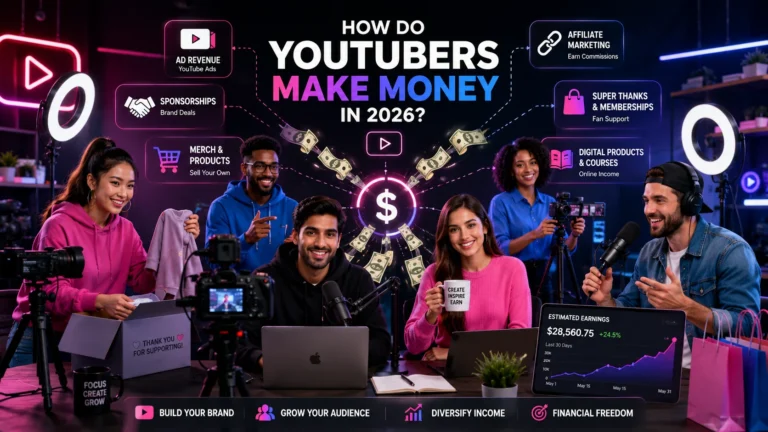
YouTubers make money through 9 primary income streams: advertising revenue, YouTube Premium shares, channel memberships, fan funding (Super Thanks, Super Chat), YouTube Shopping, affiliate marketing, sponsorships, selling products, and selling services or courses. Most successful creators combine multiple revenue models rather than relying on ads alone.lenspov+2
If you’re exploring how to make money on YouTube, understanding the full creator business model is essential. This guide breaks down every monetization method, eligibility requirements, and which strategies work best for different channel types. For more insights on what’s trending, check out Top Trends of YouTube India for 2026.
Quick Summary
Here’s what you need to know about YouTube monetization in 2026:
- Full ad revenue requires 1,000 subscribers plus 4,000 watch hours (or 10M Shorts views in 90 days)
- Early access tier unlocks fan funding at 500 subscribers plus 3,000 watch hours (or 3M Shorts views)
- Sponsorships and affiliate marketing have no subscriber minimum and can start immediately
- Top creators earn 40-60% from ads and 40-60% from brand deals, not just AdSense
- Diversification is critical: relying only on ads limits income potential and creates instability
How Do YouTube Creators Actually Make Money?
YouTube creators make money by combining platform-based revenue (ads, Premium, memberships, fan funding) with external income streams (sponsorships, affiliate marketing, products, services). The modern creator economy rewards diversification, with top earners building business models that extend far beyond AdSense payouts.
The YouTube Partner Program (YPP) now operates on a two-tier system, making it easier for smaller creators to start earning through fan funding before qualifying for full ad revenue sharing. This structure acknowledges that building a sustainable creator business takes time and multiple income sources.
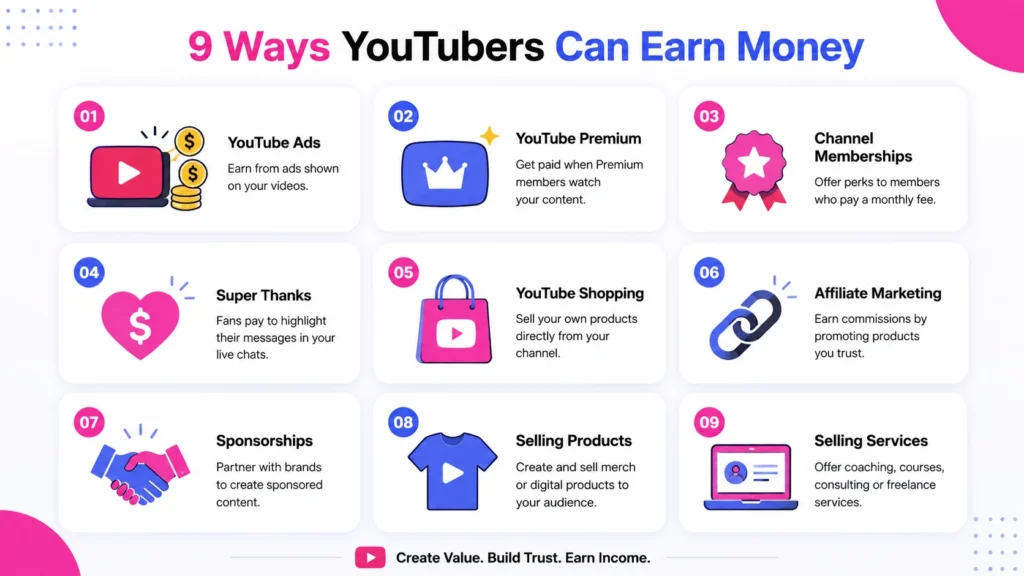
What Are the 9 Ways YouTubers Can Earn Money?
YouTube Advertising
YouTube advertising is the most well-known monetization method, where creators earn a share of ad revenue from ads displayed on their videos. YouTube keeps 45% of ad revenue, and creators receive 55% for long-form videos and 45% for Shorts.
Requirements: 1,000 subscribers plus either 4,000 valid public watch hours in the last 12 months OR 10 million valid public Shorts views in the last 90 days.
Earnings potential: Most long-form creators earn $2–$22 RPM (revenue per 1,000 views), with finance and business niches at the higher end ($15–$40 CPM). Early-stage channels (under 20,000 monthly views) often earn $20–$300/month, while established channels (250,000+ monthly views) can make $2,000–$5,000+ from ads alone.
Key takeaway: Ads provide baseline income but rarely sustain full-time earnings for small to mid-size creators.
YouTube Premium
YouTube Premium revenue comes from a share of subscription fees paid by Premium members who watch your content. YouTube allocates 30% of Premium net revenue (60% for Premium Lite) to a creator pool, then distributes it based on watch time from Premium subscribers. Creators receive the standard 55% revenue share from their allocated portion.
Requirements: Same as full ad revenue tier—1,000 subscribers plus 4,000 watch hours or 10M Shorts views.
Earnings potential: Premium revenue typically represents 5–15% of total YouTube earnings for most creators. Indian creators see ₹15–₹80 RPM from Premium views, with 100K-subscriber channels earning ₹1,000–₹5,000/month and 1M+ channels earning ₹15,000–₹1,00,000+/month.
Key takeaway: Premium is a passive bonus stream that rewards watch time from loyal, paying subscribers.
Channel Memberships
Channel memberships allow viewers to pay a monthly fee ($0.99–$99.99, set by the creator) for exclusive perks like custom badges, emojis, member-only videos, and community posts. YouTube takes 30%, and creators keep 70% of membership revenue.
Requirements: 500 subscribers plus 3 public uploads in the last 90 days and either 3,000 watch hours or 3M Shorts views (early access tier).
Earnings potential: Conversion rates typically range from 0.3% to 2% of active subscribers. A channel with 10,000 subscribers might convert 50–200 members, earning $175–$700/month at a $4.99 average tier. At 100,000 subscribers, that scales to $1,700–$10,000+/month.
Key takeaway: Memberships provide predictable recurring revenue from your most loyal fans.
Super Thanks and Fan Funding
Super Thanks, Super Chat, and Super Stickers enable viewers to send one-time payments during videos or live streams. Super Thanks appears as a highlighted comment on regular videos, while Super Chat and Super Stickers highlight messages during live streams. Creators keep 70–80% of these payments, with YouTube taking 20–30%.
Requirements: 500 subscribers plus 3 public uploads in the last 90 days and either 3,000 watch hours or 3M Shorts views (early access tier).
Earnings potential: Fan funding typically represents 5–10% of total revenue for mid-tier creators (100K–1M subs). Top performers in live streaming niches (gaming, music, talk shows) can earn significantly more, with some channels seeing 20–30% from fan funding.
Key takeaway: Fan funding works best for highly engaged, interactive audiences who want to support creators directly.
YouTube Shopping
YouTube Shopping allows eligible creators to tag products from participating brands in videos, Shorts, and live streams. When viewers click tagged products and purchase on the retailer’s site, creators earn a commission (typically 5–15%, set by each brand).
Requirements: 500 subscribers and enrollment in the YouTube Partner Program (early access tier). The program expanded to the UK in July 2026 and operates in 15+ markets.
Earnings potential: Creators earn 10–15% commission on tagged product sales. A $100 product generates $10–$15 per sale; a $20 product earns $2–$3. Affiliate revenue is paid through AdSense, typically 60–120 days after purchase to account for returns.
Key takeaway: YouTube Shopping is ideal for product review, tech, fashion, and lifestyle channels with purchase-intent audiences.
Affiliate Marketing
Affiliate marketing involves promoting products or services with unique tracking links in video descriptions. Creators earn commissions (typically 5–50%) when viewers purchase through their links. Popular programs include Amazon Associates (1–10%), software/SaaS (20–50% recurring), and digital courses (30–50%).
Requirements: No subscriber minimum—anyone can start affiliate marketing immediately. However, FTC guidelines require clear disclosure of affiliate relationships.
Earnings potential: Affiliate partnerships earn creators $2,000–$10,000 monthly depending on audience size and buying behavior. Software and course affiliates with recurring commissions offer the highest long-term value.
Key takeaway: Affiliate marketing is the best beginner monetization strategy because it requires no approval and scales with audience trust.
Sponsorships
Sponsorships (brand deals) are paid partnerships where creators promote a brand’s product or service in their videos. Unlike ads, sponsorships are creator-led, require FTC disclosure, and pay 100% directly to the creator (YouTube takes no cut).
Requirements: No formal minimum, but most brands seek channels with 5,000+ subscribers and consistent engagement. Micro-influencers (10K–50K subs) can start landing deals.
Earnings potential: Sponsorship rates in 2026 typically follow a $20–$50 per 1,000 views formula, with significant variation by niche. Micro-creators (10K–50K subs) earn $500–$5,000 per video, mid-tier (50K–250K) earn $5,000–$25,000, and large creators (250K–1M) earn $15,000–$75,000 per deal. For many full-time YouTubers, sponsorships earn 2–5x more than AdSense.
Key takeaway: Sponsorships are the highest-paying income stream for most creators but require audience trust and consistent content quality.
Selling Products
Selling products includes merch (t-shirts, hoodies, mugs), print-on-demand items, digital downloads, or physical goods. Creators keep 100% of profits after production and platform fees. Popular tools include Teespring, Printful, and Shopify.
Requirements: No subscriber minimum, but success depends on audience loyalty and brand strength.
Earnings potential: Merchandise and direct-to-fan sales typically represent 10–15% of mid-tier creator revenue (100K–1M subs). Profit margins vary widely: print-on-demand offers 10–30% margins, while self-fulfilled merch can reach 40–60%.
Key takeaway: Products work best for highly engaged communities with strong brand identity, but require upfront investment and inventory management.
Selling Services or Courses
Selling services or courses leverages creator expertise into high-margin offerings like consulting, coaching, online courses, or paid communities. This model offers the highest profit margins (70–95%) and builds owned assets beyond platform dependency.
Requirements: No subscriber minimum—success depends on positioning, expertise, and audience trust.
Earnings potential: Digital products and services can generate $5,000–$50,000+ monthly for established creators. A course priced at $297 sold to 100 students generates $29,700. Consulting at $200/hour for 20 hours/month equals $4,000.
Key takeaway: Services and courses offer the highest margins and most control, making them ideal for creators with specialized expertise.
How Many Subscribers Do You Need to Make Money?
You can start making money on YouTube with zero subscribers through affiliate marketing, sponsorships (if you have engaged viewers), and selling your own products or services. However, YouTube’s built-in monetization features require minimum thresholds.
Here’s the 2026 eligibility breakdown:
| Feature | Subscribers Required | Watch Time / Views | Notes |
|---|---|---|---|
| Affiliate Marketing | 0 | None | Start immediately with any audience |
| Sponsorships | 0 (but 5K+ recommended) | None | Depends on engagement and niche |
| Selling Products/Services | 0 | None | Requires audience trust |
| YouTube Shopping | 500 | 3,000 watch hours OR 3M Shorts views | Early access tier |
| Channel Memberships | 500 | 3,000 watch hours OR 3M Shorts views | Early access tier |
| Super Thanks / Fan Funding | 500 | 3,000 watch hours OR 3M Shorts views | Early access tier |
| Full Ad Revenue | 1,000 | 4,000 watch hours OR 10M Shorts views | Full YPP tier |
| YouTube Premium Revenue | 1,000 | 4,000 watch hours OR 10M Shorts views | Full YPP tier |
Important note: Starting February 1, 2027, new applicants will need 8,000 watch hours (or 20M Shorts views) for full ad revenue, doubling the current 4,000-hour requirement. The 1,000-subscriber minimum remains unchanged.
Key takeaway: Don’t wait for 1,000 subscribers to start monetizing—build external income streams immediately while working toward YPP eligibility.
Ads vs Sponsorships vs Affiliate Marketing: Which Is Better?
There’s no single “best” monetization method—the winning strategy combines all three. Here’s how they compare:
| Factor | YouTube Ads | Sponsorships | Affiliate Marketing |
|---|---|---|---|
| Income Type | Passive, recurring | Active, per-deal | Passive, performance-based |
| Control | Low (YouTube controls rates) | High (you negotiate) | High (you choose products) |
| Earnings Stability | Moderate (fluctuates monthly) | Low (deal-dependent) | Moderate (scales with trust) |
| Earnings Potential | $2–$22 RPM | $20–$50 per 1,000 views | 5–50% commission per sale |
| Requirements | 1,000 subs + 4,000 hours | 5K+ subs recommended | None |
| Best For | Baseline income | Big paychecks now | Flexible, long-term income |
Most successful YouTubers use:
- Ads for baseline passive income
- Sponsorships for cash boosts and higher CPM
- Affiliate links for ongoing commissions that compound over time”The real winning strategy is to combine all three.
“The real winning strategy is to combine all three. The most successful YouTubers use ads for baseline income, sponsorships for cash boosts, and affiliate links for ongoing commissions. That’s how you turn YouTube into a full-time business.”
What Is the Best Monetization Model by Channel Niche?
Different niches perform better with different monetization strategies. Here’s what works best in 2026:
| Niche | Best Monetization Model | Why It Works |
|---|---|---|
| Finance / Business | Sponsorships + Affiliate (SaaS, courses) | High CPM ($50–$200), high-ticket affiliate commissions |
| Tech Reviews | Affiliate (Amazon, software) + Sponsorships | Purchase-intent audience, recurring SaaS commissions |
| Lifestyle / Fashion | YouTube Shopping + Affiliate + Sponsorships | Visual products, high conversion on tagged items |
| Gaming | Fan Funding (Super Chat) + Memberships + Ads | Highly engaged live audiences, loyal fanbase |
| Education / How-To | Courses + Affiliate + Sponsorships | Expertise monetization, high-value digital products |
| Entertainment / Vlogs | Ads + Memberships + Sponsorships | Broad appeal, scalable ad revenue |
| Fitness / Health | Courses + Coaching + Affiliate (supplements) | Transformation-based offers, recurring revenue |
| Travel | Affiliate (booking, gear) + Sponsorships | High-ticket travel commissions, brand partnerships |
Key insight: Finance and business creators earn the highest sponsorship rates ($6,000–$12,000 per integration at 80K views), while tech channels benefit from recurring SaaS affiliate commissions (20–50%).
What Are Common YouTube Monetization Mistakes to Avoid?
Avoid these critical mistakes that can drain revenue or get your channel demonetized:
- Relying only on AdSense and sponsorships – Diversify into affiliate, products, and services to reduce platform dependency.
- Monetizing views instead of impact – Focus on conversions and audience value, not just view counts.
- Not building an email list – Owned audiences protect you from algorithm changes and platform policy shifts.
- Uploading reused or mass-produced content – AI-generated compilations, clip channels, and templated content face strict review and demonetization risk.
- Using excessive AI without disclosure – YouTube requires AI disclosure for altered or synthetic content; robotic voices and AI slop trigger policy violations.
- Inconsistent uploads and ignored branding – Professional branding (banner, profile, About section) and consistent schedules improve approval chances.
- Misleading titles or thumbnails – Clickbait and misleading metadata can lead to demonetization or limited ads.
- Fake engagement or buying views – Artificial subscriber/view inflation violates policies and triggers audits.
“YouTube’s reused-content policy is separate from copyright enforcement: even when a creator has permission to use material, a channel can still fail monetization if it adds insufficient commentary or substantive transformation.”
Pro tip: Before publishing AI-assisted videos, ask: What is original here? What materially changes from previous episodes? What could mislead a viewer? What disclosure does this require?
FAQ
How many subscribers do I need to start making money on YouTube?
You can start with zero subscribers through affiliate marketing, sponsorships, and selling products. For YouTube’s built-in features, you need 500 subscribers for early access (memberships, fan funding) or 1,000 subscribers for full ad revenue.
How much do YouTubers make per 1,000 views?
Most long-form creators earn $2–$22 RPM (revenue per 1,000 views), with finance niches at the higher end ($15–$40 CPM). Shorts RPM is much lower, typically $0.03–$0.08 per 1,000 views.
Can I monetize YouTube without showing my face?
Yes, faceless channels can monetize if content is genuinely original (your script, structure, research, visuals). However, stock footage + AI voice channels face stricter review and higher demonetization risk.
How long does it take to get monetized on YouTube?
On average, new channels take 6–18 months to reach 1,000 subscribers and 4,000 watch hours. After applying, YouTube’s review process takes 1–3 months.
Do YouTube Shorts count toward monetization?
Yes, you can qualify for full ad revenue with 1,000 subscribers plus 10 million valid public Shorts views in the last 90 days (instead of 4,000 watch hours).
What percentage does YouTube take from creator earnings?
YouTube takes 45% of long-form ad revenue (creators keep 55%), 55% of Shorts revenue (creators keep 45%), and 30% of membership/fan funding revenue (creators keep 70–80%).
Can I get demonetized after being approved for YPP?
Yes, channels can lose monetization for community guidelines strikes, reused content, misleading metadata, fake engagement, or low-quality uploads. Maintain policy compliance to stay monetized.
Is YouTube monetization enough to make a full-time income?
For most creators, ads alone are insufficient. Consistent $10,000+ monthly incomes usually come from sponsorships, products, or courses—not AdSense alone. Diversification is essential.
Key Takeaways
- YouTubers make money through 9 income streams: ads, Premium, memberships, fan funding, Shopping, affiliate, sponsorships, products, and services.
- Full ad revenue requires 1,000 subscribers plus 4,000 watch hours (or 10M Shorts views), but you can start earning earlier through affiliate and sponsorships.
- Top creators earn 40–60% from ads and 40–60% from brand deals, not just AdSense.
- Sponsorships pay 2–5x more than ads for most full-time YouTubers.
- Diversification is critical: relying only on platform payouts creates instability and limits income potential.
- Avoid reused content, AI slop, and misleading metadata to protect your monetization status.
Next Steps
Ready to start monetizing your YouTube channel? Here’s what to do next:
- Audit your current content – Identify which monetization methods align with your niche and audience.
- Join affiliate programs – Start with Amazon Associates or niche-specific programs (software, courses) and add links to video descriptions.
- Create a media kit – Prepare a one-page document with your stats, audience demographics, and sponsorship rates to pitch brands.
- Work toward YPP eligibility – Focus on watch time and subscriber growth to unlock memberships and fan funding at 500 subscribers.
Conclusion
Understanding how do YouTubers make money in 2026 means looking beyond ads to the full creator business model. The most successful creators combine platform revenue (ads, memberships, fan funding) with external income (sponsorships, affiliate, products, services) to build sustainable, diversified businesses.
Start with what you can control immediately—affiliate marketing, sponsorships, and your own products—while working toward YouTube Partner Program eligibility. For more insights on growing your channel, check out Top Trends of YouTube India for 2026.
Remember: Views don’t guarantee income, but conversions do. Build a monetization strategy around your audience’s needs, not just the algorithm.
Ready to Share Your Expertise?
If you have deep knowledge about YouTube, technology, business, finance, or any specialized topic, you can turn your expertise into published content that reaches a wider audience. StartupMandi Global welcomes subject-matter experts, creators, and professionals to become publishers and share actionable insights with our community.
Become a Publisher – StartupMandi Global – Explore publisher opportunities and submit your content for review today.
Resources
Official YouTube Documentation:
Helpful Tools:
Further Reading: