




What Are Backlinks: A Complete Beginner’s Guide to SEO Links
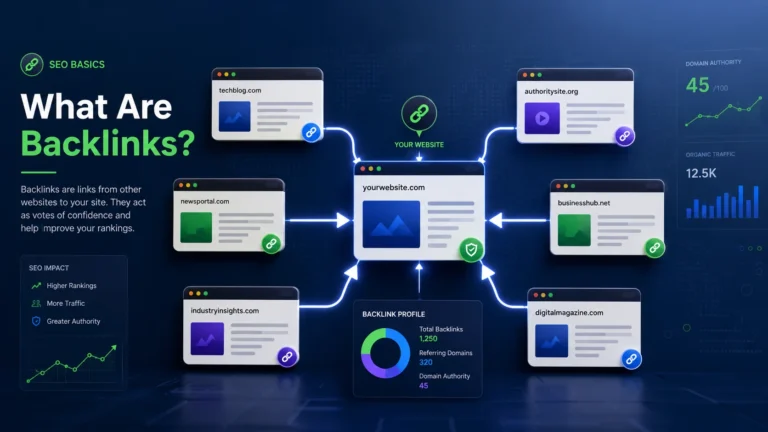
What are backlinks? They are simply links from other websites that point to your site. Search engines often treat them as votes of confidence, which can help your pages rank higher when those links come from trustworthy, relevant, and authoritative sources.
In addition, backlinks can bring referral traffic, improve brand visibility, and help search engines discover new content. However, quality matters more than quantity, so earning a few relevant links is usually more valuable than collecting many low-quality ones. This guide explains what backlinks are, how they work, why they matter for SEO, and how to earn them safely through ethical strategies.
For more informative blogs, practical SEO guidance, and useful digital marketing insights, visit StartupMandi Global.
What Are Backlinks in SEO?
What are backlinks in simple terms? They are hyperlinks from one website to another. When another site links to one of your pages, that link becomes a backlink for your website.
Search engines use these connections to understand how much other websites trust and value your content. In addition, backlinks can help search engines discover your pages, bring referral visitors, and increase your online visibility. However, quality and relevance matter more than quantity. Therefore, a few natural backlinks from respected websites can be more valuable than many links from unrelated or low-quality sources.
“Backlinks are links from one website that point to yours — and they are one of Google’s top ranking factors.”
How Do Backlinks Work for Rankings?
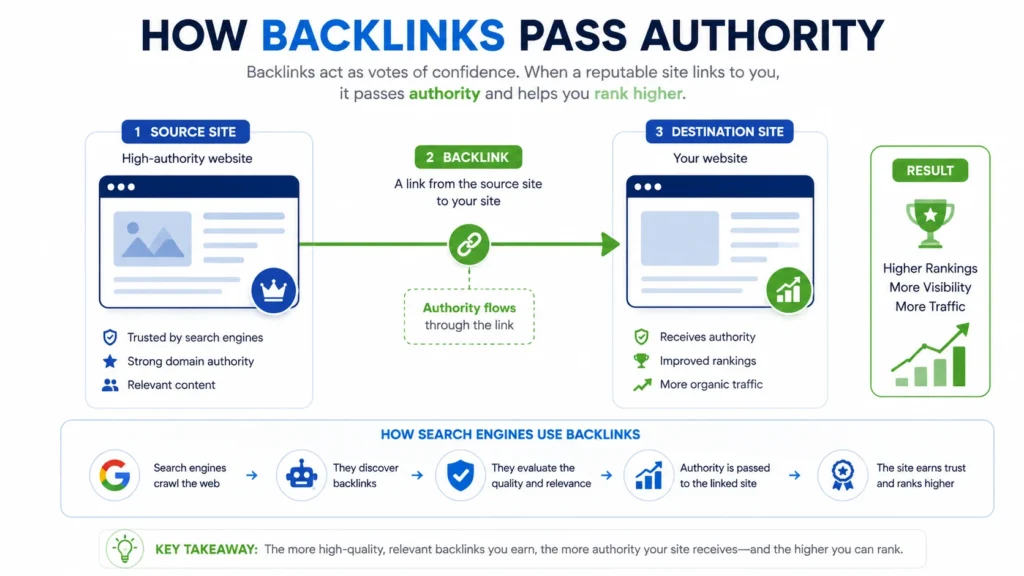
Backlinks work like endorsements that pass authority from one website to another. When a reputable and relevant site links to your content, search engines may view that link as a signal that your page offers useful, trustworthy information.
Additionally, backlinks can help search engines discover your pages and understand how your content fits within a broader topic. They may also bring referral traffic from readers who click the link. However, the value of a backlink depends on its relevance, placement, and the credibility of the linking website—not simply on the total number of links.
This process helps in three main ways:
- Authority transfer: Links pass “link equity” or “link juice” to your site.
- Discovery: Crawlers find new pages by following links between sites.
- Ranking signal: Backlinks remain a core ranking factor, with quality mattering more than quantity.
Why Are Backlinks Important?
Backlinks are important because they help search engines evaluate which pages appear trustworthy, relevant, and valuable. Much like citations in academic research, they show that other websites consider your content useful enough to reference.
Moreover, quality backlinks can improve your search visibility, attract targeted referral traffic, and strengthen your brand’s credibility within a specific industry. They may also help new pages get discovered more quickly. However, not every backlink provides the same benefit. Poor-quality, irrelevant, or manipulative links can weaken your site’s reputation and may create SEO risks, so earning natural and relevant backlinks should always be the priority.
What Makes a Backlink High Quality?
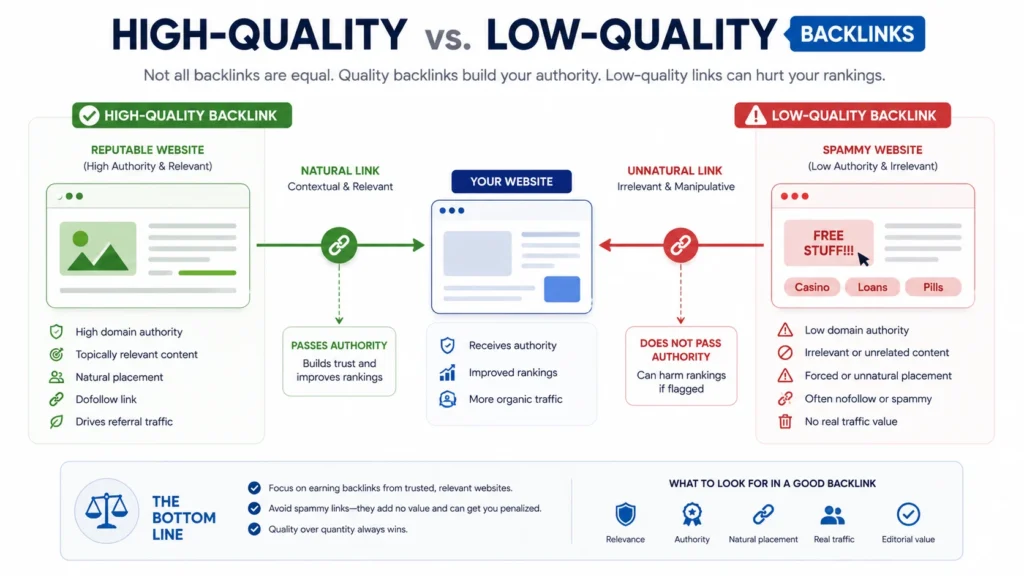
Not all backlinks are equal. A high-quality backlink usually comes from a relevant, authoritative website that links to your content naturally because it adds genuine value for its readers.
In addition, the link should appear within useful, well-written content rather than being placed randomly or artificially. Relevant anchor text, strong topical connections, and the reputation of the linking site can all influence how valuable the backlink is. Therefore, it is better to focus on earning a few trustworthy links than pursuing a large number of unrelated or low-quality backlinks.
Key factors include:
- Relevance: The linking site covers a related topic.linkedin+1
- Authority: The site has strong trust and ranking power.harisandcoacademy+1
- Placement: The link appears naturally within useful content.chainreaction+1
What Is the Difference Between Dofollow and Nofollow?
Dofollow and nofollow backlinks help search engines understand how a link should be treated. A dofollow link is a standard hyperlink that may pass ranking value, or link equity, from the referring website to the linked page.
By contrast, a nofollow backlink includes the rel="nofollow" attribute, which tells search engines not to treat the link as a direct endorsement. However, Google now treats nofollow as a “hint” rather than an absolute rule. As a result, nofollow links may still contribute indirectly by generating referral traffic, increasing brand visibility, and helping search engines understand your wider online presence.
| Link Type | Passes Ranking Value? | Typical Use |
|---|---|---|
| Dofollow | Yes | Editorial links, natural mentions |
| Nofollow | Usually no (hint) | Ads, sponsorships, user-generated links |
How Do Search Engines Use Backlinks?
Search engines use backlinks to discover content, evaluate authority, and determine rankings. Their crawlers follow links from trusted, already-known pages to find new websites and content that may be useful to searchers.
Additionally, search engines examine the surrounding context, source quality, anchor text, and relevance of each link. This helps them understand how closely the linked page relates to a particular topic and how much trust it deserves. As a result, a relevant backlink from an authoritative website can support stronger visibility, while an unrelated or suspicious link may provide little value. Over time, these signals contribute to how search engines assess your page’s credibility and ranking potential.
How Can You Earn Quality Backlinks?
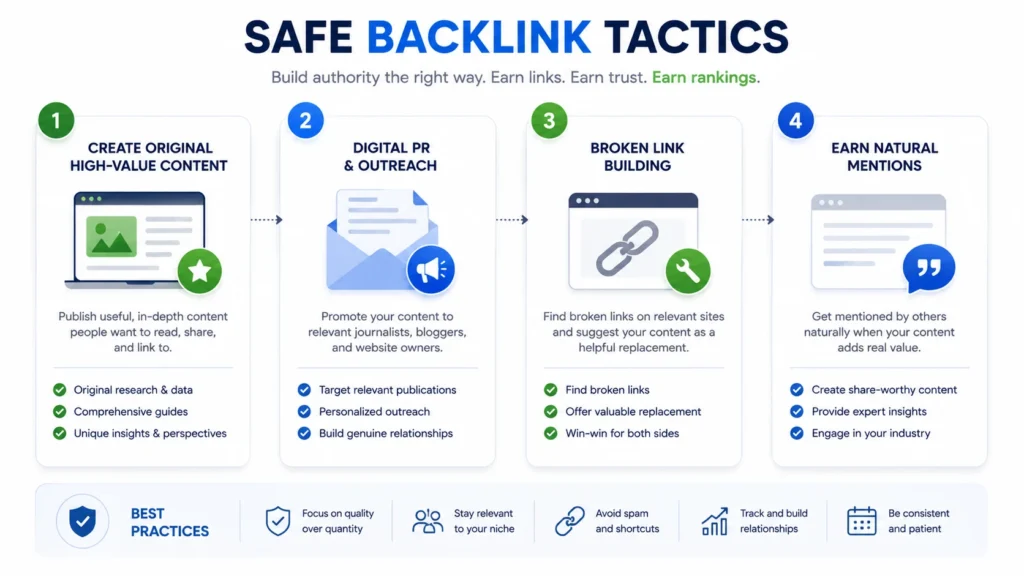
Earning quality backlinks starts with creating valuable, original content that other websites genuinely want to reference. For example, detailed guides, original research, useful statistics, expert insights, and practical resources are more likely to attract natural links.
After publishing, you can support your content through ethical outreach and digital PR strategies. Contact relevant publishers, bloggers, and industry professionals with a clear explanation of why your resource may help their audience. However, avoid sending generic messages or requesting links from unrelated websites. Instead, focus on building genuine relationships and offering content that adds real value.
Practical approaches include:
- Create original research or data that others can cite.
- Write helpful guides that solve real problems.
- Use tools like HARO to respond to journalist queries.
- Fix broken links on relevant sites and suggest your content.
“Link building remains controversial yet still critical in 2026. The shift: from quantity to editorial legitimacy.”
What Backlink Tactics Should You Avoid?
Some backlink tactics can do more harm than good. Manipulative methods, such as private blog networks, low-quality guest posts, paid link schemes, and comment spam, may appear to deliver quick results but can create serious long-term SEO risks.
Search engines may ignore these links or take action against websites that rely heavily on them. Therefore, it is safer to focus on authentic, editorial backlinks earned through useful content, digital PR, expert contributions, and genuine industry relationships. In the long run, relevant links from trustworthy websites are more valuable than a large number of artificial or unrelated backlinks.
Key Takeaways
- Backlinks are external links pointing to your site.
- They act as trust signals for search engines.
- Quality matters more than quantity in 2026.
- Dofollow links pass more value; nofollow links act as hints.
- Safe tactics include original content, digital PR, and broken-link fixes.
Next Steps
- Audit your current backlink profile using a trusted tool.
- Identify 2–3 content ideas that could attract natural links.
- Reach out to relevant sites with helpful resources.
- Monitor your rankings and referral traffic over time.
- Avoid any shortcuts that could trigger penalties.
FAQ
They are links from other websites that point to your site, acting as trust signals.
Yes, but quality, relevance, and authenticity matter more than volume.
A standard link that passes ranking value to the destination page.
A link with rel="nofollow" that tells search engines not to treat it as a direct endorsement.
There is no fixed number; focus on earning relevant, high-quality links over time.
Yes, spammy or manipulative links can harm your reputation and rankings.
Create valuable content, use digital PR, and fix broken links on relevant sites.
Conclusion
What are backlinks? They are a core part of how search engines evaluate trust, relevance, and authority online. In 2026, earning high-quality backlinks from relevant and reputable websites remains an effective way to strengthen your search visibility, attract referral traffic, and build long-term brand credibility.
However, the focus should always be on quality rather than quantity. Natural, editorial links from trusted sources are generally more valuable than large numbers of unrelated or low-quality backlinks. For more informative blogs, practical SEO guidance, and broader digital and business insights, visit StartupMandi Global.
Resources
- Semrush: What Are Backlinks? — beginner-friendly overview.
- GeeksforGeeks: Backlinks in SEO — technical and strategic context.
- Mailchimp: Backlinks Glossary — simple definition and examples.
- LinkinTech: How Backlinks Work in SEO — mechanics and strategy.
- SEOKRU: Backlinks 2026 — what works and what does not.