



startupmandi-blog-background

How to Automate Workflows Using AI Tools: 2026 Ulitimate Guide

Master workflow automation with AI tools! Discover powerful automation platforms to boost productivity, reduce costs, streamline tasks.

AI workflow automation tools are revolutionizing how startups operate today. These intelligent platforms handle repetitive tasks automatically. Moreover, they eliminate manual data entry and reduce costly errors. Additionally, they save teams countless hours weekly. Consequently, businesses can focus on growth and strategy instead. In short, AI workflow automation is no longer optional. Furthermore, it’s becoming essential for competitive advantage. Most importantly, implementing these tools transforms organizational productivity completely. Beyond doubt, the future belongs to automated workflows. Thus, every forward-thinking business should adopt these solutions.

Here’s what you’ll discover in this comprehensive guide:

  • AI-powered automation eliminates repetitive tasks without human intervention or constant monitoring

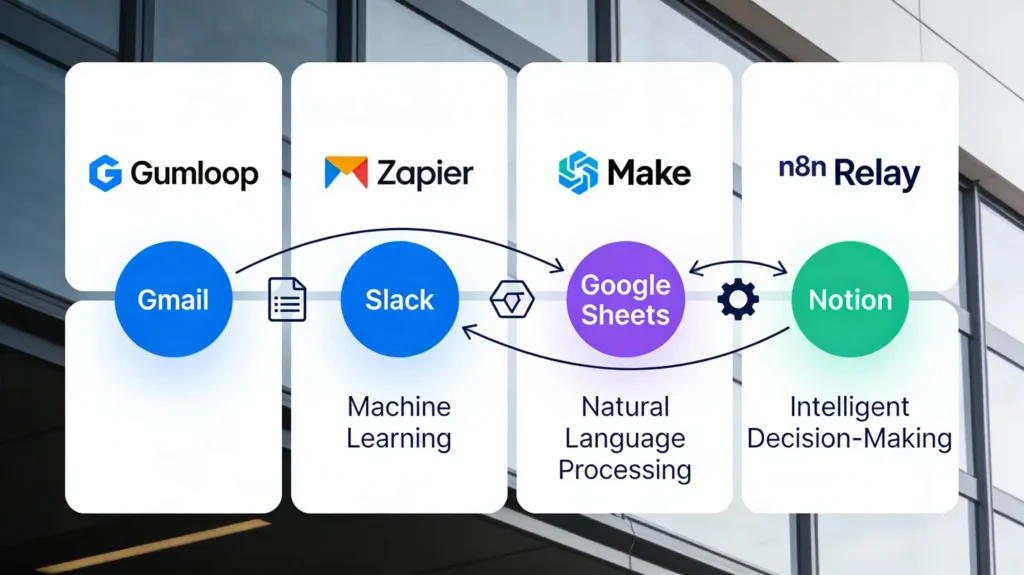
  • Smart integration connects your favorite tools like Slack, Notion, and Gmail seamlessly together

  • Intelligent decision-making enables AI to analyze data and take actions automatically

  • Cost savings & efficiency reduce operational expenses while boosting team productivity dramatically

  • Beginner-friendly platforms require no coding skills to build powerful automated workflows

UNDERSTANDING AI WORKFLOW AUTOMATION

What Is AI Workflow Automation? 

AI workflow automation combines artificial intelligence with workflow management systems. These tools connect multiple business applications together intelligently. They enable automated task execution without manual intervention required. Specifically, they use machine learning and natural language processing. Furthermore, they can handle both structured and unstructured data easily. Additionally, they make intelligent decisions based on real-time information. Most importantly, they learn and improve over time continuously.

Unlike traditional automation tools, AI platforms think and adapt. Zapier and Make only move data between applications predictably. However, modern AI tools like Gumloop and Relay do much more. Specifically, they analyze content, understand context, and execute complex workflows. They can read emails, categorize information, and generate responses.

How AI Differs From Traditional Automation

Traditional automation follows strict if-then rules mechanically. It executes predefined steps without flexibility whatsoever. However, AI automation understands context and makes intelligent choices. The main difference is that AI systems handle decision-making autonomously. They process unstructured data like emails and documents. Simultaneously, they can recognize patterns humans might miss easily.

Core Technologies Powering AI Automation

Several key technologies enable AI workflow automation today. Machine learning analyzes patterns in your business data. Natural language processing understands human language and context. Generative AI creates new content based on instructions. Agentic AI performs autonomous actions without constant supervision. Together, these technologies orchestrate complex workflows seamlessly. They transform how teams work daily fundamentally.

how-to-automate-workflows-using-ai-tools-2026-guide
Popular AI Workflow Automation Tools and Integrations
Checkout Our Latest Services

TOP AI WORKFLOW AUTOMATION TOOLS & PLATFORMS

Best Platforms for Automating Your Business 

The AI automation landscape includes many excellent platforms today. Each tool offers unique features and pricing models. The best options include Gumloop, Zapier, n8n, Make, and Relay. These platforms range from beginner-friendly to enterprise-grade solutions. Your choice depends on technical expertise and budget constraints. Additionally, consider your specific business needs and integration requirements.

Beginner-Friendly Options for Startups

Starting your automation journey doesn’t require technical skills necessarily. Gumloop features an intuitive drag-and-drop interface effortlessly. The platform includes an AI assistant called Gummie that builds workflows for you. Relay.app offers similar simplicity with beautiful design aesthetics. Both platforms include generous free plans for testing. Furthermore, they provide extensive template libraries to get started quickly.

Enterprise-Grade Solutions for Scale

Large organizations need robust automation platforms with advanced features. Vellum AI and Stack AI serve enterprise customers specifically. These platforms offer security compliance, dedicated support, and custom pricing. They handle complex workflows across entire organizations seamlessly. Additionally, they provide audit trails and compliance documentation automatically.

REAL-WORLD IMPLEMENTATION & BUSINESS BENEFITS

Getting Started With AI Workflow Automation

Implementing AI workflow automation begins with identifying repetitive tasks. Write down tasks your team does manually every day. Then evaluate which ones waste the most time and resources. Next, choose a platform matching your skill level and needs. Start small with one workflow to understand the system. Afterward, gradually expand to other processes methodically.

Your Implementation Roadmap:

  1. Identify Bottlenecks — Find repetitive, time-consuming tasks in your workflow

  2. Select Your Platform — Choose tools matching your needs and technical expertise

  3. Build Your First Workflow — Start simple, then expand to complex automations

  4. Test Thoroughly — Verify workflows work correctly before full deployment

  5. Scale Gradually — Add more automation as your team gets comfortable

Real-World Use Cases Delivering Measurable Impact

Insurance companies automate claims processing with AI workflow tools. Computer vision analyzes claim images automatically and routes cases correctly. Legal firms use AI to search through thousands of documents instantly. Healthcare providers automate appointment scheduling and patient reminders. Financial institutions detect fraudulent transactions in real-time. Content creators turn videos into blog posts automatically using workflow tools.

Sales teams build personalized outreach campaigns at scale effortlessly. Customer support teams handle routine inquiries without human intervention. Marketing departments generate reports from multiple data sources automatically. Human resources processes job applications and schedules interviews seamlessly.

Quantifiable Business Benefits You’ll Achieve Today

BenefitImpactReal-World Example
⏱️ Time Savings10-20 hours weekly per employeeEliminate manual data entry from emails
💰 Cost Reduction30-40% reduction in operational expensesFewer staff hours for routine tasks
✅ Error Reduction85-95% fewer manual errorsAccurate data processing consistently
📈 Productivity Increase2-3x productivity boostMore time for strategic work
⚡ Faster Turnaround50-70% quicker processingSame-day deliverables instead of delays
Checkout Latest Grants Listed

Conclusion: 

AI workflow automation represents the future of business operations. The technology eliminates repetitive tasks that drain employee time and resources. Moreover, it enables teams to focus on high-value strategic work. Furthermore, implementation has become remarkably simple and affordable. These powerful platforms are accessible to startups and enterprises alike. The question isn’t whether to automate, but which platform suits you best.

Begin your automation journey today with a free trial. Identify just one repetitive workflow to automate first. Most importantly, experience the productivity gains yourself. Your team will thank you for it. The future of work is automated, intelligent, and efficient. 

Frequently Asked Questions 

What exactly is AI workflow automation and how does it work?

AI workflow automation combines artificial intelligence with task management to execute repetitive processes automatically. These tools connect your business applications together through intelligent connections. They use machine learning and natural language processing to understand context and make smart decisions. For instance, an AI tool can read customer emails, categorize them, draft responses, and log information without human assistance. This represents a fundamental shift from traditional automation tools that simply move data predictably.

How much time can AI workflow automation actually save my team?

Most teams experience 10-20 hours of time savings weekly per employee. This depends on how many repetitive tasks you automate and their complexity. Simple automations like data entry can save 5-10 hours weekly. More complex workflows handling customer support or content creation save significantly more time. Additionally, indirect benefits include fewer errors and better data quality across your organization.

Do I need coding skills to use these AI automation tools?

No, modern AI workflow tools are designed for non-technical users entirely. Platforms like Gumloop, Relay, and Lindy feature drag-and-drop interfaces requiring no code knowledge. Some platforms include AI assistants that build workflows for you automatically. However, advanced users can access code-level customization when needed for complex requirements and integrations.

What’s the difference between Zapier and newer AI automation tools?

Zapier is a traditional automation platform that moves data between applications predictably. However, newer AI-native platforms like Gumloop and Vellum add intelligent decision-making capabilities. These AI-first tools can analyze content, understand context, and make autonomous decisions. They handle unstructured data like documents and emails that Zapier cannot process effectively or intelligently.

How much do AI workflow automation tools cost to implement?

Pricing varies significantly based on features and scale needed. Most platforms offer free plans for beginners with basic functionality. Paid plans typically range from $25-$100 monthly for small teams and startups. Enterprise solutions require custom pricing based on usage and requirements. However, the ROI typically exceeds costs within 1-3 months through time and expense savings alone.

Arshia Jahan
Arshia Jahan

Digital Marketing and SEO professional, focused on content strategy & optimizing content, improving search rankings, and delivering results through smart, audience-focused strategies. As a Content Strategist and SEO professional, I believe that search engines don't buy products—people do. By blending technical SEO precision with a human-first content approach. I provide readers with the strategic blueprints needed to scale in a competitive digital world.

Articles: 42

Leave a Reply

Your email address will not be published. Required fields are marked *