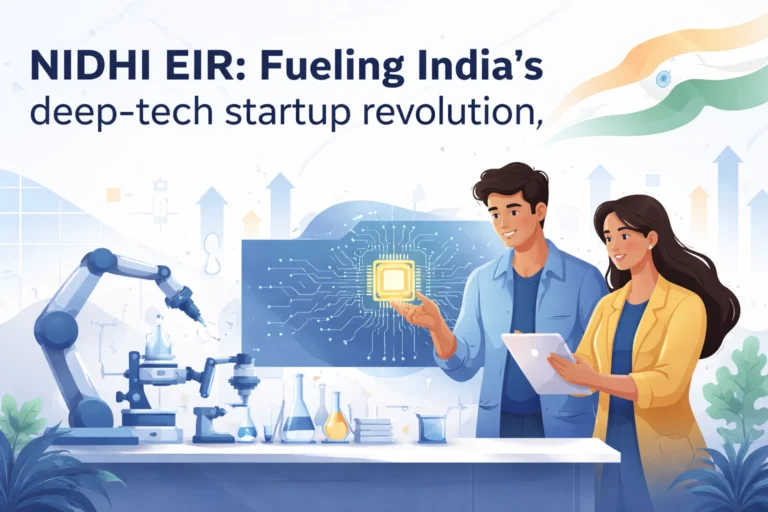




Government Grants for Startups in India 2026: Best Funding & Eligibility Guide
Learn which government grants for startups in India 2026 are worth applying for, who qualifies, and how founders can improve approval chances.

If you are searching for government grants for startups in India 2026, the strongest starting points are the
DPIIT-linked Startup India benefits, science and technology startup grants, and selected state innovation schemes.
The official Startup India government schemes directory and myScheme listing continue to position these as important support channels for founders in 2026.
Startup India Seed Fund Scheme (SISFS)
Most blogs simply list names. This guide goes further by helping you understand which schemes are actually worth your time, who should apply, how eligibility really works, and what practical steps can improve your chances before deadlines close.
Quick Summary
Best early-stage grant: Startup India Seed Fund Scheme remains one of the most founder-relevant funding programs in 2026.
Best first step: Secure DPIIT recognition because many startup benefits and schemes depend on it. Best for technical startups: India’s science and technology grant ecosystem remains important for product, R&D, and research-driven teams.
Best founder strategy: Match grants to your stage instead of applying everywhere.
Best long-term advantage: Non-dilutive funding helps you build without giving away equity too early.
What are government grants for startups in India?
Government grants are publicly backed financial support mechanisms designed to help startups build innovative products, validate technology, commercialize ideas, and solve high-priority market problems. Startup India’s government schemes directory specifically highlights financial, infrastructural, and regulatory support across sectors such as technology, agriculture, manufacturing, and healthcare.
Unlike venture capital or business loans, startup grants are usually meant to reduce early-stage risk rather than immediately seek returns or collateral. That makes them especially valuable for founders building new technology, prototypes, or market pilots that need time before revenue stabilizes.
Why are government grants important in 2026?
In 2026, raising startup capital is still possible, but investors are increasingly looking for stronger proof of demand, execution discipline, and early traction. That makes grants useful because they allow founders to build core assets first, whether that means an MVP, a pilot, or early commercialization readiness. The policy environment is also active. The Union Cabinet approved Startup India Fund of Funds 2.0 with a ₹10,000 crore corpus to mobilize venture capital for India’s startup ecosystem, especially in deep tech, innovative manufacturing, and early-growth ventures.
“The founders who use grants well are often the ones who enter private fundraising with stronger proof, better milestones, and more negotiation power.”
Which government grants for startups in India 2026 are worth applying for?
The schemes below are the most relevant for founders who want real support rather than generic awareness.
1. Startup India Seed Fund Scheme —The Startup India Seed Fund Scheme (SISFS) remains one of the best-known central funding routes for early-stage founders. The official scheme listing notes an outlay of ₹945 crore to support proof of concept, prototype development, product trials, market entry, and commercialization. myScheme and multiple ecosystem sources also describe the structure clearly: startups can receive up to ₹20 lakh as a grant and up to ₹50 lakh through debt or convertible instruments, generally routed via incubators. The program targets early-stage startups and is built to support founders before traditional investors step in.
2. Startup India recognition-linked benefits —While not a direct cash grant by itself, Startup India recognition unlocks access to a wider support system that includes tax benefits, easier compliance, IPR facilitation, and eligibility for schemes such as seed support. Startup India’s official recognition page states that recognized startups can access tax benefits, faster IPR support, and related ecosystem advantages. For many founders, this recognition step is the gateway action that makes future grant applications possible. If you skip this, you may waste time preparing for schemes you are not yet eligible to access.
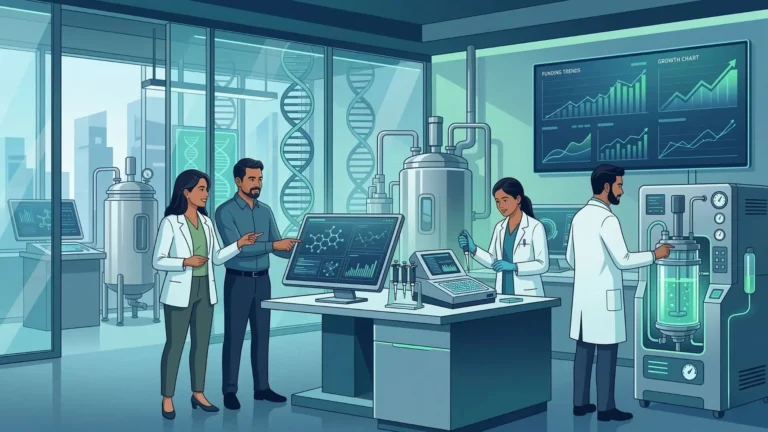
3. Science and technology startup grants —The India Science, Technology & Innovation (ISTI) portal continues to list startup grants and funding opportunities across ministries and specialized programs. The portal currently catalogs dozens of startup-related funding opportunities, including programs connected to innovation, electronics, medical technology, and entrepreneurship development. This matters most for founders in deep tech, hardware, healthtech, biotech, research-led innovation, semiconductors, and product engineering. These startups often need prototype and validation support before commercial revenue becomes meaningful.
4. Biotechnology and sector-specific grants —Some sectors have specialized grant opportunities beyond generic startup schemes. For example, Venture Center notes that the Biotechnology Ignition Grant (BIG) offers funding grants of up to ₹50 lakh for innovative biotech projects over up to 18 months. This kind of scheme is particularly useful because it is more targeted. If your startup works in biotech or regulated scientific domains, a sector-specific grant can often be better than a broad startup support program.
5. State and regional startup support State-led — startup ecosystems are increasingly relevant in 2026, especially where founders have better access to incubators, state innovation councils, and local industrial programs. Search visibility around state-wise startup incentives has risen, and many founders now treat regional grant programs as stepping stones before central schemes or venture rounds.
Who is eligible for startup grants in India?
Eligibility varies, but several filters appear repeatedly across official sources.
What are the common eligibility rules?
- You usually need a recognized startup entity —Startup India’s recognition framework is central to many benefits and scheme pathways.
- Your startup must typically be innovation-led—Startup India emphasizes innovation, scalability, and startup value creation rather than routine trading models.
- Your business age matter —SISFS-related sources consistently note that the startup is generally expected to be less than two years old at the time of application.
- You may face prior-funding limits —SISFS guidance notes that startups with government support above certain thresholds may not qualify under the standard rules.
What documents should founders keep ready?
A strong application stack usually includes:
1.Certificate of incorporation
2.PAN and entity records
3.Founder KYC
4.Pitch deck
5.Product note or innovation brief
6.Demo, prototype, or MVP evidence
7.Budget and use-of-funds plan
These are not random paperwork items. Reviewers want to know whether the startup is real, fundable, and capable of using public money responsibly.
How do I get DPIIT recognition first?
The short answer is simple: start with Startup India recognition before chasing most major schemes. Startup India’s official recognition page explains that recognized startups gain access to tax benefits, easier compliance, fast-tracked IPR support, and related ecosystem support.
Step-by-step process
1.Incorporate the business properly
- Use an eligible legal structure such as a Private Limited Company, LLP, or Partnership before applying. Startup India’s recognition framework is designed around formal startup entities.
2. Register on the Startup India platform
- Create your account and begin the recognition process through the official startup route.
3.Describe your innovation clearly
- Your application should explain how the business is innovative, scalable, or solving a meaningful problem in a differentiated way.
4.Upload core business documents
- Include incorporation proof and related details required for the recognition process.
5.Use the recognition strategically
- Once approved, use this status to unlock grant applications, IP support, and funding readiness.
What mistakes cause startup grant rejection?
Even strong ideas can fail because the application is weak.
Most common mistakes
- Applying to the wrong scheme for your current stage
- Writing a vague problem statement
- Failing to show genuine innovation
- Submitting with no MVP, prototype, or proof point
- Using unrealistic budgets or milestone plans
- Treating the application like a generic pitch deck
- Missing incubator context or program fit.
Grant reviewers do not just fund ideas.They fund clarity, feasibility, and execution readiness. Founders who prepare a sharper application usually outperform founders with slightly better ideas but weaker documentation.
“Public funding does not reward noise. It rewards preparedness.”
How do I improve my approval chances?
Here are the most practical approval tips for 2026.
Get your stage right— Apply only when your startup has the maturity the scheme expects.
Show use-of-funds clearly—Explain exactly how grant money will move you from current stage to the next measurable milestone.
Keep your innovation story concrete—Avoid buzzwords. Explain the problem, your solution, and why it matters now.
Use incubator feedback before submitting—Because many seed support schemes operate through incubators, early mentor feedback can materially improve your application.
Build a complete founder packet—Your pitch deck, product note, budget sheet, and compliance docs should tell one consistent story.
This is also where StartupMandi can help. Founders who need structured support can explore grants matching & drafting application by AI agents to shortlist the right schemes and improve submission quality.
How To apply for government grants in IndiaTimes Needed: Days: 14, Hours: 06, Minutes: 00
Estimated Cost: Currency: USD, Price: 0
Description: A practical founder workflow to identify the right startup grant, prepare documents, improve application quality, and submit with better clarity and stage fit.
Steps:
- Complete startup recognitionStep Description: Get the legal entity and Startup India recognition process done first so you can qualify for major startup support pathways.
- Shortlist matching schemesStep Description: Select only those grants that fit your startup stage, sector, and funding need instead of applying randomly.
- Build the application kitStep Description: Prepare a deck, innovation note, founder profile, and use-of-funds sheet that clearly explain your startup.
- Validate through mentorsStep Description: Share the application draft with an incubator, advisor, or grant expert before final submission.
- Submit and track responsesStep Description: Apply through the official portal or incubator route, then stay ready for clarifications, interviews, or follow-ups.
Tools Name: Startup India portal, pitch deck software, spreadsheet budget sheetMaterials Name: incorporation certificate, founder KYC, MVP proof, financial plan
Which StartupMandi resources should founders use?
Startup grants are easier to understand when your research, documentation, and communication are stronger.Grant matching and drafting application support helps founders identify relevant schemes and prepare stronger submissions.
AI content marketing service can improve startup storytelling, thought leadership, and visibility.100+ Pro AI prompts for startups and MSMEs can speed up founder research, market discovery, and planning.These internal resources are highly relevant because grant success is not just about eligibility. It is also about presentation, research discipline, and strategic positioning.What resources should you use for fact-checking?Use authoritative sources before applying.
Startup India government schemes directory for official scheme discovery. Startup India recognition page for eligibility and benefit framework. myScheme SISFS page for scheme-level details and application understanding. India Science, Technology & Innovation portal for research and innovation funding opportunities. PM India update on Fund of Funds 2.0 for ecosystem-level funding direction.
FAQ Section
For many early-stage founders, the Startup India Seed Fund Scheme remains one of the most relevant options because it combines grant support with commercialization-oriented funding pathways.
For many major startup schemes and ecosystem benefits, DPIIT-linked Startup India recognition is an important prerequisite.
Scheme-related sources describe support of up to ₹20 lakh as a grant and up to ₹50 lakh through debt or convertible instruments, typically routed through incubators.
For very early-stage founders, grants are often more attractive because they are generally non-dilutive and do not work like standard collateral-backed borrowing.
Yes, India’s science, technology, and biotech ecosystems include specialized grant programs for focused areas such as innovation, engineering, medical technology, and biotechnology.
Innovation-linked and pre-commercialization programs may be relevant for student founders, especially if they are building genuine products or research-based solutions.
The most common reasons are weak clarity, poor stage fit, limited proof of innovation, and incomplete use-of-funds planning.
Start with recognition readiness, shortlist 2–3 matching schemes, and build a stronger documentation pack before applying
Key Takeaways
- Government grants for startups in India 2026 are most useful when matched to startup stage.
- Startup India Seed Fund Scheme remains a leading early-stage option.
- DPIIT recognition is a foundational first step for many founders.
- Science, technology, and biotech grants are especially relevant for research-led startups.
- Better grant outcomes come from clearer positioning, stronger paperwork, and smarter scheme selection.
Next Steps
- Get your startup recognition process moving.
- Shortlist the 2–3 most relevant grants for your stage.
- Build a polished deck, budget note, and milestone roadmap.
- Explore StartupMandi’s grant matching and drafting support.
- Strengthen startup visibility with AI content marketing services.
Conclusion
The best part about government grants for startups in India 2026 is that they can give founders more than money. They can buy time, reduce dilution pressure, improve credibility, and help early teams reach a stronger stage before private fundraising begins.
If you want to improve your chances, do not apply blindly. Start with recognition, pick the right scheme, prepare smarter documentation, and use expert support where needed. StartupMandi can help you move faster with grant application support and sharper founder communication through AI content marketing.
Few Link Suggestions for More Research & Fact Check
Startup India Government Schemes – official scheme directory: ht
Startup India Recognition – official recognition and benefits page
myScheme SISFS Page – Startup India Seed Fund Scheme listing: