




IRS Covid Tax Refund Deadline 2026: Who Qualifies and How to Claim It
Show your love by sharing with your friends
Add StartupMandi as Preferred Source on Add Us as Preferred Source on Google

The IRS Covid tax refund deadline is a real deadline, not a rumor, and taxpayers who may qualify often need to act by July 10, 2026 to preserve a refund or abatement claim tied to COVID-era penalties and interest. In many cases, this is the final chance to protect your right to file, so timing matters more than ever.

If you paid certain IRS penalties or interest during the COVID disaster period, you may still be able to claim relief. The key step is filing the correct claim, usually Form 843, before the window closes. Moreover, this guide shows who may qualify, what documents to prepare, and how to avoid missing the last date. For more information on topics like this, explore the StartupMandi Global site for related guides, updates, and insights.


What Is the IRS Covid Tax Refund Deadline?

This deadline stems from COVID-era tax relief claims that were shaped by court rulings and the IRS’s handling of the disaster period. Tax guidance and watchdog updates point to July 10, 2026 as the final day many taxpayers can preserve a claim. In other words, the deadline is about protecting your right to request a refund or abatement, not waiting for money to arrive automatically.

That difference is important. The IRS is not issuing these refunds on its own, so eligible taxpayers have to take action and file the claim themselves. As a result, anyone who thinks they may qualify should review their records, confirm the relevant tax years, and prepare to submit the required paperwork before time runs out.


Who Qualifies For The Covid Tax Refund?

Infographic showing who may qualify for the COVID-era tax refund.
A quick visual guide to eligibility and timing.

Eligibility can be broader than many people expect. Coverage from tax advocates and major financial outlets says the issue may affect individuals, small businesses, corporations, estates, and trusts that were assessed certain penalties or interest during the COVID period.

Here are the most common situations :

  1. Late-filing penalties.
  2. Late-payment penalties.
  3. Estimated tax penalties.
  4. Associated interest charged during the COVID disaster period.
  5. Other related assessments that fall within the covered window.

If you are unsure, the first question is simple : did the IRS charge you penalties or interest connected to a return or payment during the pandemic years? If yes, you may need to review your records immediately.


Why Does It Matter?

This matters because deadlines like this can close the door on money you may otherwise have been entitled to claim. The Taxpayer Advocate has warned taxpayers to act before the deadline, and tax publications have repeated that missing it could mean losing the chance permanently.

According to IRS-related reporting, the COVID public health emergency was treated as a disaster period that runs through May 11, 2023, and related timing rules may push claims to July 10, 2026. In short, this is a timing problem, and timing is everything here.

“If claims aren’t submitted by July 10, 2026, they will forfeit the chance for a refund or abatement.”


How Do I Check Eligibility For IRS Tax Refund?

The quickest way to check is by reviewing your IRS account transcript. It shows penalties, interest, payments, and adjustments, which makes it easier to see whether the issue applies to your tax record. In addition, you should look for any charges dated within the COVID disaster window and compare them with your filing and payment history.

If the transcript shows a penalty or interest you do not recognize, do not assume the issue is already resolved. Instead, gather your tax records, verify the dates, and compare everything against the covered period. Moreover, if anything looks unclear, keep the transcript, notices, and payment proof together so you can confirm whether a claim is worth filing.


How Do I File the Claim?

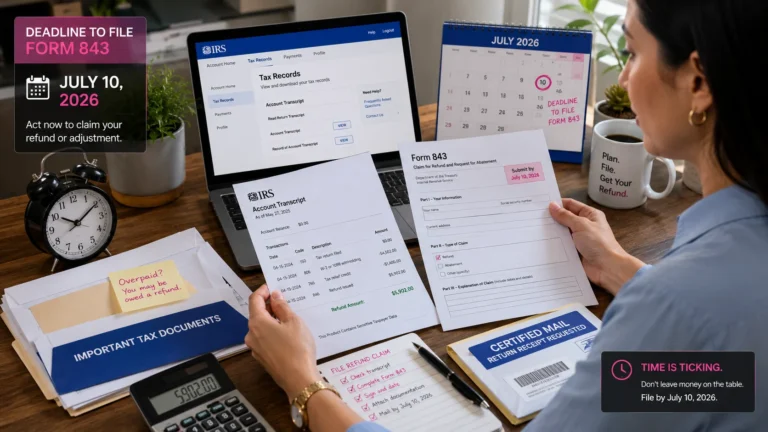
For many taxpayers, the main form is IRS Form 843, which is used to request a refund or an abatement of certain taxes, interest, penalties, fees, and additions to tax. It is the key document for making this kind of COVID-era claim, so accuracy matters from the start.

Because the claim is time-sensitive, many experts recommend sending it by certified mail so you have proof it was submitted before the deadline. In addition, some reporting notes that Form 843 cannot be filed electronically, which makes mailing even more important. As a result, keeping copies of the completed form, supporting records, and mailing receipt is a smart final step.


How To Claim It

Step-by-step setup for filing a COVID-era IRS refund claim.
A clear visual for preparing and mailing the claim on time.

Times Needed : 2 Days, 3 Hours, 0 Minutes
Estimated Cost : USD 0
Description : A step-by-step process for checking eligibility, gathering tax records, and filing a COVID-era refund claim before the July 10, 2026 deadline.

Steps :

  1. Review your IRS transcript
    Check for penalties, interest, or late-payment charges from the COVID period. This confirms whether your claim may be worth pursuing.
  2. Gather supporting tax records
    Collect filed returns, payment records, notices, and correspondence. These documents help you match the transcript to the underlying tax issue.
  3. Complete Form 843 carefully
    Fill in the form with the correct years, amounts, and explanation. Clear documentation helps reduce the chance of processing delays.
  4. Mail the claim by certified mail
    Send the form before July 10, 2026, and keep your proof of mailing. That receipt may be important if the filing date is later disputed.

Tools Name

  1. IRS Online Account.
  2. IRS account transcript.
  3. IRS Form 843.
  4. Certified mail service.

Materials Name

  1. Tax returns.
  2. IRS notices.
  3. Payment records.
  4. Penalty or interest statements.

What Is a Protective Claim In IRS Tax Refund?

A protective claim is a filing that helps preserve your right to a refund while the legal issue is still being resolved. This can be especially important when your situation depends on court outcomes or on how the IRS ultimately handles the claim. In other words, it gives you a way to protect your position before the window closes.

Some tax experts also suggest making the claim language clear and specific so there is no confusion about your intent. If your case is complicated, or if you are unsure how the ruling affects you, professional tax advice can be especially helpful. That extra guidance can make it easier to file correctly and avoid mistakes that could hurt your claim later.


What Are the Risks?

The biggest risk is waiting too long. If the deadline passes, you may lose the chance to preserve the claim, even if you later discover that you qualified. In addition, filing incomplete paperwork can create delays, weaken your case, or force you to correct the claim later.

There is also no guarantee of payment. Even well-prepared claims may still depend on the final legal and administrative outcome, so it is important to file carefully and keep copies of everything. As a result, the safest approach is to act early, double-check the details, and make sure your documents are complete before sending anything.


How Much Could the IRS Covid Tax Refund Be?

The exact amount depends on your penalties, interest, and filing history. Some taxpayers may only be looking at a few hundred dollars, while others could see much more depending on the assessments involved. Because the potential impact varies, it is worth checking rather than guessing.


Key Details Table

ItemWhat It Means
DeadlineJuly 10, 2026
Main formIRS Form 843
Filing methodPaper mail, often certified mail
Possible claim typesPenalties, interest, abatements
Possible claimantsIndividuals, businesses, estates, trusts

Key Takeaways

  1. The IRS Covid tax refund deadline is often July 10, 2026.
  2. The opportunity may apply to penalties and interest from COVID-era tax periods.
  3. Form 843 is the main filing form for many claims.
  4. Certified mail can help prove timely filing.
  5. A protective claim may help preserve rights in uncertain cases.

Next Steps For Completing Your IRS Covid Refund

  1. Pull your IRS transcript today.
  2. Identify any penalty or interest charges during the covered period.
  3. Gather supporting tax documents.
  4. File Form 843 before the deadline.
  5. Consider professional tax help if your situation is complex.

FAQ

What is the IRS Covid tax refund deadline?

It is the final date many taxpayers may have to file a claim for COVID-era penalties or interest relief, often July 10, 2026.

Who may qualify for the refund?

Individuals, businesses, estates, and trusts may qualify if they were charged certain penalties or interest during the covered period.

What form do I use?

Most reporting points to IRS Form 843 for refund or abatement claims.

Can I file online?

No, reporting indicates Form 843 is generally filed by mail, not electronically.

What is a protective claim?

It is a filing that helps preserve your right to a refund while legal issues remain unresolved.

How do I know if I qualify?

Check your IRS transcript for penalties or interest tied to the COVID period.

Is the refund automatic?

No, taxpayers generally must submit a claim themselves.

What happens if I miss the deadline?

You may lose the chance to preserve the claim.


Conclusion

The IRS Covid tax refund deadline gives eligible taxpayers a narrow window to protect a possible refund or abatement claim. If you think penalties or interest from the COVID period apply to you, review your transcript and act quickly.

For related tax guidance, you can also review StartupMandi Global’s finance coverage and tax deadline updates. For more information from the sources used here, see the links below.


Few Links Suggestions for more Research & Facts Check


Show your love by sharing with your friends
Serin Simon
Serin Simon
Articles: 6

Leave a Reply

Your email address will not be published. Required fields are marked *