
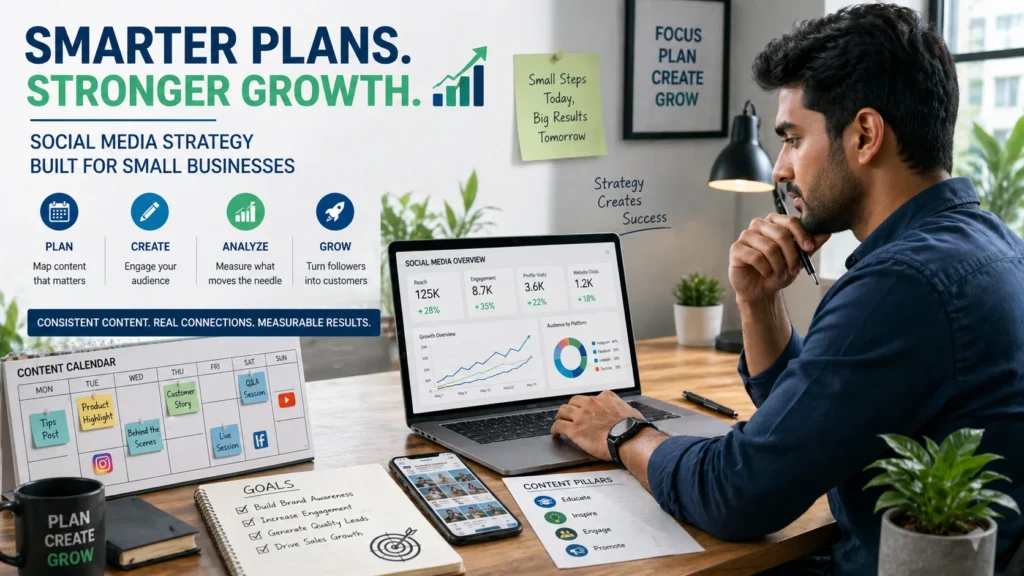
Posting randomly is one of the fastest ways to waste time on social media. A strong social media strategy for small business helps you attract the right people, build trust, and turn attention into sales. In 2026, the businesses that win are the ones that post with purpose, not just frequency.
Quick Summary
A good social media strategy does not need a huge budget. It needs clear goals, the right platforms, simple content pillars, and a repeatable posting process. Small businesses that focus on engagement, local relevance, and conversion-friendly content usually see better results than those chasing vanity metrics.
What Is A Social Media Strategy?
A social media strategy is a simple plan for what you post, where you post, and why you post it. It keeps your content tied to business goals instead of random activity.
For small businesses, that usually means:
- Building awareness.
- Driving inquiries.
- Generating leads.
- Supporting repeat sales.
A clear strategy also helps you avoid burnout. When you know what to post and where to post it, content creation becomes much easier.
Why Does Strategy Matter?
Strategy matters because attention alone does not pay bills. Likes and views can feel encouraging, but they are not the same as customer action.
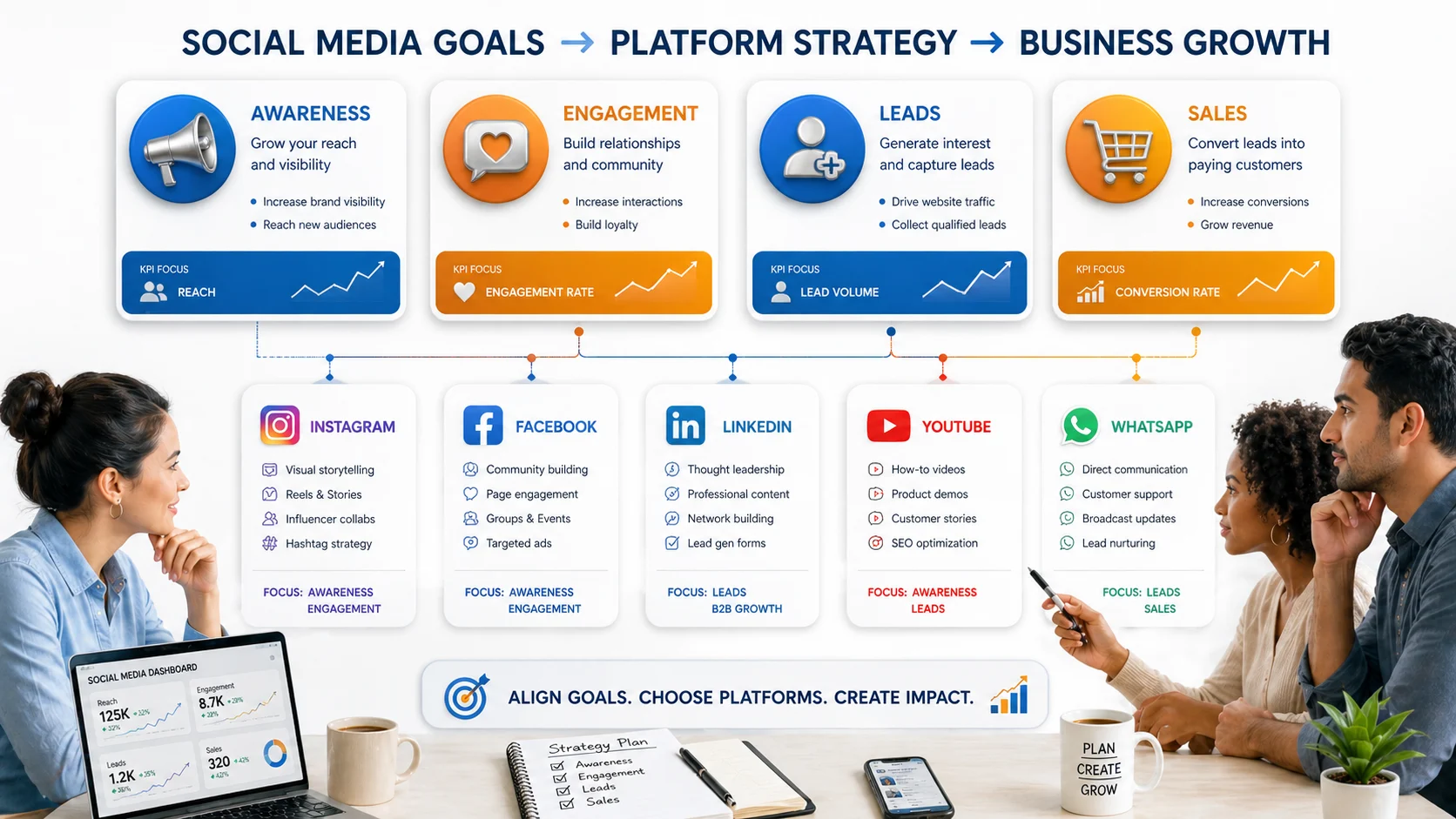
Social media works best when it supports the full buying journey. People may discover you on Instagram, compare you on Facebook, and finally message you on WhatsApp or visit your site. If your content does not guide them through that path, they may simply scroll away.
According to Sprout Social, social media is still a major place where people discover brands, which makes planning essential. According to DataReportal, billions of people continue to use social platforms globally, so the opportunity is still huge.
“A strategy turns posting into positioning.” — StartupMandi perspective
How Do You Set Goals?
The best starting point is choosing one primary business goal. If you try to do everything at once, your messaging gets confusing.
Use this simple framework:
- Awareness: more people should know your business exists.
- Engagement: more people should comment, save, and share.
- Leads: more people should enquire, book, or sign up.
- Sales: more people should buy or convert.
For example, a local café may focus on footfall and WhatsApp orders, while a service business may focus on consultation bookings.

Which Platforms Should You Choose?
You do not need to be everywhere. In fact, small businesses usually perform better when they focus on two or three channels.
| Platform | Best For | Why It Works |
| Visual brands, local services, creators | Strong for stories, reels, and trust-building | |
| Local businesses, community sales | Useful for groups, ads, and older audiences | |
| B2B, consultants, agencies | Better for authority and professional leads | |
| YouTube | Tutorials, demos, long-term traffic | Great for search visibility and trust |
| Direct communication and closing leads | Fast follow-up and personalized selling |
A practical social media strategy for small business usually starts with the platforms where your customers already spend time. That matters more than chasing trends.
What Content Should You Post?
Good content is not just promotional. It should answer questions, reduce doubt, and make people remember you.
A balanced content mix can look like this:
- Educational posts that teach something useful.
- Trust-building posts such as testimonials or case studies.
- Product or service posts that explain your offer.
- Behind-the-scenes posts that show your process.
- Local or community posts that make your brand feel familiar.
A simple ratio is 60% value, 20% trust, and 20% promotion. That keeps your feed helpful without becoming sales-heavy.
How Do You Create Consistency?
Consistency does not mean posting every day. It means showing up on a schedule you can maintain.
Try this weekly structure:
- Monday: educational tip.
- Wednesday: customer story or proof.
- Friday: offer, CTA, or lead magnet.
- Weekend: behind-the-scenes or community post.
This kind of rhythm helps people know what to expect. It also makes it easier to batch content in advance.
“Consistency beats intensity when the goal is long-term growth.” — Common small business marketing principle
What Makes Content Convert?
Content converts when it leads people to take a next step. That step could be a DM, website visit, call, or booking form.
To improve conversions:
- Use clear calls to action.
- Add proof, such as reviews or results.
- Keep your message specific.
- Match the post with a landing page or contact option.
- Make it easy to reply.
If people have to search too hard for the next step, they usually stop.
How Do You Track Results?
You should measure results beyond likes. For a social media strategy for small business, the most useful metrics are the ones tied to business growth.
| Metric | What It Tells You | Why It Matters |
| Reach | How many people saw your content | Shows visibility |
| Engagement rate | How people interacted | Shows relevance |
| Click-through rate | How many visited your link | Shows interest |
| Leads | How many enquiries came in | Shows business impact |
| Conversion rate | How many became customers | Shows revenue impact |
According to Hootsuite, performance tracking is one of the biggest differences between casual posting and strategic marketing. If a post gets engagement but no enquiries, the problem may be the CTA, offer, or landing page.
How To Build Your Strategy
Times Needed: Days: 14, 6 Hours: 12, Minutes: 00
Estimated Cost: Currency: USD, Price: 150
Description: A simple two-week process to build a practical social media strategy for small business, with clear goals, platform focus, and measurable next steps.
Steps Build Your Strategy:
- Define One Main Goal
Pick one primary outcome, such as leads, bookings, or awareness. This keeps your content focused and prevents mixed messaging. - Choose Two Platforms
Start where your audience already spends time. Two active channels are usually better than five weak ones. - Create Content Pillars
Set 3–5 repeatable themes, such as tips, proof, offers, and behind-the-scenes content. This makes planning much easier. - Schedule Weekly Posts
Batch content once a week so you stay consistent. A simple calendar helps you avoid last-minute posting. - Review Results Monthly
Check what posts drove clicks, DMs, or sales. Double down on what works and remove what doesn’t.
Tools Name: Canva, Meta Business Suite, Google Analytics, Notion
Materials Name: Content calendar, brand photos, customer FAQs
What Mistakes Should You Avoid?
Many small businesses lose momentum because they make the same few mistakes over and over.
- Posting without a goal.
- Being active on too many platforms.
- Ignoring comments and DMs.
- Selling too hard too often.
- Copying competitors without adapting to their audience.
- Posting inconsistent visuals and messages.
These mistakes make your brand look scattered. A stronger system creates a more trustworthy presence.

How Can Small Businesses Grow Faster?
Growth comes from making social media easier for people to trust and act on. That means better content, clearer offers, and faster responses.
A few practical ways to speed things up:
- Use short-form video for reach.
- Add testimonials to build trust.
- Share local relevance to feel closer to your audience.
- Promote lead magnets like checklists or free audits.
- Use paid ads only after your organic message is working.
If you want help with execution, StartupMandi offers useful support through its social media advertising service by AI agents and social media management service by AI agents. Those pages are worth reviewing if you want to save time and stay consistent.
Why Is Local Relevance Important?
Local relevance makes your brand feel more real. People trust businesses that understand their city, culture, and needs. For example, a small salon in Ludhiana will often perform better when it posts local offers, neighborhood references, and real customer stories. That makes the business feel familiar instead of generic.
This is especially useful for service businesses, cafes, clinics, coaches, and retail stores. Local trust often leads to faster conversions than broad national messaging.
Key Takeaways
- A social media strategy for small business should start with goals.
- Focus on two or three platforms, not all of them.
- Use a content mix that builds trust and encourages action.
- Measure leads and conversions, not just likes.
- Consistency matters more than volume.
Next Steps
- Write down your main business goal.
- Pick your top two platforms.
- Build three content pillars.
- Set a weekly posting schedule.
- Review your results after 30 days.
FAQs That Actually Help
Two to five times a week is a good starting point if you can stay consistent.
Two to five times a week is a good starting point if you can stay consistent.
Not always. Organic content should come first, then ads can help scale what already works.
Share tips, customer stories, behind-the-scenes content, FAQs, and simple offers.
Many small businesses need at least 60 to 90 days to see reliable patterns.
Posting without a clear goal or conversion path is one of the most common mistakes.
Use clearer CTAs, stronger offers, and a fast response system for comments and DMs.
Yes, but batching content and using planning tools makes it much easier to stay consistent.
Conclusion
A strong social media strategy for small business is not about being everywhere or posting constantly. It is about being clear, consistent, and useful enough that people trust you. If you focus on the right platforms, the right content, and the right actions, social media becomes a real growth channel instead of a time drain.
For more practical help, you can also explore StartupMandi’s social media management service by AI agents and social media advertising service by AI agents.
Need help building a winning social media strategy? Contact us today and let’s grow your business online.
Few Links Suggestions for more Research & Facts Check