

startupmandi-blog-background

How to Implement Generative AI in Startups in 2026 โš™๏ธ๐Ÿš€

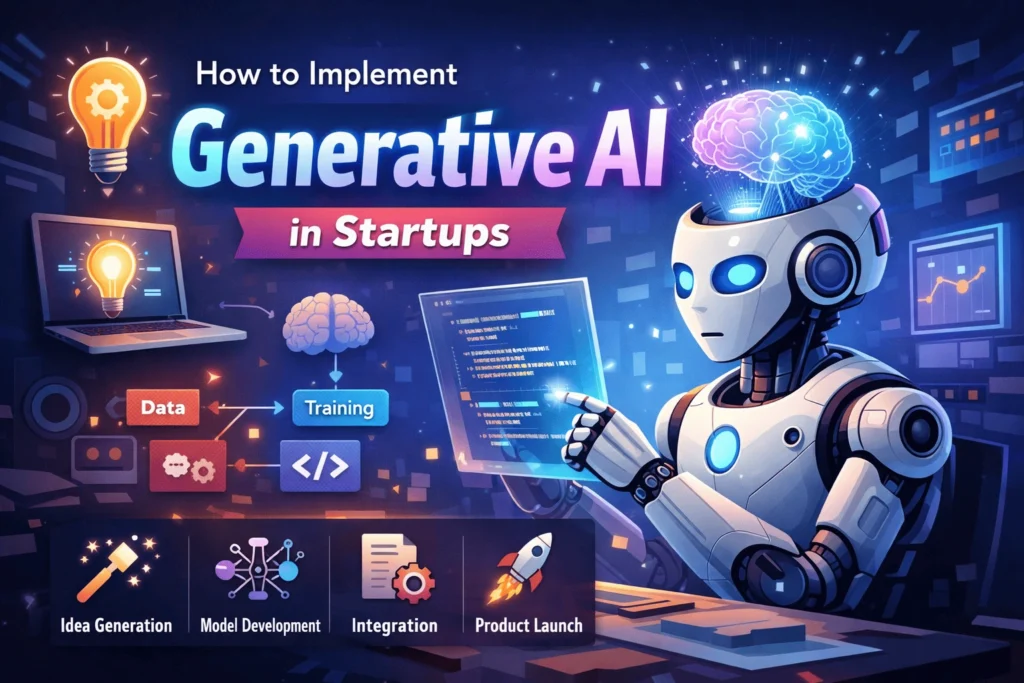
How to Implement Generative AI in Startups like a pro ๐Ÿ’ก Useโ€‘cases, tech stack, data, risks, and rollout steps that actually ship.

Introduction

How to Implement Generative AI in Startupsย is now a core execution question, not a futuristic topic. IBMโ€™s stepโ€‘byโ€‘step roadmap shows that generative AI reshapes productivity, product velocity, and even business models when it is aligned with clear useโ€‘cases and good data. Moreover, Indapoint and Evalogical emphasise that winners treat genAI asย infrastructure inside real workflows, not just a chatbot bolted on. Therefore, this blog walks through aย practical, underโ€‘1000โ€‘words playbook you can apply immediately.

Source:Step-by-step guide: Generative AI for your business | IBM

ย 

  1. Identifyย highโ€‘impact genAI use casesย for your startup.

  2. Design aย lightweight but scalable tech stack.

  3. Getย data, security, and governanceย right from day one.

  4. Follow aย proofโ€‘ofโ€‘concept โ†’ pilot โ†’ scaleย path.

  5. Avoid commonย cost and hallucination trapsย that kill trust.

Pick the right generative AI use cases

Start from business outcomes, not models

IBM recommends starting withย business objectivesย such as โ€œreduce support cost by 30%โ€ or โ€œdouble accountโ€‘executive outputโ€, then mapping genAI to these goals. Evalogical similarly begins with aย useโ€‘case scoring matrix weighing revenue impact, feasibility, and timeโ€‘toโ€‘value before writing any code.

Good first targets inside startups usually include:

  1. Support copilots that summarise tickets and draft replies.

  2. Sales content generators for proposals, emails, and decks.

  3. Internal knowledge assistants over docs, Notion, and Slack.

Because these sit very close to revenue or cost, they provideย fast feedback on ROI.

Validate ideas on user journeys, not feature wishโ€‘lists

Indapointโ€™s roadmap stresses definingย clear missions and useโ€‘cases before building. Instead of saying โ€œWe need an AI assistantโ€, sketch the complete journey:โ€‹

  1. Where does the user start?

  2. Which manual steps are slow or painful?

  3. Where can generative AI compress or automate those steps?

Consequently, each feature should eitherย remove a bottleneckย orย unlock a capabilityย users cannot achieve today.

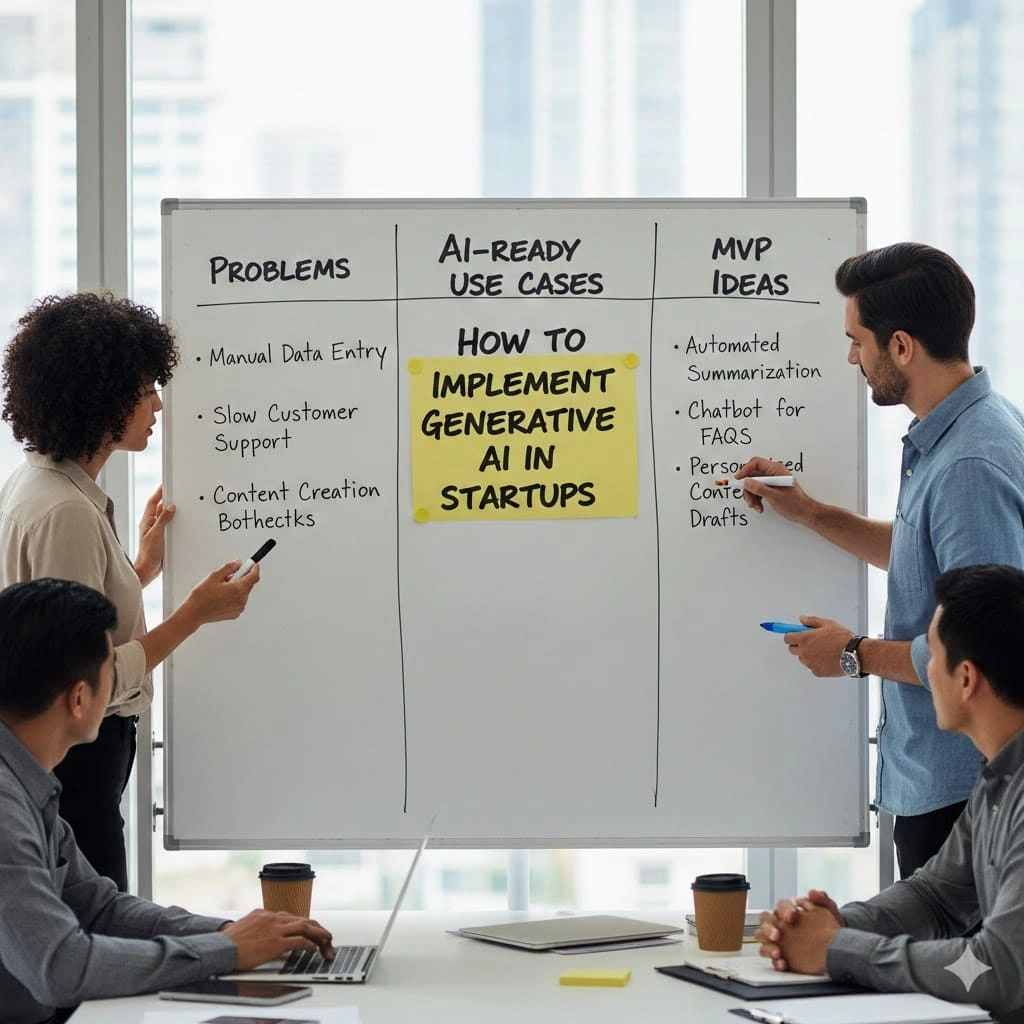
mapping-painful-workflows-before-deciding-which-generative-ai-features-to-build.
Checkout Our Latest Services

Design a lean, scalable genAI tech stack

Go APIโ€‘first before training custom models

Evalogicalโ€™s startup guide recommends anย APIโ€‘first approach: use managed LLM APIs (OpenAIโ€‘class, Claudeโ€‘class, or similar) rather than training models from scratch. IBM also suggests assessingย technical feasibilityย and only considering custom models where you have strong data and clear needs.

This approach gives:

  1. Fast MVPs (weeks, not months).

  2. Lower upfront infra spend.

  3. Minimal MLOps burden early on.

Custom or fineโ€‘tuned models then make sense once you prove demand and seeย proprietaryโ€‘data advantages.

Source: AI Development Company – A Step-by-Step 2025 Guide to Creating Generative AI Model

Core architecture blocks for startups

IBM describes a modular architecture for generative AI that separates application, models, and data. Evalogicalโ€™s โ€œmodern GenAI frameworkโ€ aligns closely with this.

A typical earlyโ€‘stage stack:

  1. Application layerย โ€“ your web/mobile app or internal tools.

  2. Orchestration & prompts โ€“ prompt templates, routing logic, guardrails.

  3. Model layerย โ€“ one or more LLM APIs plus embeddings.

  4. Data layerย โ€“ vector database or search index over your docs and logs.

  5. Monitoring layerย โ€“ logging, cost dashboards, user feedback loops.

Example stack table

LayerCommon choices for startups
AppReact / Next.js / Node / Django APIsโ€‹
OrchestrationLangChain, LlamaIndex, custom middleware
ModelsHosted LLMs + embeddings; later fineโ€‘tuned models
Data / RAGPinecone, Weaviate, Qdrant, pgvectorโ€‹
MonitoringOpenTelemetry + custom analytics dashboardsโ€‹
ย 
ย 
ย 

Indapointโ€™s integration practice addsย design and architecture planningย as a distinct step so genAI components fit existing systems and remain upgradeable.

Ship safely: data, experimentation, and governance

Make data readiness your foundation

IBM calls dataย โ€œthe foundation of generative AIโ€ย and advises a fullย data inventory. For a startup, this means:โ€‹

  1. Listing structured and unstructured sources: CRM, tickets, docs, logs.

  2. Markingย PII, financial, and sensitiveย segments needing special handling.

  3. Choosing which sources feed your initialย RAG pipelines.

Evalogical notes that RAG over your private knowledge base is often theย highestโ€‘ROI first step, especially in B2B useโ€‘cases.โ€‹

Move from POC โ†’ pilot โ†’ production

IBMโ€™s guide recommends aย proofโ€‘ofโ€‘concept, followed by aย limited pilot, then a full rollout. Indapoint uses a similar multiโ€‘step pattern: needs analysis โ†’ architecture โ†’ model selection โ†’ integration โ†’ testing โ†’ optimisation.

For each feature, define 3โ€“4 measurable outcomes:

  1. Time saved per task.

  2. Ticket deflection or CSAT uplift.

  3. Conversion or average dealโ€‘size impact.

Then run A/B tests or controlled pilots and iterate onย prompts, UX, and guardrails, not just model choice.

Governance, security, and responsible AI

IBM stresses that governance is not optional: you must manageย hallucinations, bias, security, and compliance. At startup scale, practical steps include:

  1. Addingย AI disclaimersย where outputs could be wrong or incomplete.

  2. Applyingย content filtersย for toxicity, PII leaks, and policy violations.

  3. Logging prompts and outputs securely for debugging and audits.

  4. Setting minimalย internal AI usage policiesย for staff and contractors.

Because generative AI can create plausible but false content, systematic guardrails are essential to maintain user trust.โ€‹

Conclusion

How to Implement Generative AI in Startupsย effectively comes down to three disciplines:ย pick the right workflows, use an APIโ€‘first modular stack, and treat data and governance seriously from day one. IBM, Indapoint, and Evalogical converge on the same pattern: start small, measure hard, and then scale what clearly works. When implemented this way, generative AI becomes aย quiet engine inside your product and operations, not just a marketing slogan.

FAQs

Q1. Where should a nonโ€‘technical founder start with generative AI?
Start by mappingย business problemsย andย user journeys, then use noโ€‘code or lowโ€‘code tools plus hosted LLM APIs to run a small proofโ€‘ofโ€‘concept, following IBMโ€™s โ€œbusinessโ€‘firstโ€ approach.โ€‹

Q2. Do we need our own custom model as a startup?
Usually not initially. Evalogical and IBM both suggest starting withย preโ€‘trained foundation models via APIsย and only considering fineโ€‘tuning or custom models once you have scale and proprietary data advantages.

Q3. How long does it take to launch a genAI MVP?
Indapointโ€™s and Evalogicalโ€™s examples show that a focused team can ship aย narrow MVP in 4โ€“8 weeks, if the useโ€‘case and data are clear and the team uses managed infrastructure.

Q4. What skills does a genAI implementation team need?
IBM recommends at least: aย product owner, anย app developer, aย data/ML engineer, and someone accountable forย risk and governance, even if people hold multiple roles in a small startup.

Q5. How can StartupMandi support AIโ€‘focused founders?
StartupMandi can helpย prioritise useโ€‘cases, sanityโ€‘check your architecture, connect you with genAI implementation partners, and refine your fundraising storyย around real AI value instead of hype.

Referring Blog / Fact Source Links

  1. Step-by-step guide: Generative AI for your business | IBM
  2. The CEOโ€™s guide to generative AI | IBM
  3. AI Development Company – A Step-by-Step 2025 Guide to Creating Generative AI Model
  4. How to build a generative AI solution: A step-by-step guide
  5. Generative AI Integration | Indapoint
  6. Build Generative AI Apps: Step-by-Step Guide for Startups | 2025
Dikshant Choudhary
Dikshant Choudhary

Iโ€™m Dikshant Choudhary, a University of Delhi student and freelance writer specializing in SEO blogs, transcription, and business analysis. I create engaging, research-driven content for academic and client projects with creativity and discipline.

Articles: 46

Leave a Reply

Your email address will not be published. Required fields are marked *