
Most businesses create content, but only a few turn that content into real leads. How to generate leads with content marketing comes down to building the right content, placing the right calls to action, and matching each piece to a buyer’s intent. When you do that well, content stops being “just traffic” and starts becoming a lead engine.
Quick Summary
Content marketing can generate leads when it answers buyer questions, builds trust, and offers a clear next step. The best results come from content mapped to each stage of the funnel, strong landing pages, and consistent tracking.
What Does Lead-Generating Content Mean?
Lead-generating content is content designed to move a reader toward a conversion action. That action might be a form fill, demo request, newsletter signup, consultation booking, or quote request.
It works because people rarely buy the first time they discover a brand. They usually need education, reassurance, and a reason to act. Content gives you all three.
According to a 2026 lead generation benchmark roundup, businesses using content marketing as a lead channel can see up to 3x more leads at about 62% lower cost than outbound methods. That’s one reason content remains such a strong long-term channel.
Why Does Content Marketing Generate Leads?
Content marketing generates leads because it earns attention before asking for a sale. That makes the entire conversion path feel more natural.
When a blog post answers a problem, a guide compares solutions, or a case study shows proof, the reader becomes more comfortable taking the next step. That is the real power of content.
“Content is the bridge between a question and a decision.” — StartupMandi editorial note
A recent content marketing benchmark also found that 87% of B2B marketers say content generates demand and leads. That’s not surprising when content is built around user intent instead of vanity traffic.

What Content Works Best?
The best content for lead generation is content that matches intent. Some formats educate, some compare, and some convert.
| Content Type | Best Use | Lead Potential |
| Blog posts | Attract search traffic | Medium |
| How-to guides | Solve urgent problems | High |
| Case studies | Build trust | High |
| Comparison pages | Support decision-making | Very high |
| Webinars | Capture engaged leads | Very high |
| Lead magnets | Collect contact details | Very high |
A practical rule: use blogs to attract, guides to educate, and offers to convert. Semrush notes that content should shift by funnel stage, from awareness content to decision-stage conversion assets.
Transitioning from content type to structure, the next question is usually what actually makes content convert.
How Do You Turn Readers Into Leads?
You turn readers into leads by giving them one clear next step. Without that, even great content can stall.
Here are the most effective conversion elements:
- A relevant call to action in every major piece.
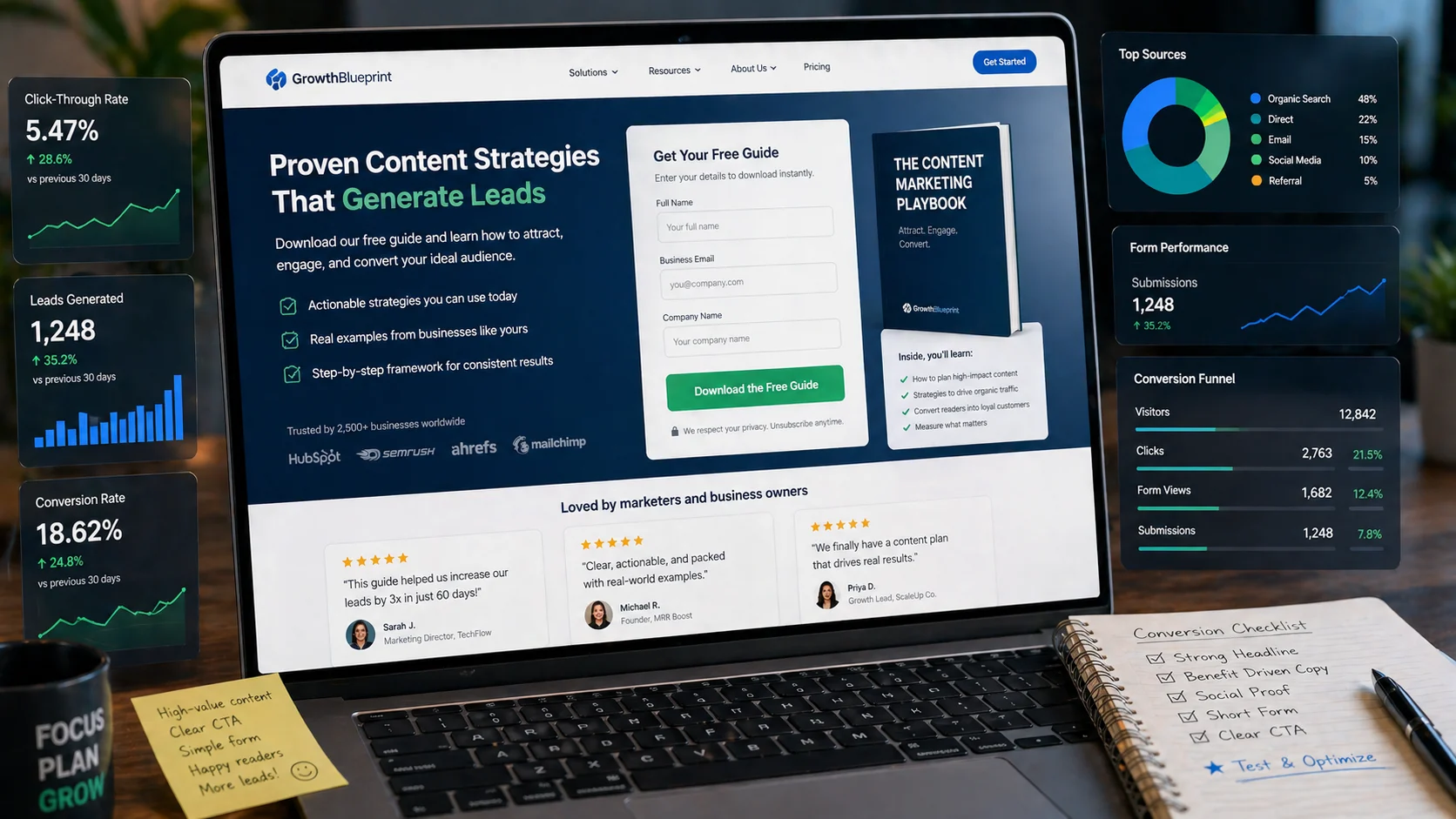
- A strong lead magnet tied to the topic.
- A simple landing page with minimal friction.
- Proof points like testimonials or results.
- A follow-up email sequence.
For example, a blog about “social media content ideas” should not only inform. It should offer a downloadable content calendar, checklist, or strategy call. That makes the content useful and actionable.
How Do I Build A Content Funnel?
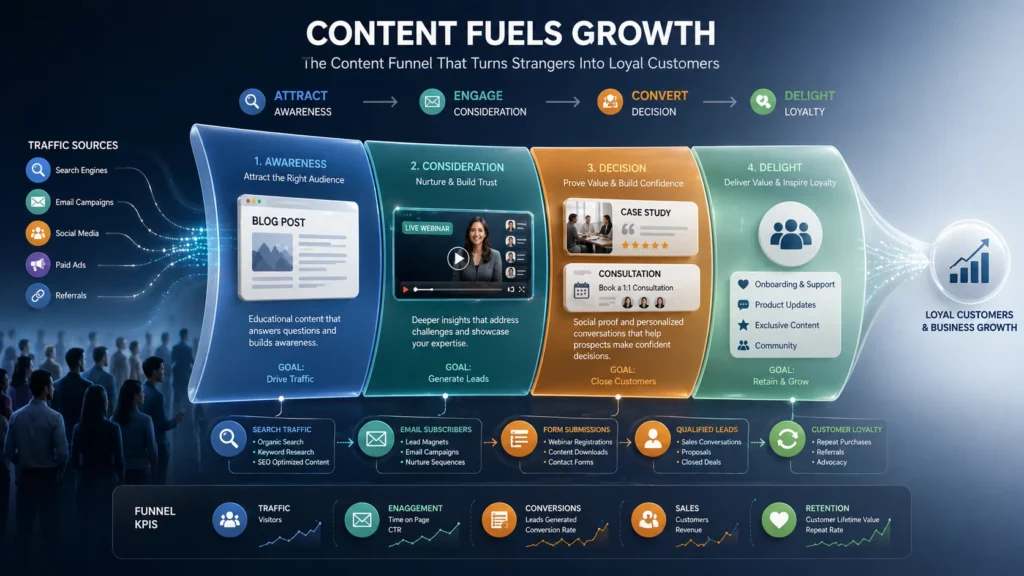
A content funnel maps the right content to the right stage of the buyer journey. This is where many businesses miss the mark.
Funnel Stage Breakdown
| Funnel Stage | Goal | Best Content | CTA |
| Awareness | Attract attention | Blog posts, listicles, explainer articles | Read more |
| Consideration | Build trust | Guides, webinars, case studies | Download / Register |
| Decision | Drive action | Comparisons, testimonials, demos | Book a call |
If your audience is still problem-aware, pushing a sales page too early usually fails. If they are decision-ready, sending them another general blog post wastes momentum.
This is why content that converts feels specific. It meets the reader where they are, not where you want them to be.
What Mistakes Reduce Leads?
Most content fails because it attracts the wrong people or gives them no reason to act. These are the most common problems I see.
- The topic is too broad.
- The content targets traffic, not buyers.
- The CTA is weak or missing.
- The landing page is cluttered.
- The lead magnet is unrelated to the article.
If your content gets views but no leads, the issue is often alignment. The promise in the headline, the value in the content, and the offer at the end should all connect.
“A visitor does not become a lead by accident. The path must be built.” — Content Marketing Institute insight,
How Do You Optimize For Conversions?
Conversion optimization is mostly about clarity, trust, and speed. People convert when the next step feels easy and worthwhile.
Use this simple checklist:
- Place a CTA above the fold.
- Repeat the CTA naturally mid-article.
- Keep forms short.
- Use clear benefit-driven language.
- Make the page fast on mobile.
Google’s own guidance on helpful content also reinforces writing for people first, not just for search engines. That matters because content that truly helps users is more likely to earn engagement and leads.
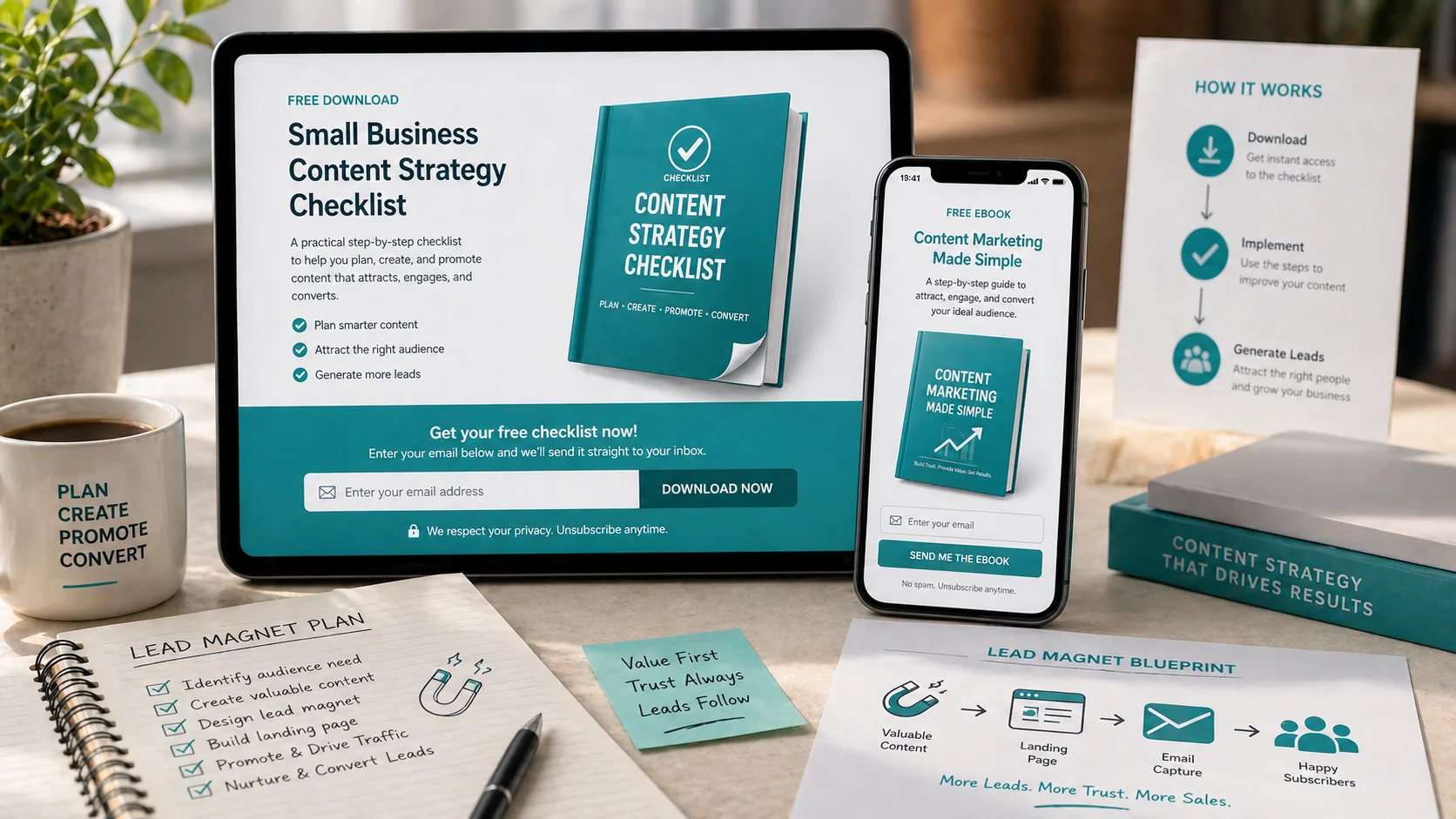
How To Generate Leads With Content Marketing
Times Needed: Days: 14, 10 Hours: 18, 30 Minutes: 00
Estimated Cost: Currency: USD, Price: 250
Description: A practical 2-week content marketing system for attracting traffic, capturing qualified leads, and converting visitors through simple content and landing page improvements.
Steps to Generate Leads With Content Marketing:
- Pick One Buyer Problem
Choose one pain point your audience already searches for. Build the content around a problem that leads naturally to your service or offer. - Create One High-Intent Asset
Write a guide, case study, or comparison page that solves the problem and includes a useful next step such as a checklist or consultation. - Add One Lead Magnet
Offer a free template, audit, checklist, or guide. Make it directly relevant to the article topic so readers feel the offer is useful, not random. - Build One Focused Landing Page
Keep the form short, the message clear, and the page tightly aligned with the content promise. Remove distractions that compete with conversion. - Track One Key Metric
Measure form fills, demo requests, or downloads. Use that data to improve headlines, CTAs, and page layout over time.
Tools Name: Google Analytics, Search Console, Canva, HubSpot
Materials Name: Lead Magnet, Blog Post, Landing Page, Email Sequence
What Metrics Should You Track?
Lead generation content should be measured by conversions, not just traffic. Otherwise, you can mistake attention for performance.
Track these metrics:
- Organic traffic.
- Click-through rate.
- Form fills or downloads.
- Conversion rate by page.
- Cost per lead.
A helpful benchmark from lead generation research says content marketing can be 3x more effective than outbound while costing less per lead. That makes optimization worth the effort, especially for small teams.taboola+1
Which Internal Links Help?
Use internal links where they naturally support the reader’s next action. For example, if someone wants help implementing a content system, this is a strong match: content marketing service by AI agents.
You can also support the blog with related startup growth or SEO content on your site, especially if the reader is comparing options before hiring help. The best internal links are the ones that help the reader continue the journey.
Key Takeaways
- How to generate leads with content marketing starts with matching content to intent.
- Educational content gets attention, but conversion content gets leads.
- Every article needs a clear next step.
- Landing pages and lead magnets matter as much as the blog itself.
- Track conversions, not just page views.
Next Steps
- Audit your top 10 content pages for CTAs.
- Identify the topics that bring the best-qualified traffic.
- Create one lead magnet for your best-performing topic.
- Improve one landing page this week.
- Review conversion data every 30 days.
Answers You Can Trust
It is the process of using content to attract people and convert them into leads through forms, downloads, demos, or consultations.
It is the process of using content to attract people and convert them into leads through forms, downloads, demos, or consultations.
Yes, when the blog answers real buyer questions and includes a relevant CTA or offer.
Case studies, comparison pages, webinars, and lead magnets usually convert better than general awareness posts.
Consistency matters more than volume. Even 2–4 high-quality pieces per month can work well if they are strategic.
Creating content without a conversion path. Traffic alone does not create leads.
SEO helps attract people already searching for solutions, so it usually improves lead quality.
Yes. In fact, smaller businesses often benefit the most because content compounds over time and lowers acquisition cost.
No. But every post should guide the reader toward a useful next step.
Conclusion
If you want real results, don’t ask only how to get more content out. Ask how to make each piece of content move someone closer to action. That is the difference between traffic and leads.
The simplest way to start is to build one useful article, one relevant offer, and one focused landing page. If you want support with that process, the StartupMandi content marketing service by AI agents is worth exploring.
Resources