

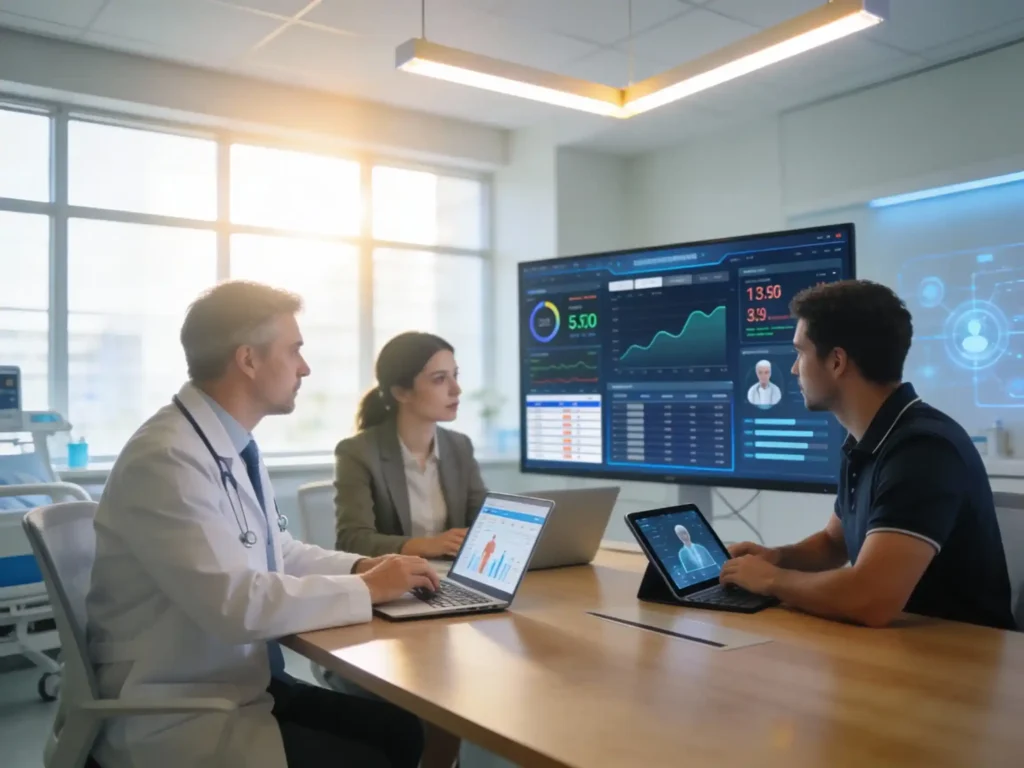
Next generation healthcare jobs are transforming the medical industry at unprecedented speed. Today’s healthcare landscape demands professionals skilled in technology, data analytics, and innovation management. Therefore, understanding emerging career paths becomes essential for aspiring healthcare workers. The healthcare sector now values digital expertise alongside traditional medical knowledge. Moreover, AI-driven roles and telehealth positions are reshaping job markets globally, particularly in India.
This blog explores emerging healthcare careers that define the future of medicine. We’ll examine transformative job roles and required skill sets. Additionally, we’ll discuss how healthcare professionals can future-proof their careers effectively.
Quick Summary:
AI Integration:Â Machine learning specialists and healthcare data analysts now lead industry growth
Telehealth Expansion:Â Remote patient monitors and virtual consultants create thousands of roles annually
Advanced Technology:Â Digital health strategists and healthcare IT professionals become invaluable assets
Specialized Skills:Â Professionals combining medical knowledge with tech expertise earn premium salaries
Career Growth:Â Healthcare innovation creates recession-resistant employment opportunities for qualified candidates
Transforming Healthcare Through Artificial IntelligenceÂ
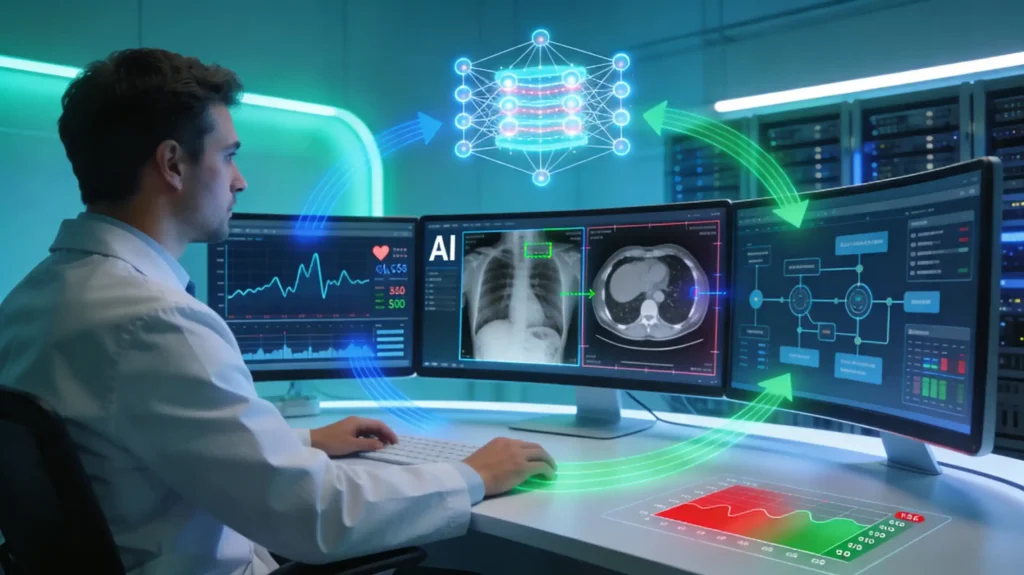
The integration of artificial intelligence fundamentally reshapes healthcare delivery and employment landscapes. AI-powered roles represent the fastest-growing segment in healthcare technology. Consequently, healthcare organizations worldwide invest heavily in AI infrastructure development. Furthermore, these investments directly create new career opportunities for skilled professionals.
Currently, 29% of healthcare organizations implement AI actively in daily operations. Moreover, 33% plan implementation within two years moving forward. Therefore, professionals entering AI healthcare fields gain significant competitive advantages immediately.
Healthcare Data Analysts & AI Specialists
Healthcare data analysts extract valuable insights from massive patient datasets using advanced algorithms. These professionals combine statistical expertise with clinical knowledge seamlessly. Specifically, they develop predictive models identifying patient outcomes and disease patterns. Furthermore, their work reduces medical errors by approximately 15-20% in early implementations.
The demand for healthcare data analysts increases at 18% annually according to industry reports. These roles require strong programming skills in Python and SQL. Additionally, professionals need deep understanding of healthcare systems like EHR and HIPAA compliance standards.
Machine Learning Engineers in Clinical Settings
Machine learning engineers develop AI systems that diagnose diseases with remarkable accuracy today. These professionals create algorithms analyzing medical images for abnormalities in seconds. Specifically, AI achieves 97.5% accuracy in detecting lung nodules surpassing human radiologists. Moreover, combined AI-human analysis reaches 99.1% accuracy significantly.
Key responsibilities include:
Designing neural networks for medical image processing
Building predictive models for patient outcomes effectively
Implementing deep learning systems for clinical decision support
Validating algorithms against real-world healthcare data continuously

- Subscribe Now This product has multiple variants. The options may be chosen on the product page
- USD: $ 99.98
- Subscribe Now This product has multiple variants. The options may be chosen on the product page
- Select options This product has multiple variants. The options may be chosen on the product page
- USD: $ 749.98 - $ 4,916.65
- Subscribe Now This product has multiple variants. The options may be chosen on the product page
- USD: $ 6.65
- Select options This product has multiple variants. The options may be chosen on the product page
- USD: $ 8.32 - $ 83.32
- Subscribe Now This product has multiple variants. The options may be chosen on the product page
Remote Patient Monitoring & Telehealth InnovationÂ
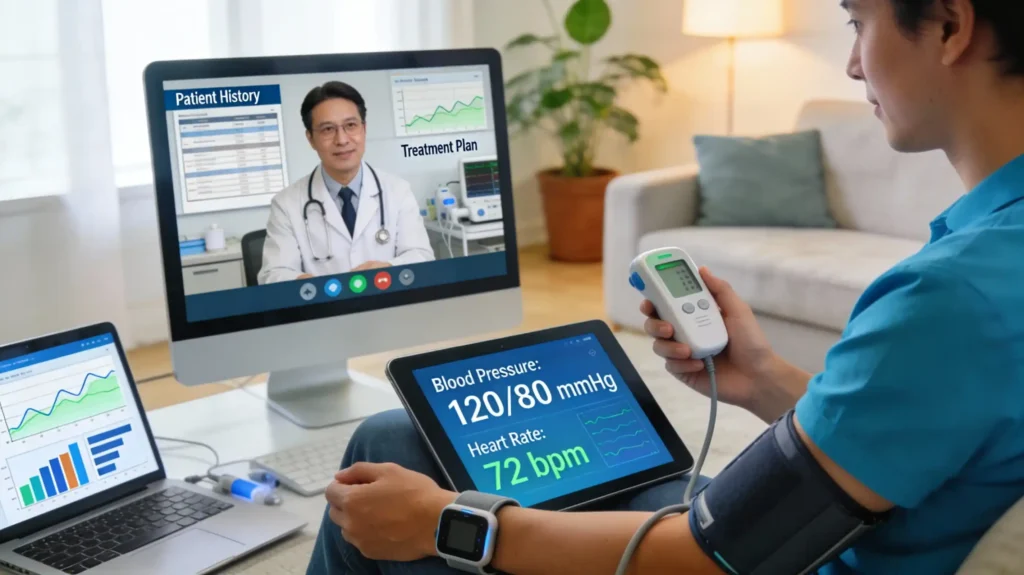
Telehealth careers represent the second major transformation in healthcare employment opportunities. Remote patient monitoring technology connects healthcare providers with patients in their homes. Consequently, this creates entirely new professional categories within healthcare organizations. Moreover, telehealth adoption accelerated 38x during recent pandemic years and remained elevated.
The remote patient monitoring market grows at 27% annually creating robust job security. Furthermore, professionals in this sector report 92% job satisfaction ratings consistently. Therefore, telehealth represents an attractive career path for healthcare professionals seeking stability.
Telehealth Specialists & Remote Patient Monitors
Telehealth specialists coordinate virtual consultations between doctors and patients across distances. These professionals manage technical platforms ensuring smooth, secure patient-provider interactions always. Specifically, they troubleshoot equipment issues and guide patients through virtual visit procedures.
Remote patient monitors collect real-time health data using wearable devices and sensors. Additionally, they analyze patient metrics identifying concerning trends requiring immediate clinical attention. Therefore, their work prevents unnecessary emergency room visits and hospital readmissions significantly.
Virtual Health Coordinators & Care Managers
Virtual health coordinators organize patient schedules and manage digital health records securely. These professionals ensure HIPAA compliance across all digital communications and data storage. Moreover, they communicate with patients providing pre-visit preparation and post-visit follow-up care. Importantly, strong communication skills and organizational abilities define success in these roles.
Care coordinators working remotely report 34% higher work-life balance satisfaction. Furthermore, many organizations offer flexible scheduling accommodating various professional preferences. Therefore, these positions attract professionals seeking flexibility without compromising career growth.

Specialized Healthcare Roles Requiring Tech IntegrationÂ
Healthcare operations increasingly demand professionals combining medical knowledge with technology expertise. Hospital administrators now require understanding of healthcare IT systems and data management. Additionally, they oversee digital transformation initiatives across entire healthcare organizations. Consequently, these multifaceted roles command higher salaries and greater career advancement opportunities.
Clinical decision support professionals develop systems helping doctors choose optimal treatment plans. These experts combine clinical expertise with software development knowledge creating innovative solutions. Moreover, their work reduces diagnostic errors and improves patient safety outcomes measurably.
Healthcare Quality & Compliance Officers
Quality managers maintain strict healthcare standards ensuring patient safety across all operations. These professionals implement accreditation requirements from NABH and JCI organizations. Specifically, they audit processes identifying improvement opportunities and compliance gaps systematically. Furthermore, their work directly impacts patient outcomes and institutional reputation significantly.
Quality officers require understanding of healthcare regulations, quality management, and continuous improvement methodologies. Therefore, certifications in quality management enhance career prospects considerably. Additionally, professionals with clinical backgrounds plus quality certification earn 25-30% premium salaries.
Healthcare Supply Chain Managers
Supply chain managers optimize medical equipment and pharmaceutical distribution networks. These professionals manage inventory ensuring critical supplies remain available without wasteful stockpiling. Specifically, they use data analytics predicting supply needs and preventing shortages. Moreover, recent pandemic experiences elevated this role’s strategic importance within healthcare systems.
Emerging specializations include:
Pharmaceutical logistics management with regulatory compliance expertise
Medical device distribution and hospital inventory optimization systems
Emergency supply chain planning for disease outbreaks preventing shortages
Sustainable healthcare supply chains reducing environmental impact effectively
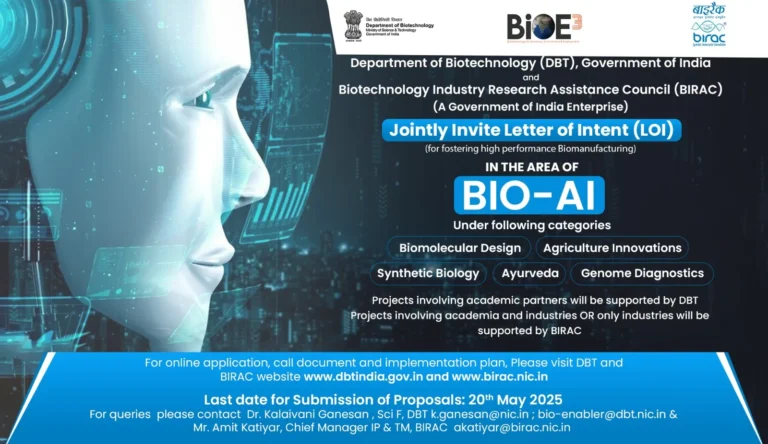
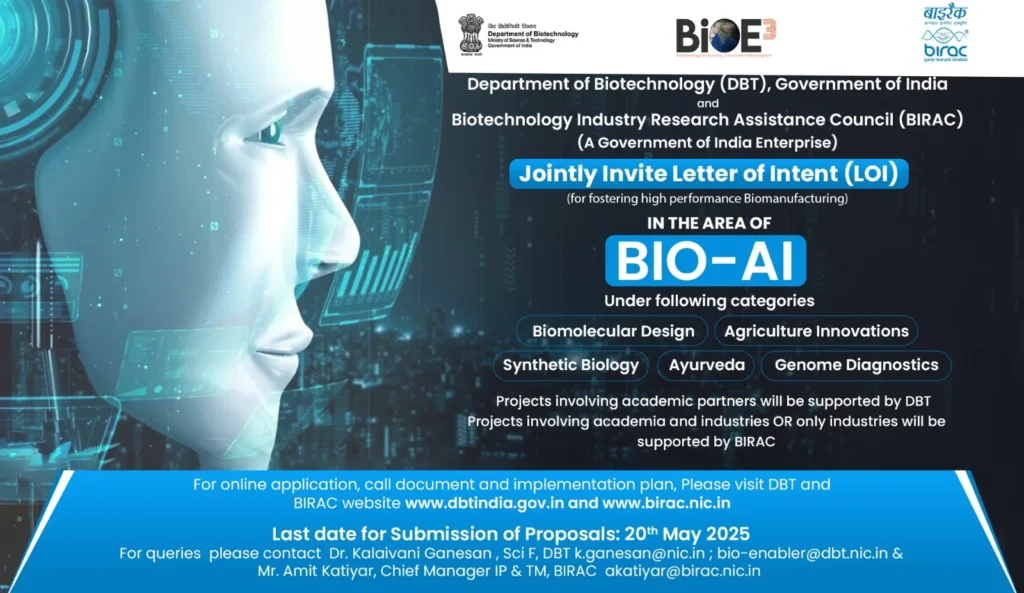
DBT–BIRAC Joint Call for Proposals on “Bio-AI” – Upto ₹25CR – under India’s BioE3 Policy
Enabling Bio-AI for High Performance Biomanufacturing | Department of Biotechnology (DBT), Government of India & Biotechnology Industry Research Assistance Council (BIRAC)
- Prototype Stage, MVP Stage, Early Revenue Stage, Growth Stage
- June 30, 2026
DBT–BIRAC Joint Call for Proposals on “Bio-AI” – Upto ₹25CR – under India’s BioE3 Policy
Enabling Bio-AI for High Performance Biomanufacturing | Department of Biotechnology (DBT), Government of India & Biotechnology Industry Research Assistance Council (BIRAC)
₹250,000,000.00- Prototype Stage, MVP Stage, Early Revenue Stage, Growth Stage
- June 30, 2026
Google for Startups Accelerator: India – AI-First 2026 Cohort
Accelerating AI‑First Indian Startups + Google for Startups (Google LLC)
₹29,225,000.00- Prototype Stage, MVP Stage, Early Revenue Stage
- April 19, 2026
Conclusion & Key Takeaways:
Next generation healthcare jobs represent exciting opportunities for professionals seeking meaningful careers. Therefore, acquiring technology skills combined with healthcare knowledge becomes increasingly valuable. Moreover, healthcare organizations actively recruit professionals with AI, data analytics, and digital health expertise today.
The transformation offers recession-resistant career paths with growing demand and excellent compensation. Furthermore, professionals entering these fields position themselves at industry forefront. Consequently, early adopters gain significant competitive advantages and leadership opportunities.
Healthcare professionals should embrace continuous learning in emerging technologies now. Additionally, pursuing certifications in AI, telehealth, and health IT strengthens career prospects significantly. Therefore, the time to transition into next generation healthcare roles is now.
Frequently Asked Questions:
What skills do healthcare data analysts need?
Healthcare data analysts require programming expertise in Python, SQL, and R for data manipulation. Additionally, they need understanding of statistical analysis, machine learning, and healthcare data standards. Furthermore, knowledge of healthcare systems like EHR, HIPAA compliance, and clinical workflows proves essential. Most positions require bachelor’s degree in computer science, statistics, or healthcare-related field.
How much do telehealth specialists earn annually?
Telehealth specialists earn between $45,000-$65,000 annually depending on experience and location. However, those with specialized certifications earn 15-20% premium compensation. Additionally, remote positions often offer flexible scheduling with higher job satisfaction metrics. Therefore, compensation combined with flexibility makes these roles highly attractive.
Can healthcare professionals transition into AI roles?
Absolutely! Healthcare professionals possess invaluable clinical knowledge crucial for AI development. Therefore, they combine domain expertise with technical training creating exceptional professionals. Many programs offer bootcamps teaching AI skills to healthcare workers specifically. Moreover, professionals with clinical backgrounds plus AI skills command highest salaries.
What certifications boost next generation healthcare careers?
Relevant certifications include HIPAA compliance, healthcare IT fundamentals, and data analytics. Additionally, AWS Certified Cloud Practitioner and machine learning certifications prove valuable. Furthermore, project management certifications enhance career advancement prospects significantly. Therefore, professionals should pursue certifications aligned with their chosen specialty areas.
Which Indian healthcare sectors offer best opportunities?
India’s healthcare sector grows fastest in metropolitan areas like Bangalore, Delhi, and Mumbai. Additionally, emerging cities like Hyderabad develop significant healthcare technology hubs. Moreover, organizations implementing Ayushman Bharat create thousands of new healthcare IT roles. Therefore, professionals should explore opportunities across multiple geographic locations nationally.
Referring Sources & Fact
Forbes: “10 Future Healthcare Jobs to Watch” – Detailed analysis of emerging medical technology roles shaping industry transformation
Future Ace Academy: “The Future of Healthcare Jobs in India: Emerging Trends and Career Opportunities” – Comprehensive insights into India-specific healthcare career landscape and digital health adoption
Healthcare Careers: “Emerging Roles in Healthcare” – Overview of newly created positions across medical technology and digital health sectors
Coursera India: Artificial Intelligence for Healthcare Specialization
UPES Editorial: “Data Analyst in Healthcare: Careers, Skills & Job Demand 2026” – Detailed career pathways and industry demand projections for analytical healthcare roles
Arshia Jahan
Digital Marketing and SEO professional, focused on content strategy & optimizing content, improving search rankings, and delivering results through smart, audience-focused strategies. As a Content Strategist and SEO professional, I believe that search engines don't buy products—people do. By blending technical SEO precision with a human-first content approach. I provide readers with the strategic blueprints needed to scale in a competitive digital world.


Telehealth and AI-driven roles are really reshaping the healthcare landscape. It’s exciting to think about how these technologies will not only open up new career opportunities but also improve accessibility to healthcare, especially for underserved communities.
The shift we’re seeing isn’t just about the technology itself, but about how it’s finally starting to bridge the gap in care equity. For years, “accessibility” was a logistical nightmare for many, but telehealth effectively removes the geographic barriers that have historically held underserved communities back.
I’m particularly interested in how these AI-driven roles will evolve to support clinicians rather than replace them. If we can use AI to handle the heavy lifting of data and administrative tasks, it should, in theory, give providers more time to actually focus on their patients. It’s a promising time to be in the industry, especially as we move toward a more proactive, rather than reactive, model of care.
Really appreciate the focus on how AI and telehealth are reshaping career paths—it’s interesting to see roles shifting from traditional clinical work to more hybrid tech-health responsibilities. It also feels like digital literacy is becoming just as important as medical expertise for the next wave of professionals. Curious to see how training programs adapt to prepare people for these blended roles by 2026.
By now, in 2026, we’re seeing a lot of medical and nursing programs finally overhaul their curricula to include “health informatics” as a core requirement rather than an elective. The shift toward these hybrid roles—like AI clinical Liaisons or Virtual Care Coordinators—really highlights that the most successful professionals will be those who can bridge the gap between complex data and empathetic patient care. It’s a challenging transition for the industry, but as you mentioned, it’s a necessary one to make the most of these technologies.
It’s fascinating to see how AI and telehealth are not just trends but fundamental shifts in healthcare delivery. The blend of medical expertise with digital skills will likely define the next wave of healthcare professionals. As someone considering a career pivot, this post really highlights the importance of staying ahead of these changes.
Thank you for your comment. To use your site link & generate backlink on our platform, 1st go through a paid plan on this page: https://startupmandi.in/services/digital-services/premium-brand-promotion-on-startupmandi/
It’s fascinating to see how AI and telehealth are not just trends but fundamental shifts in healthcare delivery. The blend of medical expertise with digital skills is exactly what the industry needs, especially as we move toward more personalized and efficient care models. This evolution opens up exciting opportunities for professionals who are ready to adapt and lead in this space.
Thank you for your comment. To use your site link & generate backlink on our platform, 1st go through a paid plan on this page: https://startupmandi.in/services/digital-services/premium-brand-promotion-on-startupmandi/