


startupmandi-blog-background

Live Translation Through Headphones: Google’s Guide

Live Translation Through Headphones is now available globally. Learn how Google's Gemini AI powers real-time translation in 70+ languages.

Live Translation Through Headphones: Breaking Language Barriers with Google’s Latest Innovation

Live translation through headphones represents a significant breakthrough in global communication. Google just unveiled its groundbreaking Gemini-powered translation feature. This technology eliminates language barriers instantly. Additionally, it transforms how people connect across cultures.

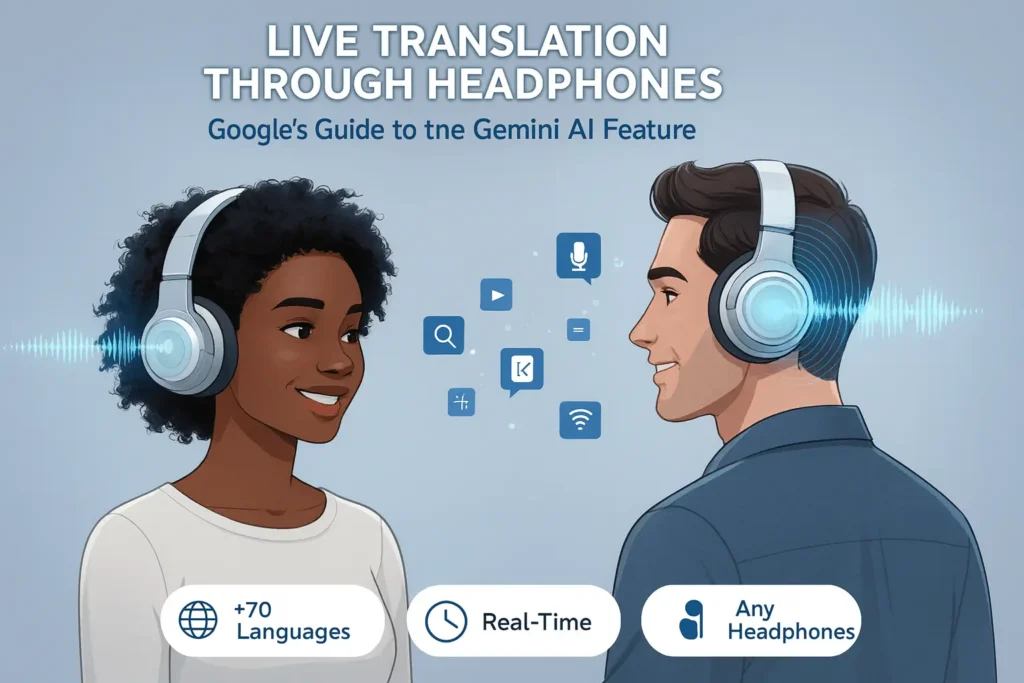
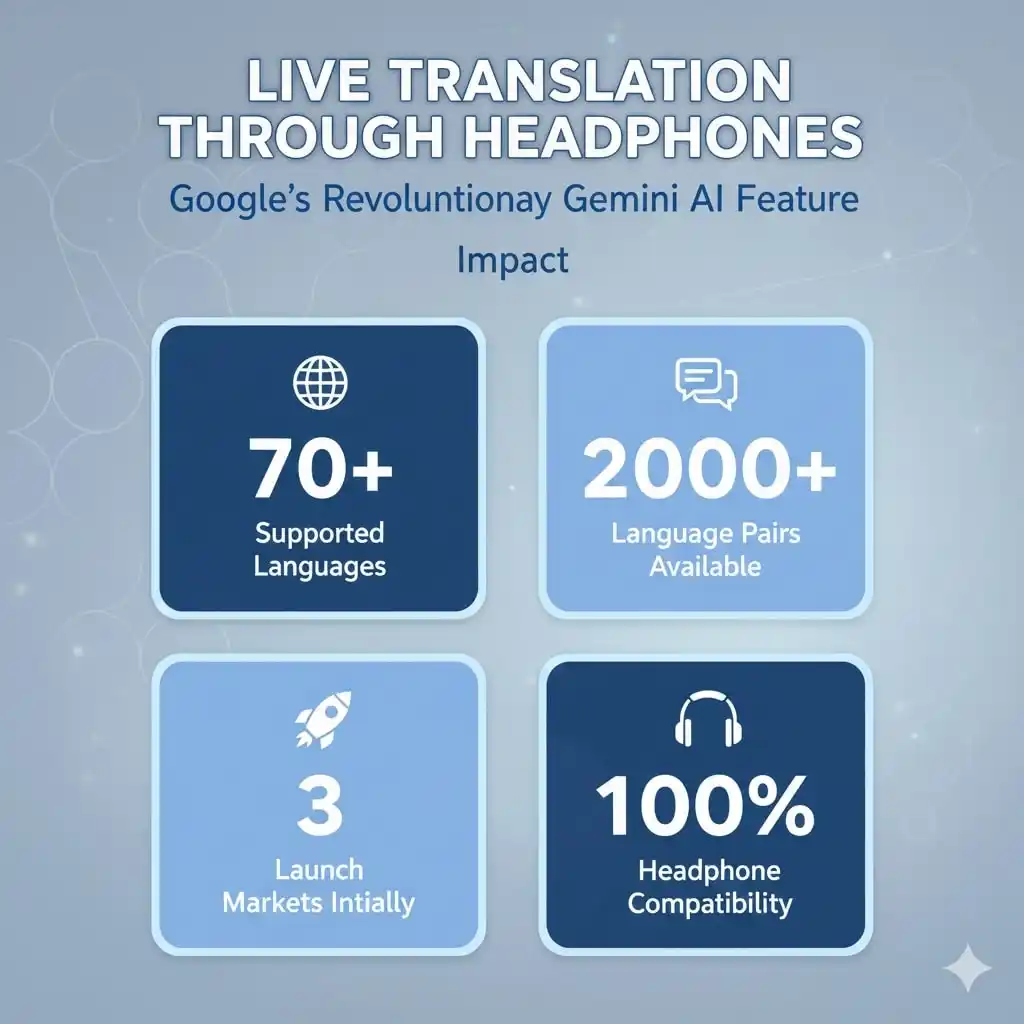
The feature works seamlessly with any wireless earbuds you own. Furthermore, it supports more than seventy different languages worldwide. Consequently, users can listen to speeches, lectures, and films in foreign languages effortlessly. Moreover, the experience feels natural rather than robotic or artificial.

How Live Translation Through Headphones Works

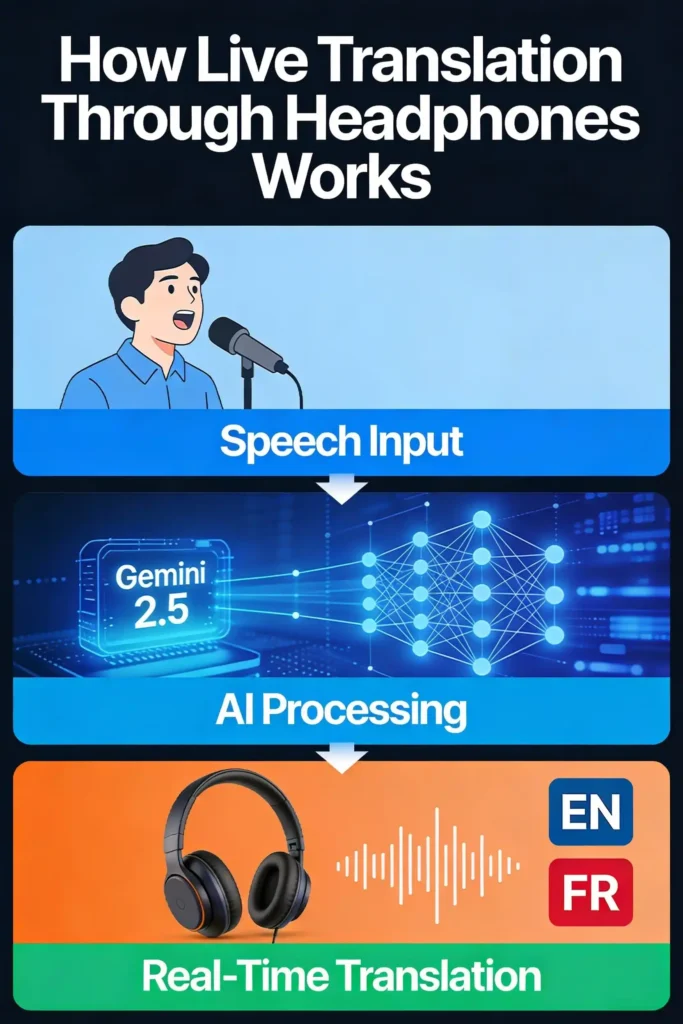
Google’s innovative system utilizes Gemini 2.5 Native Audio technology. Specifically, it processes speech in real-time without delays. Therefore, you hear translations instantly in your headphones. Additionally, the AI maintains the original speaker’s tone perfectly. Furthermore, the emphasis and cadence remain natural-sounding throughout.

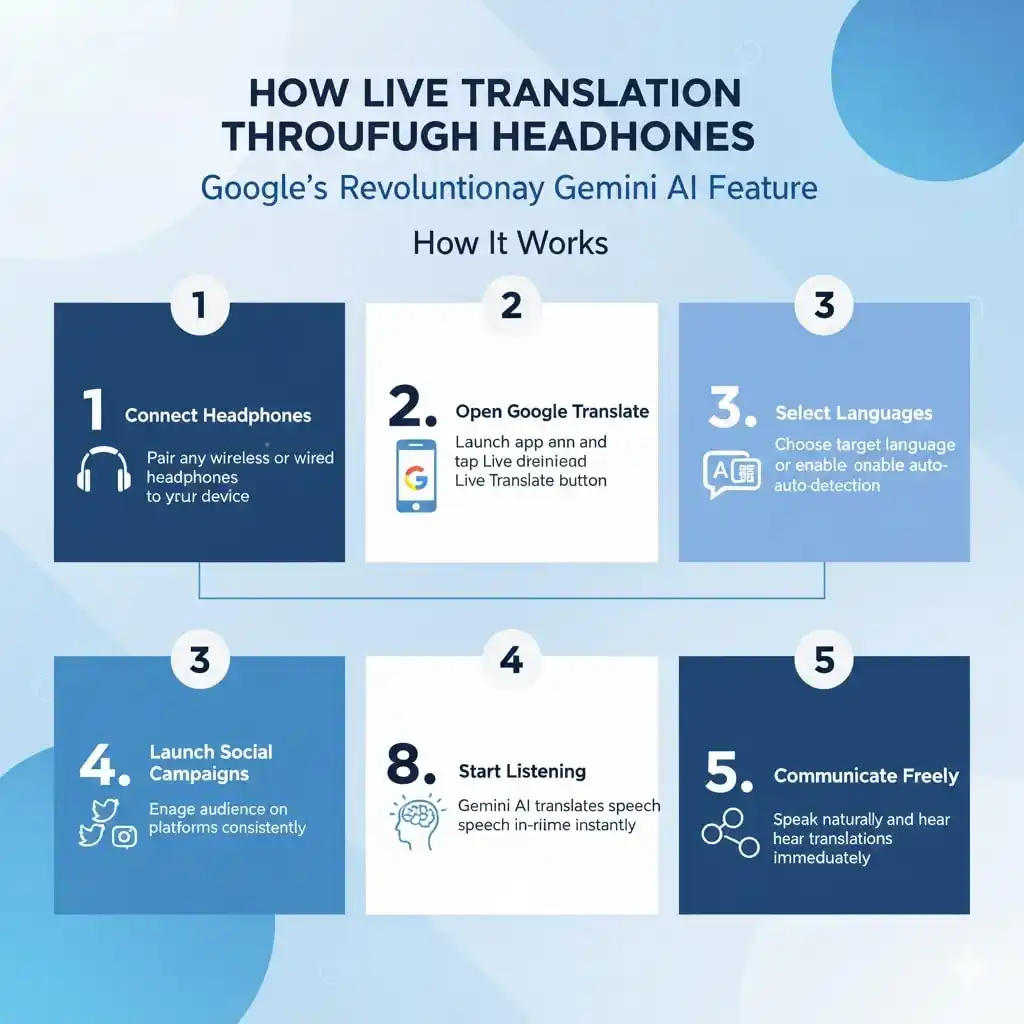
You simply need to wear your earbuds or headphones. Then, tap the “Live Translate” button on Google Translate. Next, the app automatically converts speech to your preferred language. Consequently, you understand every word without missing nuances. Moreover, the translation quality remains consistently accurate.

live-translation-through-headphones-googles-guide
How Live Translation Technology Works Step-by-Step

Gemini 2.5’s Advanced Speech Processing

The underlying Gemini 2.5 technology powers this breakthrough. It understands context, idioms, and local expressions accurately. For example, English idioms like “stealing my thunder” translate naturally. Without this capability, word-for-word translation would sound awkward. Thus, Gemini preserves meaning instead of just translating words.

This approach handles complex language nuances effectively. Slang expressions and cultural references work correctly too. Therefore, conversations feel authentic and easily understandable. In short, the technology respects linguistic complexity.

Supported Languages and Availability

Live translation through headphones currently works across seventy-plus languages. English pairs with twenty other languages including Hindi, Spanish, Chinese, Japanese, and German. Therefore, it covers major global languages comprehensively.

The feature rolled out first in India and the United States. Currently, Android users can access it immediately. However, iOS support arrives next year. Additionally, it works on Google Translate’s web version too. Consequently, accessibility spans multiple platforms seamlessly.

live-translation-through-headphones-googles-guide
Supported languages and expansion of live translation through headphones
Checkout Our Latest Services
live-translation-through-headphones-googles-guide
Expansion of live translation through headphones

Practical Applications for Daily Use

Travelers benefit enormously from this feature. Business professionals conducting international calls use it effectively. Students attending lectures in foreign languages access content easily. Furthermore, entertainment becomes accessible globally. Therefore, applications span numerous real-world scenarios.

Someone watching Japanese films understands dialogue without subtitles. A tourist navigating India speaks Hindi effortlessly. A professional joins Chinese business meetings confidently. Consequently, live translation through headphones opens endless possibilities.

The Technology Behind Real-Time Translation

Google’s speech-to-speech translation capabilities represent years of AI development. The system processes audio through multiple neural networks. Specifically, it recognizes speech patterns first. Then, it translates meaning contextually. Finally, it reproduces natural-sounding audio output.

This three-step process happens instantaneously in milliseconds. Moreover, accuracy improves continuously through machine learning. Therefore, users notice better translation quality over time. Additionally, the system learns regional accents progressively.

The Gemini 2.5 model differs significantly from traditional translation services. It understands emotions, sarcasm, and subtle meanings. Therefore, translations sound conversational rather than mechanical. Furthermore, tone preservation makes interactions feel genuine.Consequently, communication feels more human.

Checkout Latest Grant Listed

Conclusion

Live translation through headphones marks a pivotal moment in technology. Google’s Gemini-powered solution removes communication barriers globally. Moreover, it enables unprecedented global collaboration. The feature combines AI sophistication with practical accessibility. Furthermore, it works with devices most people already own. Therefore, adoption should accelerate rapidly.

This innovation extends beyond personal use significantly. Business teams, educators, and travelers all benefit tremendously. Additionally, it strengthens global connections meaningfully. In short, the technology reshapes how humanity communicates across languages.

Frequently Asked Questions (FAQs)

Q1: Which devices support live translation through headphones?

Live translation through headphones works with any wireless earbuds or headphones. You need an Android device running Google Translate. iOS support launches next year. Additionally, the web version of Google Translate offers this feature. Therefore, compatibility remains broad across devices.

Q2: How many languages does live translation through headphones support?

The feature currently supports more than seventy languages. English pairs specifically with twenty additional languages. These include Hindi, Spanish, Chinese, Japanese, and German. Google plans to expand these language combinations soon. Therefore, more options arrive continuously.

Q3: Is live translation through headphones available in my country?

Live translation through headphones initially launched in India and the United States. Availability expansion to other countries happens progressively. Check the Google Translate app for current availability. Your region’s rollout timeline may vary. Therefore, patience might be necessary for some users.

Q4: Does the translation preserve the original speaker’s voice?

The system retains tone, emphasis, and cadence characteristics. However, it doesn’t reproduce the exact original voice. Instead, it delivers natural-sounding translations in your preferred language. Furthermore, the speaker’s emotional context transfers accurately. Therefore, meaning preservation trumps voice preservation.

Q5: Can I use live translation through headphones offline?

Live translation through headphones requires internet connectivity. The system processes translation through Google’s servers. Therefore, offline functionality doesn’t exist currently. However, some features work offline with downloaded language packs. Thus, connectivity remains necessary for real-time translation.


Referring Blog/Page Links

Arshia Jahan
Arshia Jahan

Digital Marketing and SEO professional, focused on content strategy & optimizing content, improving search rankings, and delivering results through smart, audience-focused strategies. As a Content Strategist and SEO professional, I believe that search engines don't buy products—people do. By blending technical SEO precision with a human-first content approach. I provide readers with the strategic blueprints needed to scale in a competitive digital world.

Articles: 42

Leave a Reply

Your email address will not be published. Required fields are marked *