

In 2026, digital marketing is defined by three forces working together: AI, automation, and privacy-first data use.
Business owners and CMOs who embrace these trends now will lower acquisition costs, protect customer trust, and unlock more predictable revenue growth.
What Digital Marketing Trends Matter Most in 2026?
The most important digital marketing trends in 2026 are AI-powered automation, privacy-first personalization, search disruption (including AI Overviews), and human-centric content and communities.
Together, these shifts change how you plan campaigns, allocate budgets, and measure business impact from marketing.
How Is AI Transforming Digital Marketing Strategy in 2026?
AI is moving from a tactical helper to a core copilot across the marketing funnel.
By 2025, AI in marketing was already a 47.32 billion dollar market, projected to exceed 107.5 billion dollars by 2028, showing how central it has become to strategy.
- AI streamlines content creation, with 93% of marketers using it to generate content faster and 81% using it to boost brand awareness and sales.
- AI accelerates data analysis, turning large datasets into actionable insights for targeting, bidding, and journey optimization.
- AI copilots support planning and optimization, recommending budget allocation, creative variations, and audience segments in real time.
- AI-powered market research helps 40% of marketers conduct faster research, improving product and campaign decisions.
“The gap in 2026 won’t be between brands using AI and brands not using AI. It’ll be between brands with rich customer data and brands guessing at what their customers want.”
— Adapted from expert insight on AI and automation in 2026

How Does Automation Drive Scalable Growth in 2026?
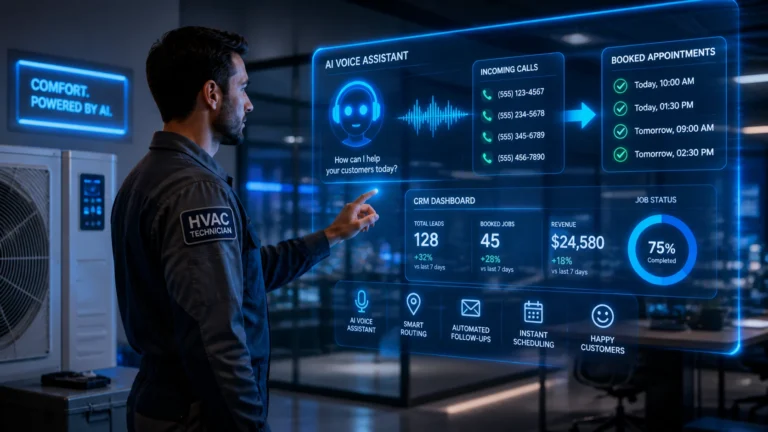
Automation in 2026 focuses less on simple workflows and more on autonomous marketing systems that act on live customer data.
These systems orchestrate messaging, channels, and offers automatically while keeping privacy and consent at the center.
- Lifecycle automation connects email, SMS, ads, and on-site experiences into unified journeys triggered by real behavior.
- Lead scoring models use AI to prioritize high-intent accounts for sales teams, improving close rates and sales efficiency.
- Creative testing is automated, with AI generating variants and algorithms selecting winners to maximize ROAS.
- Consent-aware workflows ensure that every automated touchpoint respects the permissions attached to each data record.
StartupMandi readers who are just setting up their first campaigns can combine these trends with a structured foundation by following the complete guide on how to start digital marketing for a new business.
Why Is Privacy-First Digital Marketing Non-Negotiable Now?
By 2025 and 2026, privacy laws and platform changes have reshaped how marketers collect and use data.
Regulations like GDPR, CCPA/CPRA, and new state-level privacy laws demand explicit consent, transparent notices, and stronger control for consumers.
- Marketers must use data minimization, collect only what is necessary, and document consent trails across systems.
- Third-party cookies are fading, making zero-party and first-party data the primary fuel for personalization.
- Enforcement pressure and fines are rising, and consumer awareness of privacy rights is growing quickly.
- Brands that communicate clearly about data use and offer valuable “give-to-get” exchanges build durable trust.
“Being proactive about privacy and transparency builds credibility and long-term loyalty.”
— Privacy-focused marketing experts on 2026 strategies
StartupMandi’s guide on how to expand globally with digital platforms is especially relevant here, because cross-border marketing amplifies privacy and compliance complexity.
What Key Digital Marketing Trends Will Shape 2026?
The table below summarizes the core 2026 trends and their impact on business growth.

How Are Search, SEO, and AI Overviews Changing in 2026?
Search in 2026 is increasingly generative, combining classic results with AI Overviews and richer SERP features.
This means ranking is not just about a single position but about being referenced as a trusted source across multiple surfaces.
- AI Overviews pull from authoritative, well-structured content that clearly answers “what,” “how,” and “why” questions.
- Entity-based SEO, schema markup, and topical depth help brands become cited sources rather than just ranked pages.
- Search engines reward content that demonstrates expertise, experience, authoritativeness, and trust, especially on sensitive topics.
- Discover-style feeds reward timely, emotion-driven, and mobile-friendly formats, making trend-based posts more visible.
For startups and small businesses, combining these trends with strong fundamentals like those in StartupMandi’s guide on using digital marketing to increase startup revenue can accelerate growth.
How Should CMOs Use AI Without Losing Human Authenticity?
The winning CMO in 2026 uses AI for scale but keeps humans at the center of strategy and storytelling.
Experts emphasize that even the most advanced automation cannot replace genuine human connection and brand voice.
- Use AI for ideation, summarization, and performance prediction, while humans craft narratives and positioning.
- Set guardrails for brand tone, ethics, and privacy so AI outputs always align with your values.
- Combine AI insights with qualitative research from customers and communities to guide big strategic bets.
- Invest in upskilling teams so more staff move from executional tasks to strategic work.

How Can Businesses Build a Privacy-First Data Strategy in 2026?
A privacy-first data strategy balances personalization, compliance, and trust.
Instead of hoarding data, leading brands in 2026 focus on consented, high-quality data tied to clear value exchanges.
- Map all data collection points and ensure explicit, informed consent at each touchpoint.
- Shift measurement away from individual tracking toward aggregated, modeled, or cohort-based analysis.
- Use privacy-enhancing technologies, clear retention limits, and secure storage as standard practice.
- Create preference centers where customers control topics, channels, and frequency of communication.
For companies expanding globally, aligning these practices with local regulations is essential, which ties directly to strategies covered in StartupMandi’s guide on expanding globally with digital platforms.
What Is the Role of First-Party and Zero-Party Data in 2026?
First-party data is information you collect through your own properties, while zero-party data is information a customer deliberately shares, such as preferences or quiz answers.
In 2026, both data types are central to personalization because they are more accurate and compliant than third-party cookies.
- Brands use quizzes, surveys, and preference forms to gather zero-party data in exchange for value like discounts or early access.
- Email, app, and website behavior provide first-party data that feeds into segmentation and predictive models.
- Owning this data reduces dependence on rented audiences and volatile ad platforms.
- Combined with AI, this data enables highly relevant, consented customer journeys.
How Do Digital Marketing Trends Impact Revenue and CAC in 2026?
These trends directly affect unit economics, especially customer acquisition cost (CAC), lifetime value (LTV), and payback periods.
AI and automation increase efficiency, while privacy and search shifts impact how predictable and sustainable your growth becomes.
- AI-driven optimization improves ROAS by continually refining targeting and creative based on performance data.
- Better retention from community and lifecycle automation boosts LTV, making acquisition more affordable.
- Privacy-first practices reduce legal and reputational risk, protecting long-term revenue streams.
- Strong organic presence in search, Discover, and AI Overviews lowers dependence on paid channels.
Startup founders can see the compounding effect of these changes more clearly by pairing them with practical tactics in StartupMandi’s guide on using digital marketing to increase startup revenue.
How Do I Implement 2026 Digital Marketing Trends Step by Step?
Below is a structured “How To” blueprint tailored for busy business owners and CMOs.
Times Needed: Days: 30, Hours: 20, Minutes: 0
Estimated Cost: Currency: USD, Price: 3000
Description:
Build a 30-day action plan to implement AI, automation, and privacy-first digital marketing foundations that reduce acquisition costs and improve pipeline quality for your business in 2026.
Steps:
- Step Title: Audit current channels, data, and tools
Step Description: List all channels, tools, and data collection points, then benchmark performance, privacy practices, and measurement gaps across your current marketing stack. - Step Title: Define 2026 growth and efficiency targets
Step Description: Set clear goals for revenue, CAC, LTV, and payback period, and map how AI, automation, and privacy improvements will support these targets. - Step Title: Implement AI for content and analytics
Step Description: Deploy AI tools for content ideation, writing, and data analysis, starting with 1–2 high-impact use cases like email optimization or ad creative testing. - Step Title: Build consent-first data collection flows
Step Description: Update forms, cookies, and consent banners so every data point has clear permission and value exchange, aligning with GDPR, CCPA, and local laws. - Step Title: Launch automated lifecycle journeys
Step Description: Design and launch automated onboarding, nurture, and reactivation sequences that adapt messaging based on behavior and declared preferences. - Step Title: Optimize for search and AI Overviews
Step Description: Create question-led content, add structured data, and strengthen internal links so key pages can rank and be cited in AI-driven search experiences. - Step Title: Build community and human storytelling
Step Description: Invest in community spaces, expert-led content, and founder stories that showcase real experiences, humanizing your brand in an automated world.
Tools Name:
- Marketing automation platform (e.g., HubSpot, Klaviyo)
- AI content and analytics tools
- Consent and privacy management solution
Materials Name:
- Existing customer data and analytics reports
- Current legal/privacy policy documentation
- Brand messaging and content guidelines
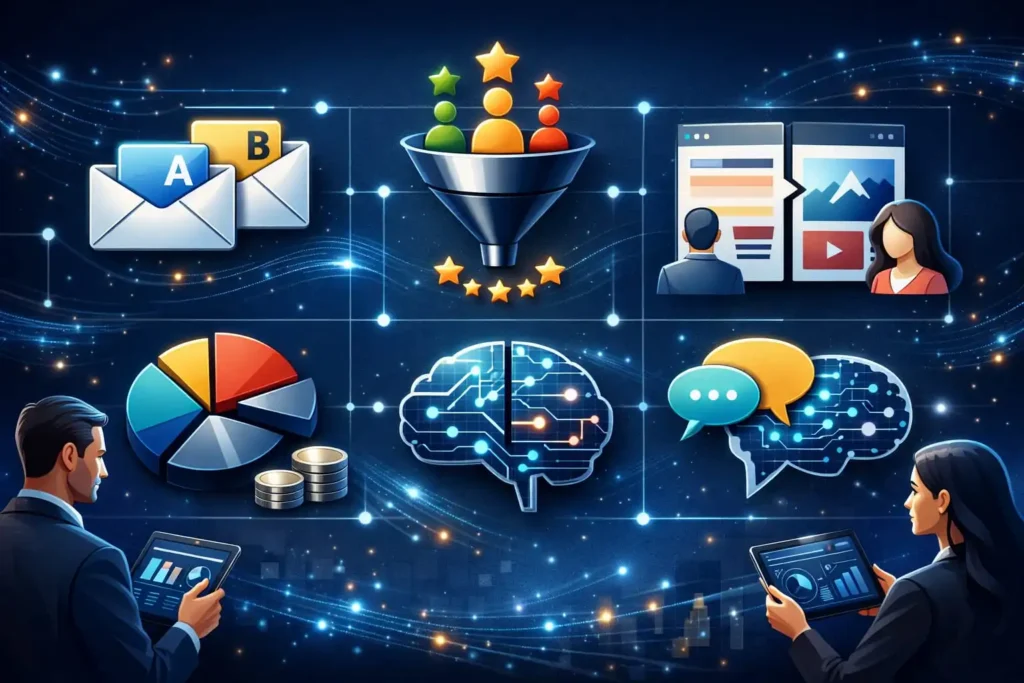
What Are Practical Examples of AI and Automation Use Cases?
The table below shows some concrete 2026 use cases you can deploy quickly.
Key Takeaways Section
- AI and automation are now core to strategy, not just nice-to-have tools, and they materially change CAC, LTV, and marketing efficiency.
- Privacy-first data practices and consent-based personalization are essential to comply with regulations and maintain customer trust.
- Search and discovery are shifting toward AI Overviews and feed-driven experiences, rewarding structured, question-led, and expert content.
- Human storytelling and community-driven engagement differentiate brands in an automated, AI-heavy environment.
- A 30-day roadmap can help CMOs and founders activate these trends in a structured, measurable way.
Next Steps Section
- Benchmark your current digital marketing performance, data practices, and tooling against the 2026 trends outlined above.
- Prioritize two quick-win AI or automation use cases, such as email optimization or predictive lead scoring, and launch controlled experiments.
- Conduct a privacy and consent audit with your legal and data teams to ensure you are ready for evolving 2025–2026 regulations.
- Strengthen your foundations with guides like how to start digital marketing for a new business and how to use digital marketing to increase startup revenue on StartupMandi.
- Plan a quarterly content series focused on 2026 trends, using question-based headings to capture both search and AI Overview visibility.
FAQ
Digital marketing in 2026 is the use of AI-enhanced, privacy-first strategies across channels like search, social, email, and web to drive measurable business growth.
The most important trend is AI-powered automation combined with first-party data, because it directly improves efficiency, personalization, and revenue impact.
AI reduces costs by automating repetitive tasks, improving targeting, and optimizing creative and bidding, which collectively lower CAC and improve ROAS
Yes, personalization is still possible, but it must rely on consented first-party and zero-party data, with transparent data practices and preference management.
Small businesses can start with low-cost AI tools, simple automation journeys, and strong content and SEO foundations to see impact without enterprise-level spend.
Search surfaces AI-generated summaries that highlight trusted sources, so brands must provide clear answers, structured data, and strong topical authority.
Teams should build skills in AI tool usage, data storytelling, privacy and compliance basics, and human-first brand storytelling and community building.
Begin with a solid website, SEO, and consistent content, then layer in simple automation and AI tools, leveraging guides like StartupMandi’s digital marketing starter resources.
Conclusion
Insight-Driven
“Where AI Efficiency Meets Human Storytelling for Resilient Brand Growth:
Digital marketing in 2026 rewards organizations that combine AI-powered efficiency, automated journeys, and privacy-first data strategies with authentic, human storytelling.
For StartupMandi’s audience of business owners and CMOs, the opportunity lies in moving early—embedding these trends into your channel mix, measurement frameworks, and customer experiences so growth becomes more predictable and resilient.
Leaning on resources like StartupMandi’s guides for starting digital marketing, expanding globally, and increasing startup revenue can accelerate this transformation and keep your brand ahead of competitors.
Transparency note: This article is for educational purposes only and does not constitute legal advice; always consult your legal counsel for compliance decisions in your regions of operation.
I
A Few Link Suggestions you can use for Research & Fact-checking
- Guide on how to start digital marketing for a new business
- Guide on how to use digital marketing to increase startup revenue
- Guide on how to expand globally with digital platforms
- AI marketing statistics for 2026
- AI in marketing usage and statistics
- Marketing automation trends for 2026
- Consumer data privacy laws and marketing impact
- 2026 digital marketing trends overview