



startupmandi-blog-background

How to Use Digital Marketing to Increase Startup Revenue ⚡

Increase Startup Revenue with smarter SEO, ads, and funnels. Boost growth fast 🚀

Intro & Key Takeaways

Digital marketing for startup revenue is one of the most powerful growth strategies for early-stage businesses today. With limited budgets and intense competition, startups rely on SEO, paid ads, content marketing, social media, and email campaigns to attract high-intent customers, improve conversions, and build sustainable revenue through digital channels.

Using how to use digital marketing to increase startup revenue as a strategic lens, startups can turn limited budgets into measurable growth. Digital channels allow you to attract ideal customers, convert them faster, and continuously optimize campaigns based on real data, not guesswork. 🚀

Summary of the Article:​

  1. Use targeted campaigns to reach high-intent audiences who are more likely to buy.

  2. Combine SEO, content, social media, email, and paid ads for compounding impact.

  3. Track everything with analytics to double down on profitable channels.

  4. Focus on customer lifetime value, not just one-time sales, to grow revenue sustainably.

  5. Start small, test fast, and scale winning campaigns to maximize ROI.

Read More: How to Start Digital Marketing for New Business: Complete Guide

how-to-use-digital-marketing-to-increase-startup-revenue

Build a Revenue-Ready Digital Foundation

How Digital Marketing Actually Drives Revenue

Digital marketing increases revenue by expanding your reach, attracting qualified leads, and nudging them through a structured funnel. Because every click and conversion is measurable, startups can quickly refine campaigns to lower acquisition costs and boost profit.

A strong strategy usually combines SEO, paid advertising, social media, content, and email so that customers can discover, trust, and buy from your startup across multiple touchpoints.

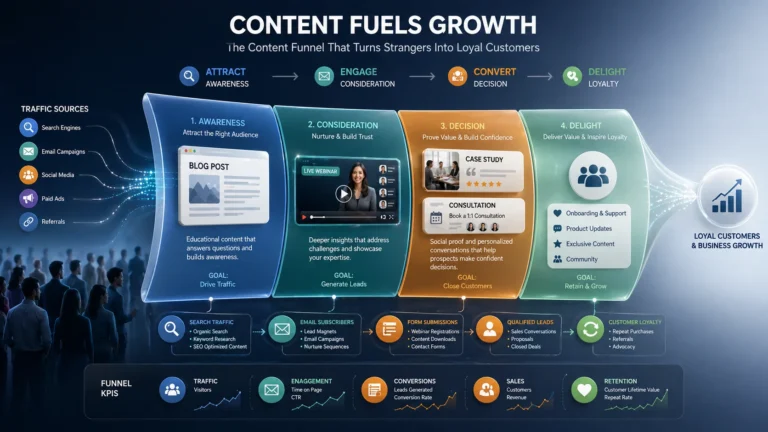
Map Your Revenue Funnel First

Before launching campaigns, define how strangers become paying and repeat customers. This clarity helps you choose the right channels and messages for each stage.

  1. Top of funnel: Awareness via SEO, social media, and educational content.

  2. Middle of funnel: Consideration via case studies, webinars, and lead magnets.

  3. Bottom of funnel: Conversion via product demos, free trials, and strong .

“Without a defined funnel, even the best campaigns leak revenue.”​


Core Channels That Impact Startup Revenue

Here is a quick view of how key channels contribute to revenue:

ChannelPrimary Revenue Impact
SEOSteady organic traffic and low-cost leads over time.
Paid Ads (PPC)Quick lead spikes and fast testing of offers.
Social MediaBrand visibility and trust that improves conversions.
Email MarketingNurtures leads and boosts repeat purchases.
Content MarketingEducates, builds authority, and supports all channels.


Set SMART, Revenue-Focused Goals

Instead of “get more followers,” aim for goals like “increase monthly qualified leads by 30% in 90 days.” This keeps your campaigns tied to revenue, not vanity metrics.

  1. Set clear KPIs: CAC, conversion rate, revenue per user, and ROAS.

  2. Review performance weekly and adjust budgets based on ROI data.

  3. A strong foundation ensures digital marketing for startup revenue remains measurable, scalable, and profitable as the business grows.


Checkout Our Latest Services

High-ROI Digital Channels Startups Must Use

SEO: Compounding Organic Revenue Engine

Search engine optimization helps your startup appear when people actively search for solutions you offer. Because SEO traffic is intent-driven, it often converts better and reduces long-term acquisition costs.

Key actions:

  1. Optimize landing pages for problem-based keywords and clear CTAs.

  2. Improve page speed, mobile experience, and internal links to boost rankings.

Paid Ads: Fast Experiments, Faster Revenue

Paid channels like Google Ads, Meta Ads, and LinkedIn let you reach precise audiences immediately. When aligned with a strong offer and landing page, they can generate revenue quickly and reveal which messages resonate.

  1. Start with small budgets and tightly focused campaigns.

  2. Use retargeting ads to bring back visitors who did not convert initially.

Social Media & Content: Trust That Sells

Content marketing and social media build authority, nurture relationships, and support every other channel. Educational content like blogs, how-tos, and webinars positions your startup as a trusted expert and drives more qualified traffic.

  1. Share case studies, customer stories, and behind-the-scenes updates.

  2. Encourage user-generated content and reviews to improve social proof and revenue.

Checkout Latest Grants Listed
digital revenue growth dashboard

Turn Traffic into Revenue With Data & Retention

Use Analytics to Find and Fix Leaks

Tools like Google Analytics 4 help startups see which channels, pages, and campaigns produce the most revenue. When you know where users drop off, you can improve those touchpoints and recover lost sales.

Key metrics to track:

  1. Conversion rate by channel and landing page.

  2. Cost per acquisition and revenue per visitor.

Improve Conversion Rates With Better Experiences

Revenue increases not only by getting more visitors but also by converting a higher percentage of them. Clear messaging, fast load times, and frictionless checkout flows significantly improve conversions.

  1. Test different headlines, CTAs, and page layouts (A/B testing).

  2. Simplify forms and reduce steps to purchase or sign up.

Retention: Where Real Profit Lives

Acquiring a new customer is often more expensive than retaining an existing one. Email nurturing, loyalty programs, and personalized recommendations can dramatically increase customer lifetime value.

Quick retention boosters:

  1. Welcome sequences that educate and onboard new users.

  2. Regular value-driven newsletters and exclusive offers for existing customers.

Conclusion

When you understand how to use digital marketing to increase startup revenue, every channel becomes a controlled experiment, not a gamble. By mapping your funnel, choosing the right mix of SEO, content, social, email, and paid ads, and relentlessly tracking performance, you can turn limited budgets into reliable, scalable growth.

Simple Revenue-Focused Action Plan

StepWhat To DoRevenue Impact
Define FunnelMap awareness to retention stages.Aligns campaigns with buying journey.
Select ChannelsPick 2–3 core channels to start.Focuses spend where impact is highest.
Track & TestSet KPIs and run experiments.Improves ROI and lowers acquisition costs.
Scale WinnersIncrease budget on proven campaigns.Accelerates growth without wasting resources.
 

FAQs

1. How quickly can digital marketing increase startup revenue?

Timeframes vary, but paid ads can show results in weeks, while SEO and content often take several months to compound. Combining both helps you capture quick wins and long-term revenue.

2. What is the most cost-effective digital channel for startups?

SEO and email marketing are typically the most cost-effective because they continue generating traffic and sales without ongoing ad spend, especially once systems are in place.

3. How much should a startup spend on digital marketing?

Many startups begin by allocating a small percentage of projected revenue, then adjust budgets based on proven ROI from each channel over time. Data from analytics helps refine these decisions.

4. How do I know if my campaigns are working?

Track metrics such as leads generated, cost per acquisition, conversion rates, and revenue attributed to each channel. If these metrics improve over time, your campaigns are performing well.

5. Do early-stage startups really need analytics tools?

Yes, even simple analytics setups reveal which campaigns, audiences, and messages generate the most value, allowing you to focus on what truly drives revenue.


External Fact Source Links

 
Shwetha Dilipkumar
Shwetha Dilipkumar
Articles: 29

Leave a Reply

Your email address will not be published. Required fields are marked *