


Common Scams in India: Your Complete Protection Handbook
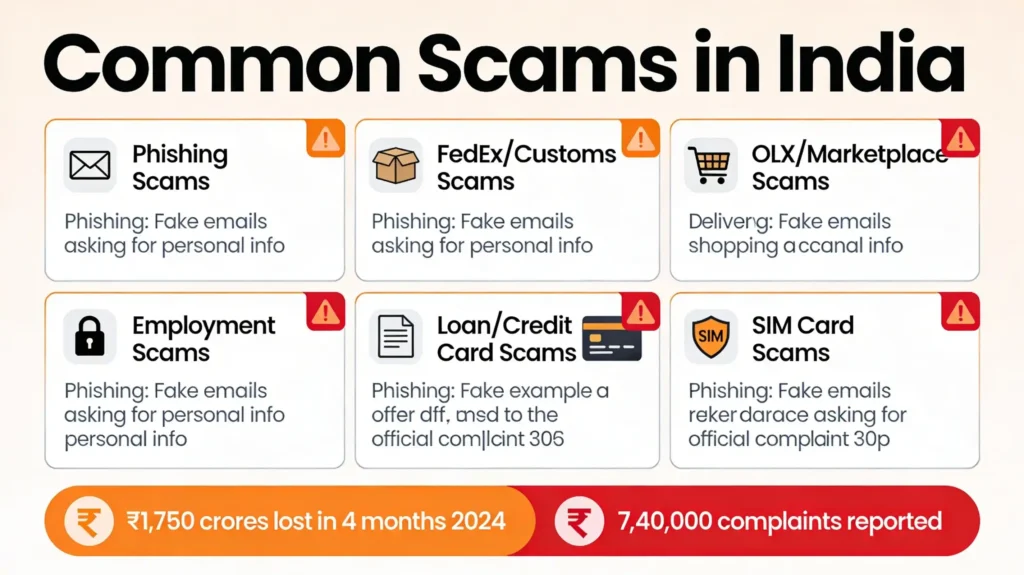
Common scams in India have become increasingly sophisticated and dangerous. According to recent data, cybercriminals stole approximately ₹1,750 crores during just the first four months of 2024. Moreover, over 7,40,000 cybercrime complaints reached the National Cybercrime Reporting Portal. Consequently, understanding these scams is essential for every Indian citizen.
The Indian Cyber Crime Coordination Centre reported alarming trends. Specifically, 7,000 cybercrime complaints emerged daily in May 2024. Furthermore, this number jumped 113.7% between 2021 and 2023. Therefore, awareness and protective measures have become critically important today.
Understanding the Most Prevalent Common Scams in India
Several scams dominate the Indian cybercrime landscape. These frauds target people across all age groups and income levels. Let’s examine each type carefully.
The FedEx and Customs Scam
The FedEx scam represents one of India’s most prevalent frauds currently. Scammers call claiming a package linked to your Aadhaar card got intercepted by Customs. They allege illegal substances like narcotics were discovered. This creates immediate panic and fear in victims’ minds.
The scammer then connects you to someone posing as Mumbai Police Cyber Cell staff. This person intensifies the scare with legal threats. They convince you to transfer money quickly. Consequently, victims lose significant amounts before realizing the deception. Therefore, never transfer money due to such unsolicited calls. Additionally, official authorities never ask for payments via call or message.

The OLX and Online Marketplace Scam
OLX and similar platforms attract scammers constantly. When you list items for sale, fraudsters contact you. These scammers appear overly eager and skip normal bargaining. Moreover, they offer payment before collecting goods.
The trick involves sending you a malicious QR code. They request you scan it to receive payment funds. However, this code actually debits your account instead. If you enter your OTP additionally, the money transfer completes immediately. Therefore, never scan unknown QR codes from strangers. Moreover, request direct bank transfers only for large transactions.
Employment and Loan Approval Scams
Job seekers face significant vulnerability from employment scams. Fraudsters claim they represent major multinational companies. They offer attractive salaries with excellent benefits. Furthermore, they create urgency by mentioning other candidates waiting.
Then comes the catch—they demand a small processing fee. Once you pay, they disappear permanently. Similarly, unsolicited calls about instant loan approvals follow the same pattern. Scammers promise money within hours without paperwork. Therefore, legitimate employers and banks never demand upfront processing fees. Additionally, verify company identity independently before any payments.
Advanced Scams Targeting Digital Users
Modern scammers employ increasingly sophisticated techniques now. These attacks exploit technology and human psychology effectively.
Phishing and SMS-Based Attacks
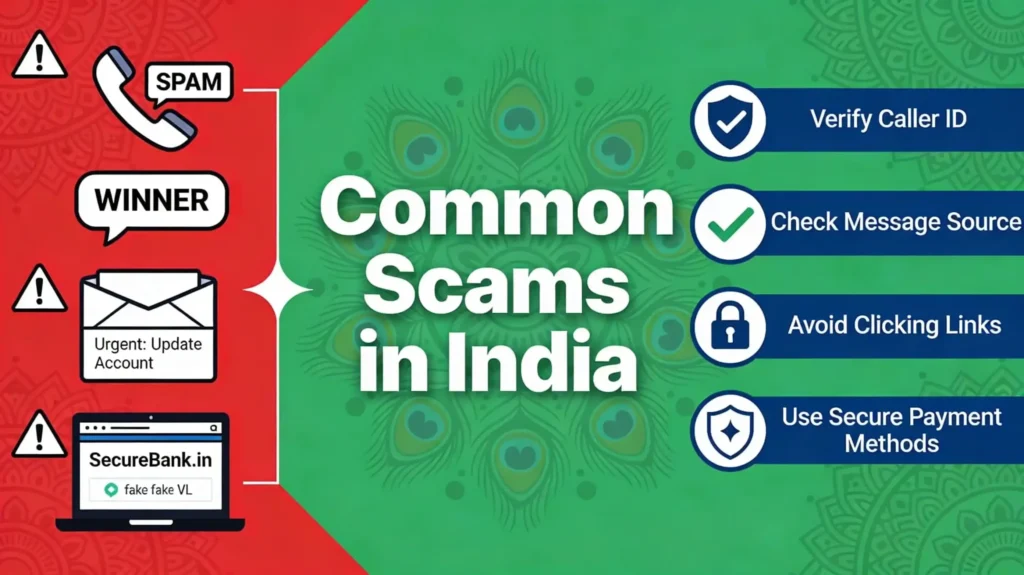
Phishing remains one of the oldest yet most effective scams. Fraudsters send emails or texts mimicking legitimate companies. These messages often contain suspicious links or requests. Common phishing attacks request OTPs, passwords, or personal information.
Scammers use multiple tactics to create authenticity. Sometimes they include company logos or official language. Other times they create urgency with warning messages. However, legitimate companies never request sensitive data via email. Therefore, always verify independently before clicking links. Moreover, check sender addresses carefully for subtle mismatches.
SIM Card and OTP Bot Scams
Your mobile number represents a critical security vulnerability. Scammers call claiming your SIM card requires urgent verification. They threaten disconnection if you don’t update details. This pressure tactics forces quick decisions.
Then they offer convenient but fraudulent solutions. They request small fees to handle documentation. Once paid, communication ceases completely. Another modern threat involves OTP bots. These automated systems request one-time passwords from you. Meanwhile, scammers attempt simultaneous account login. Consequently, the timing creates false legitimacy. Therefore, never share OTPs with anyone calling you. Additionally, enable two-factor authentication via authenticator apps instead.

- Subscribe Now This product has multiple variants. The options may be chosen on the product page

- USD: $ 99.98

- Subscribe Now This product has multiple variants. The options may be chosen on the product page

- Subscribe Now This product has multiple variants. The options may be chosen on the product page

- Subscribe Now This product has multiple variants. The options may be chosen on the product page

- Select options This product has multiple variants. The options may be chosen on the product page
- USD: $ 749.98 - $ 4,916.65

- Subscribe Now This product has multiple variants. The options may be chosen on the product page

- Subscribe Now This product has multiple variants. The options may be chosen on the product page

- Subscribe Now This product has multiple variants. The options may be chosen on the product page

- USD: $ 6.65
Critical Prevention Strategies for Common Scams in India
Protecting yourself requires awareness and vigilance. Understanding warning signs is your first defense line. Let’s explore practical protective measures.
The most important rule involves never sharing personal information. Your Aadhaar number, bank details, passwords, and OTPs require absolute secrecy. Additionally, legitimate organizations never request such information unexpectedly. Therefore, skepticism should be your default response.
Urgency and fear represent scammer primary weapons. They pressure victims to act quickly without thinking. Consequently, pause and verify everything before responding. Take time to confirm identities independently. Additionally, contact organizations directly using known phone numbers. Never use numbers provided by incoming callers.
Suspicious links and QR codes demand caution constantly. Hover over links to check actual destinations before clicking. Additionally, verify QR code sources before scanning them. Grammatical errors in messages often indicate fraudulent communication. Furthermore, mismatched URLs are major red flags to watch.
Double-check everything before confirming online transactions. Enable two-factor authentication wherever possible. Use authenticator apps rather than SMS-based codes. Additionally, update passwords regularly and keep them unique. Therefore, stronger digital hygiene significantly reduces fraud risks.
Â

UPJA 2026 — Pusa Krishi Incubation Program
UPJA 2026 | Pusa Krishi, ICAR-IARI
₹2,500,000.00- Early Revenue Stage, Growth Stage
- May 17, 2026
What to Do If You Fall Victim to a Scam
Swift action minimizes damage after fraud discovery. Report the incident immediately to relevant authorities. Contact your bank and provide transaction details. Furthermore, report the scam to the National Cybercrime Reporting Portal. Additionally, file a police report for official documentation.
Change all passwords on compromised accounts immediately. Scan your devices for malware using antivirus software. Monitor your bank and credit accounts carefully for weeks. Furthermore, place fraud alerts on your credit reports. Additionally, consider security freezes for comprehensive identity protection.
Conclusion
Common scams in India represent a serious threat to financial security. However, awareness and prevention significantly reduce your vulnerability. Understanding scam tactics helps you recognize danger early. Therefore, implement protective measures consistently. Additionally, share this knowledge with family and friends. Moreover, report suspicious activities to authorities promptly. By remaining vigilant and cautious, you protect yourself effectively. Finally, remember that legitimate organizations never rush you or demand upfront payments. Stay informed, stay skeptical, and stay safe from fraudsters operating across India.
Frequently Asked Questions (FAQs)
Q1: How can I identify if a call is genuinely from my bank?
Legitimate banks never request OTPs, passwords, or personal information via phone calls. Always hang up and call your bank directly using the number on your bank card. Ask specifically about the call you received. Furthermore, banks never pressure you for immediate decisions. Therefore, take time to verify independently before providing any information.
Q2: Are common scams in India only targeting wealthy individuals?
No, scammers target people across all income levels. In fact, low-income individuals sometimes face greater vulnerability. This is because they may feel desperate for job opportunities or loans. Therefore, vigilance matters equally for everyone regardless of financial status.
Q3: What should I do if I accidentally click a suspicious link?
Run an immediate antivirus scan on your device. Change passwords for your important accounts promptly. Monitor your bank accounts closely for unauthorized transactions. Additionally, contact your bank to report the incident. Furthermore, watch for identity theft signs over coming weeks. If money was transferred, report it immediately to authorities.
Q4: How can I protect myself from common scams in India while online shopping?
Use reputable e-commerce platforms only. Verify seller ratings and reviews carefully. Be suspicious of prices that seem too good to be true. Use credit cards instead of debit cards when possible. Additionally, check return policies before purchasing. Furthermore, research unknown sellers on Google before buying.
Q5: Is it safe to give my Aadhaar number to companies requesting verification?
Only provide your Aadhaar number to authorized government agencies or legitimate financial institutions. Most private companies don’t require Aadhaar numbers. If someone requests it unexpectedly, refuse and verify independently. Furthermore, be particularly cautious with unsolicited callers. Therefore, treating Aadhaar information as highly sensitive is absolutely essential.
Referring Blog/Page Links
Â
Outbound Links (Authoritative External Sources):
Arshia Jahan
Digital Marketing and SEO professional, focused on content strategy & optimizing content, improving search rankings, and delivering results through smart, audience-focused strategies. As a Content Strategist and SEO professional, I believe that search engines don't buy products—people do. By blending technical SEO precision with a human-first content approach. I provide readers with the strategic blueprints needed to scale in a competitive digital world.