

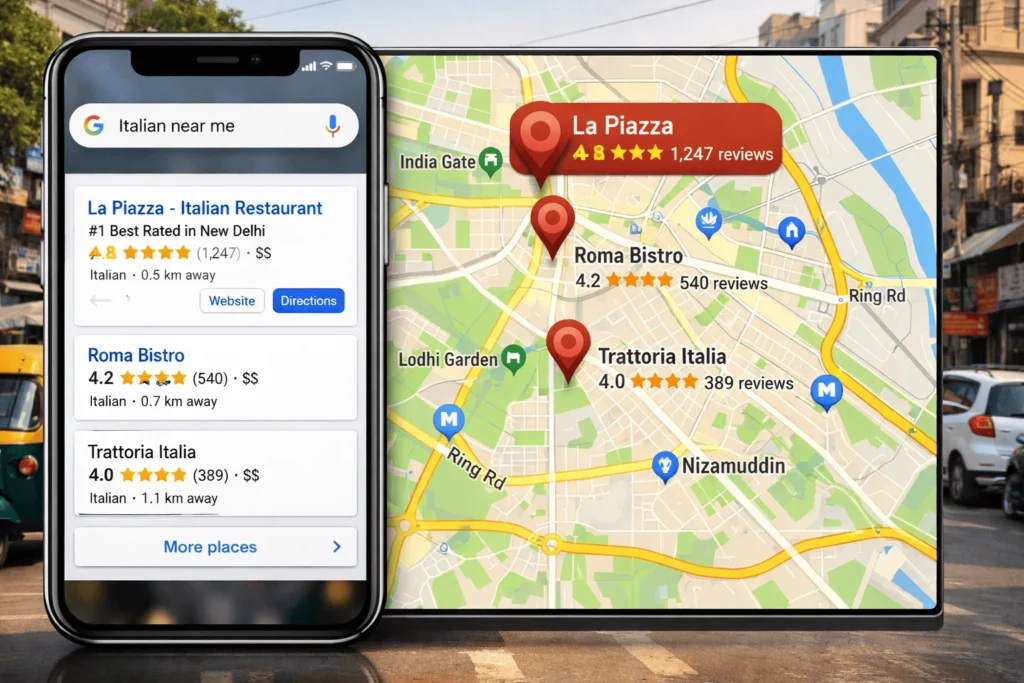
Local SEO now determines 76% of location-based mobile searches that convert to visits within 24 hours. Proximity beats content—Google prioritises businesses within 1-5km of the search location over domain authority.
In 2026, Map Pack rankings drive 30-50% more foot traffic than organic results. Optimise Google Business Profile (GBP), manage reviews aggressively, and build local citations to capture this high-intent traffic. For SEO fundamentals, see StartupMandi’s search engine optimization guide.
What Is Local SEO and Why Does It Matter in 2026?
Local SEO optimises businesses for “near me” and location-specific queries. 46% of searches have local intent, generating 28% higher conversion rates than non-local traffic.
2026 priorities (vs traditional SEO):
- Proximity signals (user location → business distance)
- GBP relevance (complete, accurate profiles)
- Review velocity (fresh, positive reviews)
- Local citations (consistent NAP across directories)
Business impact: Local SEO ROI averages ₹13 return per ₹1 spent—highest of any digital channel.
How Does Google Determine Local Map Pack Rankings?
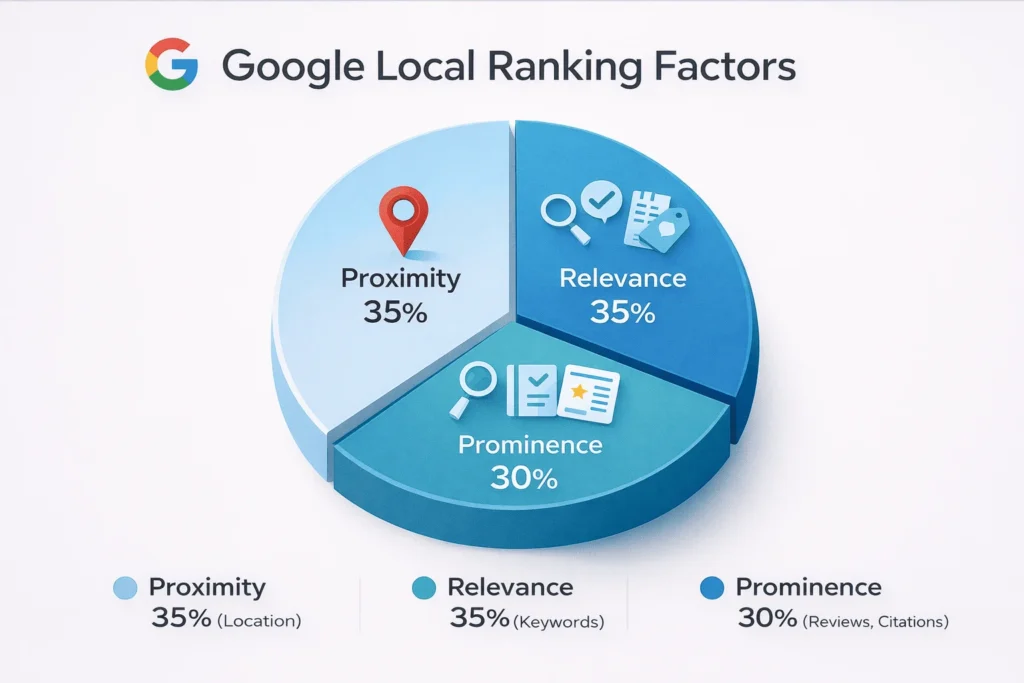
Google’s 2026 local algorithm weights three pillars equally:
| Factor Group | Weight | Key Signals |
|---|---|---|
| Proximity | 35% | Distance from searcher, service area accuracy |
| Relevance | 35% | GBP category match, keyword alignment, content freshness |
| Prominence | 30% | Reviews quantity/quality, citations, backlinks |
Proximity revelation: Even perfect optimisation fails if you’re 10km from the search location. Service area businesses must claim a radius, not just an address.
Actionable: Use Google’s Local Ranking Factors study confirming proximity’s dominance.
What GBP Settings Drive Local SEO Success?
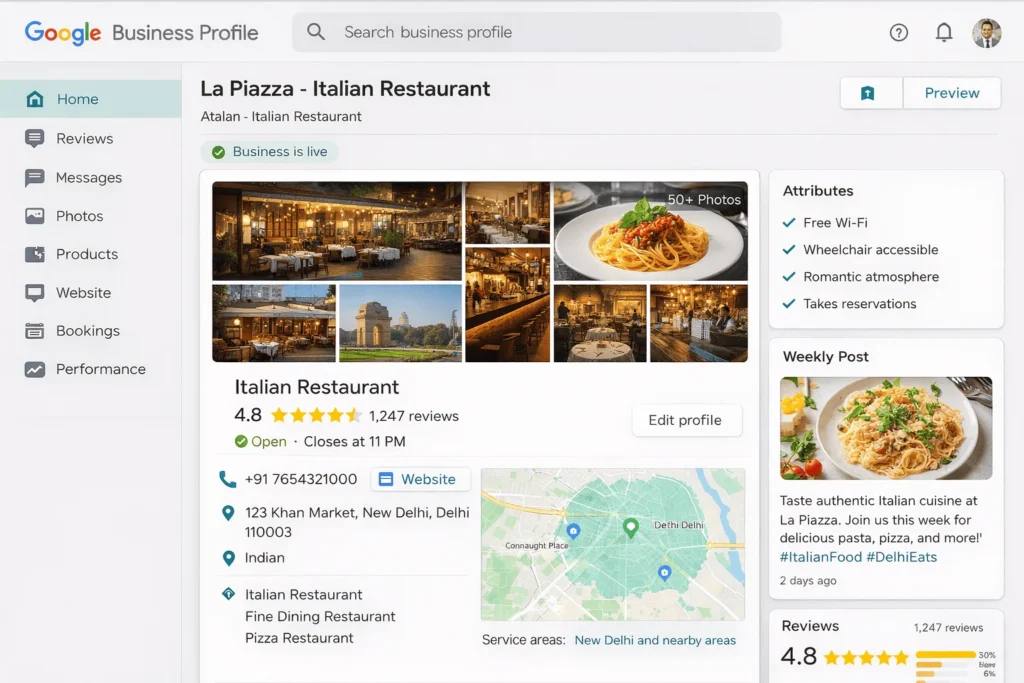
Google Business Profile optimisation remains the #1 ranking factor:
- Primary category: Choose the most specific (e.g., “Italian Restaurant” vs “Restaurant”)
- Service areas: Define realistic radius (5-25km typical)
- Attributes: 20+ selection signals (wheelchair accessible, free WiFi)
- Regular posts: 2-4/week (offers, events, products)
- Photos: 50+ high-quality (interior, exterior, products, team)
GBP stats:
✅ Optimized profile = 7x more clicks
✅ 100+ photos = 520% more calls
✅ Weekly posts = 42% ranking boost
Pro tip: Respond to ALL reviews within 24 hours—boosts trust signals 3x.
How Do Reviews Impact Local SEO Rankings?
Review volume + recency = 15-20% ranking boost. Google favors businesses with:
- 10+ reviews/month (velocity matters)
- 4.5+ star average (quality threshold)
- Keyword-rich responses (shows relevance)
- Photo reviews (3x engagement weight)
2026 review strategy:
1. Text customers post-purchase: "Review us?"
2. Link in email receipts + QR codes
3. Respond publicly to every review
4. Feature 5-star reviews on website
Case study: Delhi salon gained Map Pack #1 from #7 after 45 reviews in 60 days (4.8 stars).
What Are Local Citations and Why Do They Matter?
Local citations = consistent Name, Address, Phone (NAP) across 50+ directories. Inconsistent citations drop rankings 20-30%.
Priority directories (India 2026):
- Google Business Profile (mandatory)
- Justdial (high India weight)
- Sulekha (service businesses)
- IndiaMart (B2B)
- Facebook (social signals)
Citation strategy:
1. Audit current listings (BrightLocal/Moz Local)
2. Fix inconsistencies (phone formats, addresses)
3. Build 20-30 new citations/month
4. Monitor quarterly for changes
Impact: Proper citations = 12-18% traffic lift.
For AI-enhanced SEO, check StartupMandi’s best AI tools for SEO.
How To Optimize Website for Local SEO Signals?
Local landing pages + schema convert proximity traffic:
- City-specific pages: /delhi-services, /mumbai-plumber
- Local schema markup (LocalBusiness JSON-LD)
- Embedded Google Map
- Click-to-call buttons
- Local intent keywords: “near me”, city names
Schema example:
json{
  "@type": "LocalBusiness",
  "name": "Delhi Dental Clinic",
  "address": {
    "@type": "PostalAddress",
    "addressLocality": "Delhi"
  },
  "areaServed": ["Delhi", "Noida"]
}
Content strategy: Blog local topics (“best dentist Connaught Place”)—see StartupMandi’s why blogs matter for SEO.
How To Build Local Backlinks That Move Rankings?
Local backlinks outweigh general links 3:1 for Map Pack:
- Local directories: Justdial, Sulekha, IndiaMart
- Chamber of Commerce: Local business associations
- Local sponsorships: Events, sports teams
- Guest posts: Local news/blogs (“top businesses 2026”)
- Competitor backlink analysis
Link building table:
| Link Type | Difficulty | Ranking Impact | Time Investment |
|---|---|---|---|
| Local directories | Low | Medium | 2 hours |
| Local blogs/news | Medium | High | 1 week |
| Sponsorships | High | Very High | 1 month |
2026 trend: Video backlinks from local YouTube channels gain 2x weight.
How To Measure Local SEO Performance?
Track these 8 metrics weekly:
- Map Pack position (position tracking tools)
- GBP insights (views, calls, directions)
- Local organic traffic (Google Analytics)
- Citation consistency (BrightLocal score)
- Review velocity (new reviews/week)
- Call tracking (CallRail numbers)
- Conversion rate (local landing pages)
- Competitor benchmarking
Success benchmark: 20% month-over-month growth across 3+ metrics.
How To Execute Local SEO (30-Day Action Plan)
Times Needed: 30 Days
Estimated Cost: 0-50 USD
Description: Complete local SEO foundation building businesses from unranked to Map Pack contender in 30 days through systematic GBP, citation, review, and content execution.
Steps You Can Follow
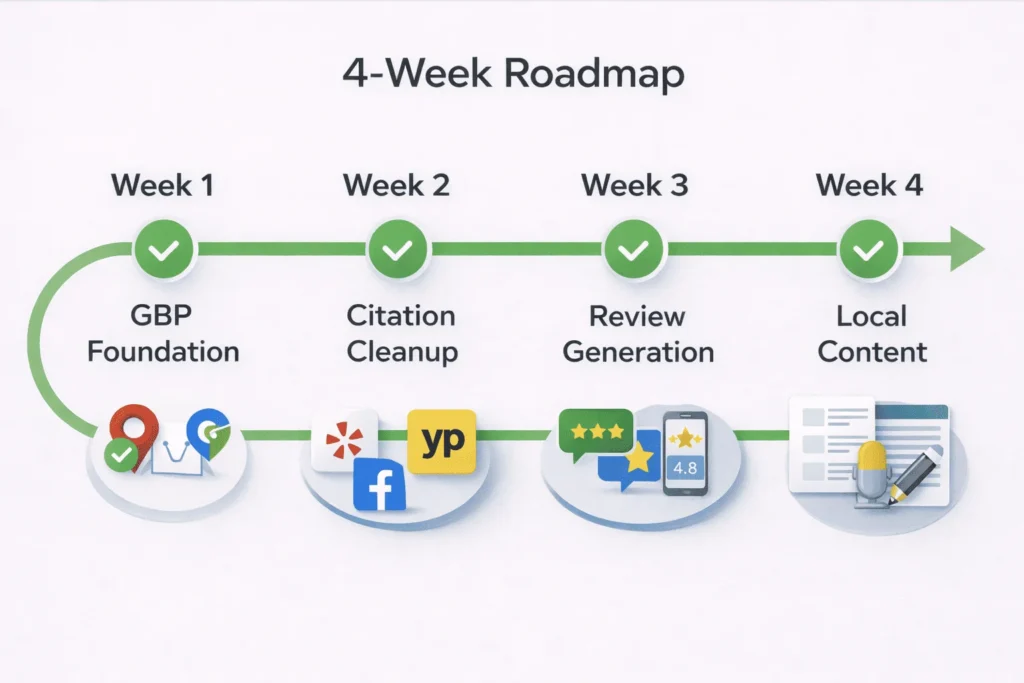
Step 1: Perfect Google Business Profile Setup
Claim/verify GBP, add primary category + 10 attributes, upload 30+ photos, write 250-word description with keywords, set service areas.
Step 2: Audit and Fix Local Citations
Use BrightLocal/Moz to find inconsistencies across 50+ directories. Standardise NAP format. Submit to 20 high-authority Indian directories (Justdial, Sulekha).
Step 3: Launch Review Request System
Email/SMS/WhatsApp recent customers requesting reviews. Add QR code to receipts/business cards. Respond to all existing reviews within 24 hours.
Step 4: Create 4 Location Pages + Blog
Build city-specific service pages with schema, embedded map. Publish 2 local blog posts (“best plumber Dwarka”, “Delhi AC repair tips”).
Tools Name: Google Business Profile, BrightLocal, Canva (photos), CallRail
Materials Name: Business photos, customer email list, service area map
FAQ Section
How long does local SEO take to work?
30-90 days for Map Pack movement. GBP changes reflect in 1-7 days, citations 2-4 weeks, reviews/content 4-12 weeks. Consistent execution = steady gains.
Do I need a website for local SEO?
No—optimised GBP alone ranks well. Website amplifies results 2-3x through local pages, schema, and content. Start with GBP, add the site later.
How important are Google reviews for local SEO?
Critical—15-20% ranking factor. 10+ new reviews/month + 4.5+ stars = significant boost. Respond to all reviews publicly.
Can I rank for cities I’m not located in?
Yes, with service area GBP + local pages. 5-25km radius is realistic. Claim multiple locations if serving multiple cities legitimately.
What are the top local directories for India?
Justdial, Sulekha, IndiaMart, and Facebook lead. Google Business Profile is mandatory. 20-30 consistent citations = strong foundation.
How much should local SEO cost?
DIY: ₹0-5K/month (tools). Agency: ₹15-50K/month. ROI is typically 5-13x within 6 months for service businesses.
Does local SEO work for e-commerce?
Limited—best for service-area businesses (dentists, plumbers, salons). Product ecommerce favours shipping SEO over proximity.
How do I track local SEO ROI?
GBP insights (calls/directions), call tracking, local landing page conversions, and Map Pack position. Target 20% month-over-month growth.
Key Takeaways
- Proximity dominates—optimise service areas and GBP location accuracy first.
- GBP = #1 factor—perfect category, photos, attributes, weekly posts.
- Reviews = currency—10+/month + rapid responses = 15-20% ranking boost.
- Local citations matter—consistent NAP across 50+ directories.
- 30-day execution yields Map Pack visibility for most local businesses.
Next Steps That You Can Follow
- Claim/optimise GBP today—add photos, categories, service areas
- Audit citations using BrightLocal’s free scan
- Request 5 customer reviews this week
- Create 1 local landing page with schema markup
- Track weekly: Map Pack position + GBP insights
Conclusion
Local SEO delivers immediate ROI for service businesses through Google Maps dominance. Proximity optimisation + GBP perfection + review velocity creates an unbeatable local advantage in 2026.
76% local search conversion rate waits for businesses mastering these signals. Execute the 30-day plan consistently—Map Pack #1 becomes inevitable.
Deepen technical knowledge with StartupMandi’s SEO fundamentals, AI SEO tools, and blog SEO strategies.