

Instagram Ads can fill your calendar with leads or drive direct sales, but each goal needs a different campaign strategy. Pick the wrong objective and Meta optimizes for clicks or cheap leads that never buy.
This guide compares Instagram Ads for lead generation vs sales using objective-based analysis, so coaches, service businesses, and D2C brands know when to choose each—and how to combine them for better lifetime value.
What Is the Real Difference Between Lead and Sales Instagram Ads?
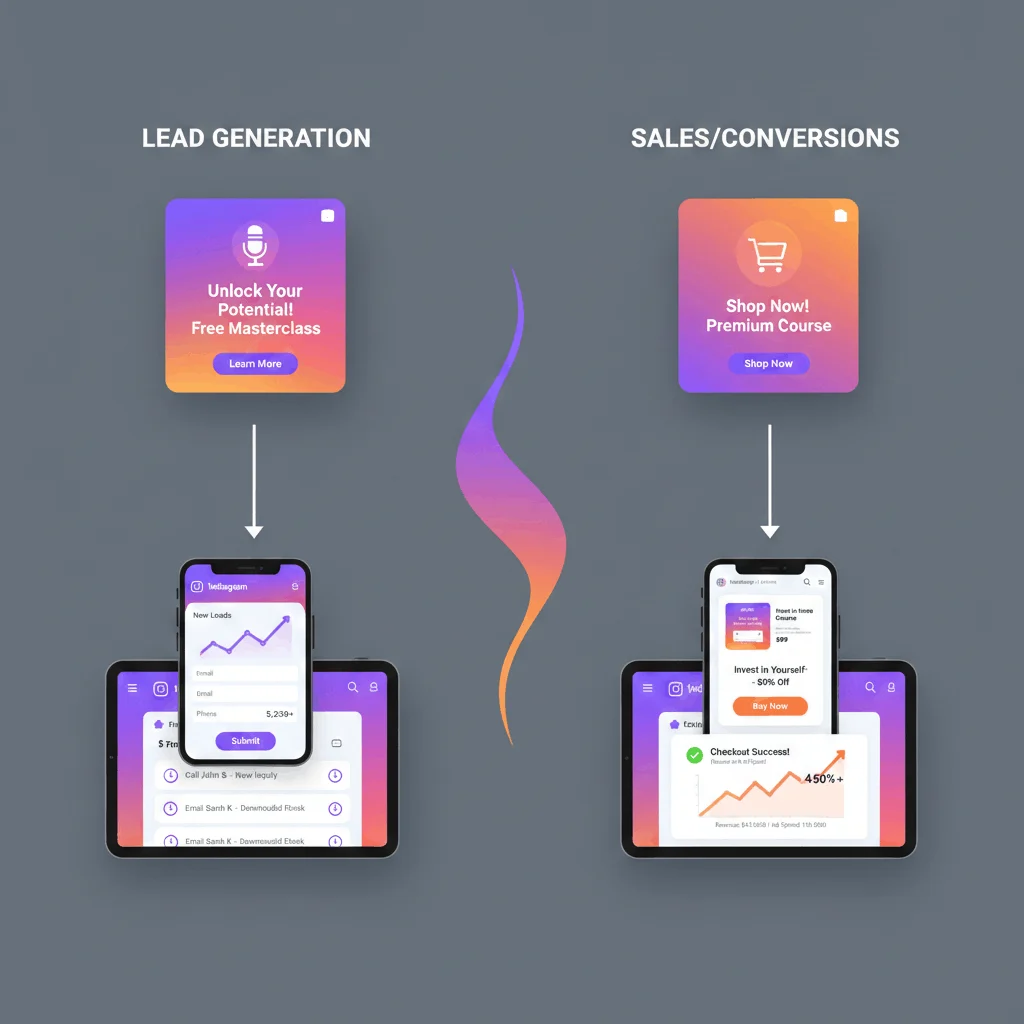
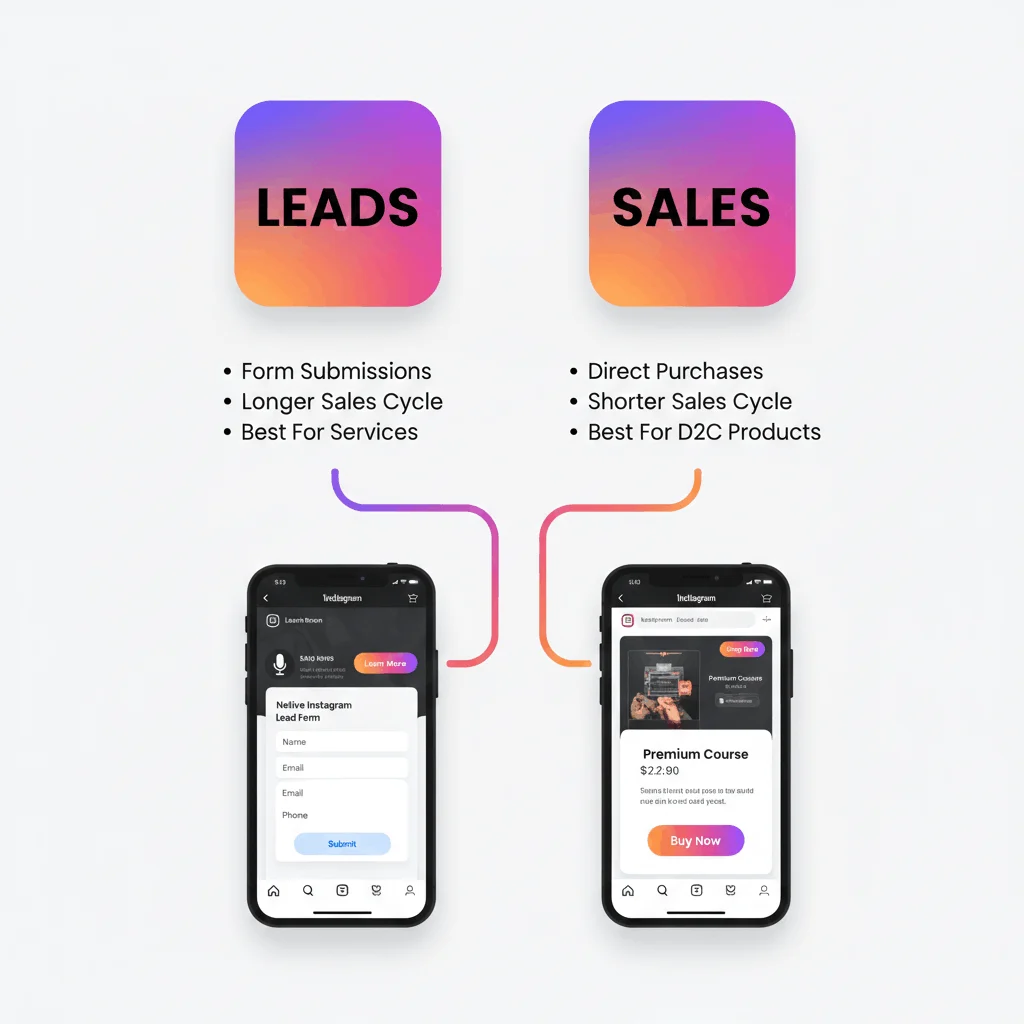
At a basic level, lead generation ads collect contact details, while sales/conversion ads drive immediate purchases or bookings.
Instagram lead ads usually use the Leads objective and often keep users on-platform with native forms.
Sales campaigns typically use Sales/Conversions or Catalog Sales objectives, sending users to a website or app to complete checkout or bookings.
Social Growth Lab and others describe it simply:
“Lead generation means someone shows interest but they haven’t bought anything yet. Sales conversion means actual money in the bank.”
Practical distinction:
- Lead campaigns optimize for form submissions or signups.
- Sales campaigns optimize for purchase events or high-intent actions (e.g., checkout, booking).
How Do Instagram Lead Generation Ads Perform?
Instagram is extremely strong for attention and discovery, which translates into powerful lead generation potential.
1. What Are Typical Lead Gen Performance Benchmarks?
Recent benchmarks show Instagram outperforms many channels for attention and clicks:
- Instagram users generate four times more clicks than Facebook for lead gen campaigns, with 8 in 10 people saying the platform helps them choose what to buy.
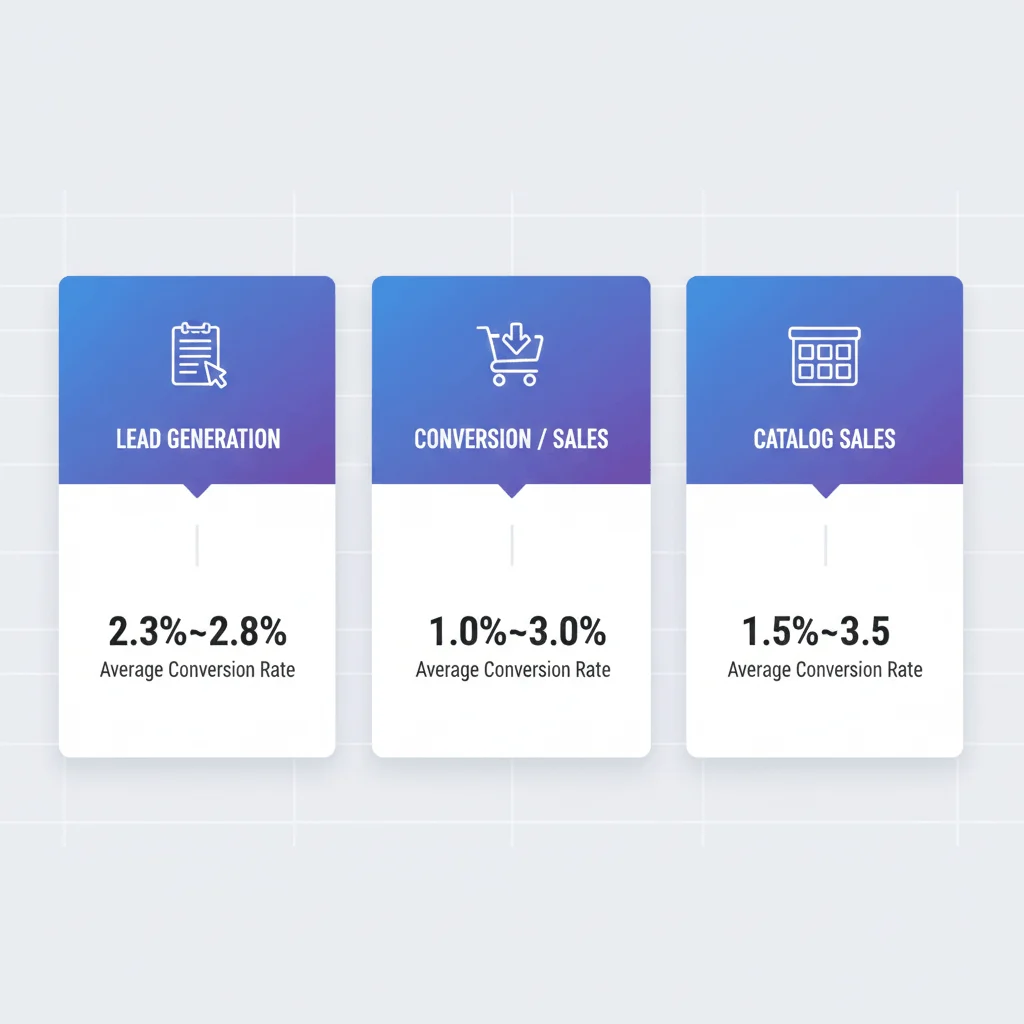
- DriftLead notes that lead generation campaigns are designed for conversions, often achieving 2.3–2.8% average conversion rates, higher than many generic traffic campaigns.
- Lead-focused objectives generally produce more leads per budget than sales/conversion objectives, since form completion is easier than purchase.
Instagram’s native lead forms reduce friction by auto-filling user details, significantly lifting submission rates.
2. When Do Lead Gen Campaigns Make the Most Sense?
Lead generation Instagram Ads are especially effective when:
- You sell high-ticket or complex services (coaching, consulting, B2B services).
- Your sales process requires consultation, demo, or call before closing.
- You need to build an audience before a launch (e.g., webinar, cohort-based program, Kickstarter).
- You have strong follow-up systems: email sequences, sales calls, or WhatsApp workflows.
Leadenforce stresses that lead campaigns work when you have infrastructure to nurture and close—otherwise you just collect cold contacts.
How Do Instagram Sales/Conversion Ads Perform?
Sales campaigns aim for immediate revenue, telling Meta to optimize for purchases or high-intent on-site actions.
1. What Are Typical Sales Conversion Benchmarks?
Instagram is one of the top social platforms for D2C and e-commerce conversions:
- DriftLead reports conversion campaigns (Sales/Conversions) often see 1.0–3.0% average conversion rates, depending on vertical and funnel quality.
- Catalog Sales campaigns for e-commerce commonly achieve 1.5–3.5% conversion rates due to product-level targeting and dynamic creatives.
- Instagram Shopping posts generate 1–2% average conversion rates and over 130 million monthly interactions with shopping tags, a strong signal of purchase intent.
Instagram Stories and Reels drive high engagement and view-through rates, making them ideal placements for lower-funnel sales creatives.
2. When Do Sales Campaigns Work Best?
Conversion/Sales objectives outperform lead gen when:
- You have a proven, optimized landing page or product page.
- Your offer is simple, lower ticket, or impulse-friendly (typical for many D2C brands).
- You are retargeting warm audiences—engagers, website visitors, or cart abandoners.
- Your tracking is solid (Pixel + CAPI), giving Meta clean purchase signals.
Choosing Sales when your website is slow or confusing usually results in low ROAS and wasted budget.
Instagram Ads for Lead Generation vs Sales: Which Is Better?
The honest answer: neither is “better” in isolation. The right choice depends on your business model, ticket size, and sales infrastructure.
1. How Do Lead vs Sales Objectives Compare?
DriftLead notes that objectives optimized for direct conversions (Conversions, Catalog Sales) see higher purchase conversion rates, but lead gen can feel cheaper because you’re not requiring payment yet.
2. Which Objective Is Better for My Business Type?
Based on current best practices:
- Coaches & Service Businesses
- Best primary objective: Leads (Instant Forms, Messages) for cold audiences.
- Secondary: Sales/Conversions for retargeting high-intent leads to book calls or pay deposits.
- B2B services / SaaS with long cycle
- Best primary objective: Leads (form fill, demo requests).
- Build multi-touch nurture (email, calls, webinar remarketing).
- D2C Brands (low–mid ticket)
Straight North summarises 2025–26 Meta strategy: Sales and Leads remain top performers for ROI-focused marketers—but each must match funnel stage and business model.
How To Choose the Right Instagram Ads Objective
Times Needed: Days: 03, Hours: 06, Minutes: 00
Estimated Cost: Currency: USD, Price: 0–500 (ad spend for testing)
Description: A 3-day decision process to align Instagram Ads objectives (Leads vs Sales) with your offer type, funnel, and tracking setup.
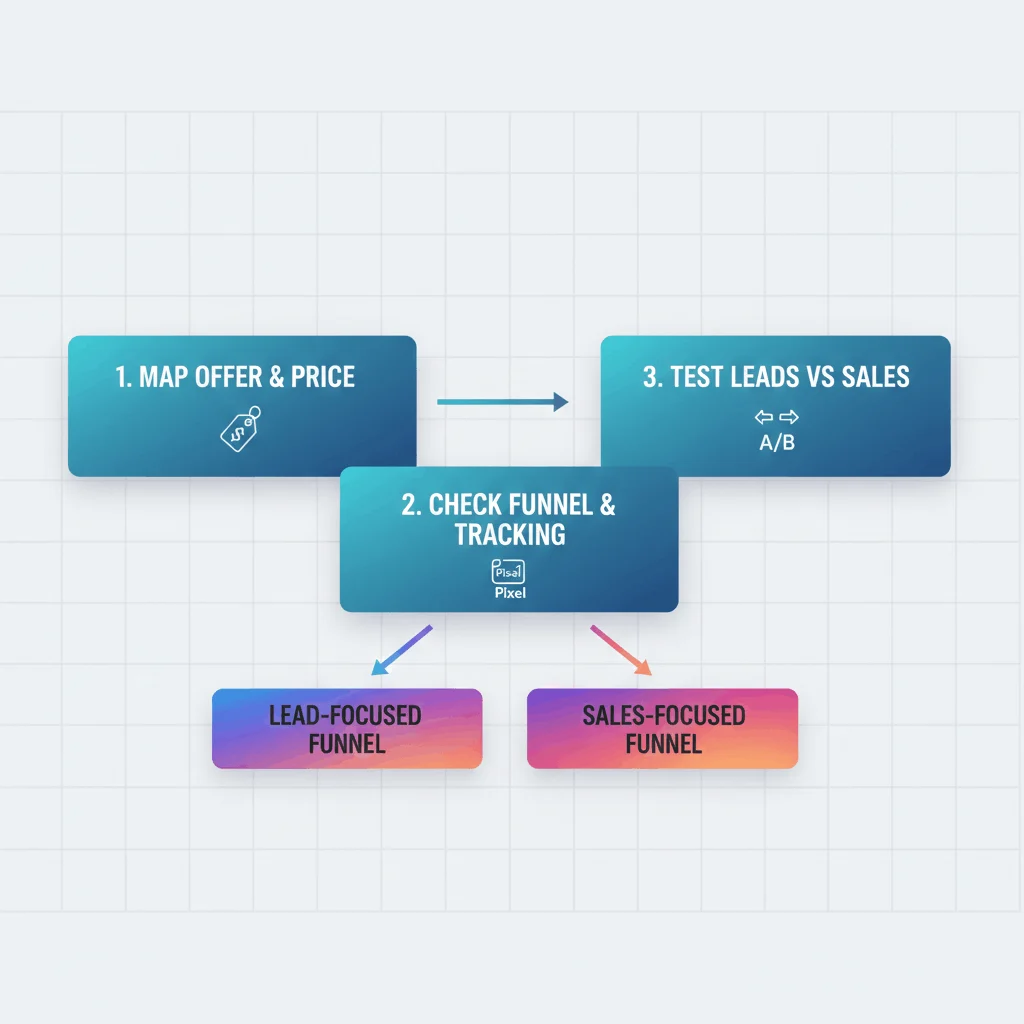
Step 1: Map Your Offer, Price, and Sales Cycle
Step Title: Clarify Ticket Size and How People Buy
Step Description:
List your main offers with price points, average time from first contact to sale, and whether a human conversation is typically needed. High-ticket, consultative services lean towards lead gen, while clear, lower-ticket products work better with sales objectives.
Tools Name: Spreadsheet tool, CRM, analytics
Materials Name: Offer list, historical sales data, funnel map
Step 2: Assess Funnel Assets and Tracking
Step Title: Check Landing Pages and Tracking Quality
Step Description:
Review your website speed, clarity of landing pages, and Pixel + CAPI setup. If tracking and UX are weak, start with lead forms; if they are strong, test sales/conversion campaigns to measure ROAS accurately.
Tools Name: Meta Events Manager, PageSpeed tool, analytics suite
Materials Name: Tracking implementation doc, key landing page URLs, benchmark metrics
Step 3: Design a Two-Objective Test Plan
Step Title: Run Parallel Lead vs Sales Tests
Step Description:
Create one campaign with the Leads objective and another with Sales/Conversions, both targeting similar audiences. Use different creatives tailored to the objective and run both for at least 2–4 weeks. Compare not just CPL vs CPA, but also revenue per impression and lead-to-sale rate.
Tools Name: Meta Ads Manager, reporting dashboard, CRM/lead tracker
Materials Name: Creative sets for both objectives, KPIs sheet, test timeline
FAQ Section
Neither is universally better. Lead gen suits high-ticket, service-based, and longer-cycle offers, while Sales/Conversions suits D2C and lower-ticket products with strong landing pages.
Lead gen campaigns usually deliver lower cost per “conversion” (lead) because forms are easier than purchases. However, cheap leads are useless if your follow-up and sales process are weak.
Native forms increase completion rates via autofill, but website lead forms provide deeper analytics and qualification options. Many brands test both and choose based on lead quality and CRM integration.
Meta performs best when you pick a single primary objective per campaign. Trying to optimize for both at once confuses the algorithm and weakens performance.
Reels and Stories dominate engagement: Reels gain 700M+ monthly users, while Stories account for 37% of ad placements and have a 23% better view-through rate than feed ads. These placements work well for both lead gen and sales with the right creative.
For leads: CPL, lead-to-opportunity rate, and customer acquisition cost. For sales: CPA, ROAS, and conversion rate from click to purchase.
Most coaches and service providers perform best with Leads campaigns (applications, call bookings) for cold audiences, plus Sales/Conversion retargeting to close warmer leads.
Run each objective long enough to gather meaningful conversions—aim for at least 50–100 conversion events per ad set before making big budget shifts.
Key Takeaways Section
- Instagram Ads for lead generation excel when your offer is high-ticket or complex, and you have strong follow-up systems to nurture interest into sales.
- Sales and conversion objectives work best for D2C and simpler offers, especially when supported by optimized landing pages, clear tracking, and warm audiences.
- Benchmarks suggest lead gen campaigns often convert 2.3–2.8%, while sales and catalog campaigns typically sit around 1.0–3.5%, depending on vertical and funnel.
- The smartest strategy is rarely either–or; it combines lead campaigns for top/mid-funnel and sales campaigns for bottom-funnel retargeting.
- Instagram’s strength in discovery—4x more clicks than Facebook and high shopping interactions—makes it a powerful platform for both lead generation and sales when objectives match your business model.
Next Steps Section
- Map your offers, prices, and sales cycle, then decide whether you sell with a call or directly online.
- Audit your website UX and tracking; if they’re weak, start with lead forms, if strong, test sales objectives for ROAS.
- Build a two-objective test, running lead and sales campaigns side-by-side for 2–4 weeks, and compare end-to-end economics—not just CPL or CPC.
Conclusion
Instagram Ads for lead generation vs sales is not a philosophical question—it’s an objective and funnel alignment problem. When you match the right campaign objective to your business model, price point, and sales process, both can be powerful.
Use Instagram’s strength in discovery to capture qualified leads where conversations matter, and deploy sales/conversion campaigns where the path to purchase is clear. Over time, layering both objectives in a structured funnel gives you more predictable growth and a healthier mix of short-term revenue and long-term pipeline.
REFERENCE LINKS USED FOR RESEARCH
reference guide on Instagram Ads conversion rates by objective
lead generation ads vs conversion campaigns comparison
guide to choosing the correct Meta campaign objective
overview of Meta advertising objectives and strategies
Instagram ads statistics and trends through 2026