

AI vs Human Jobs: Understanding Future Workforce Trends Through 2030 🔮
AI vs human jobs represents the central economic question of our era—fundamentally reshaping how people work, what skills matter, and which careers flourish. Rather than binary replacement narratives, sophisticated workforce analysis reveals nuanced displacement patterns: 6-7% near-term job losses countered by 97 million new jobs created through 2025, coupled with 15% labor productivity gains. Understanding these future workforce trends proves essential for career planning, education investment, and policymaking.
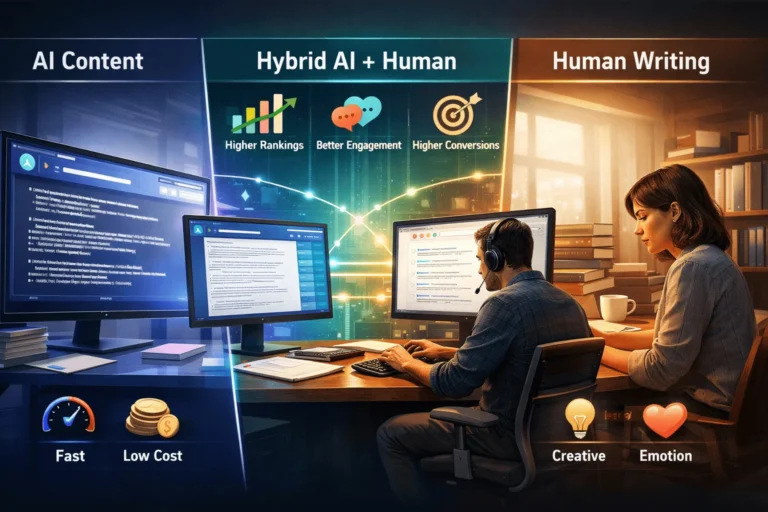
The evidence suggests neither utopian nor dystopian outcomes. AI will displace some jobs (assembly workers, drivers, telemarketers), but simultaneously create entirely new categories requiring different skills. Critically, human-AI collaboration emerges as the dominant working model rather than replacement—technology amplifies human capability while automating repetitive tasks.
AI vs Human Jobs – Workforce Impact Snapshot 📈
Job Displacement Risk: 6-7% baseline estimate (3-14% range under different scenarios)
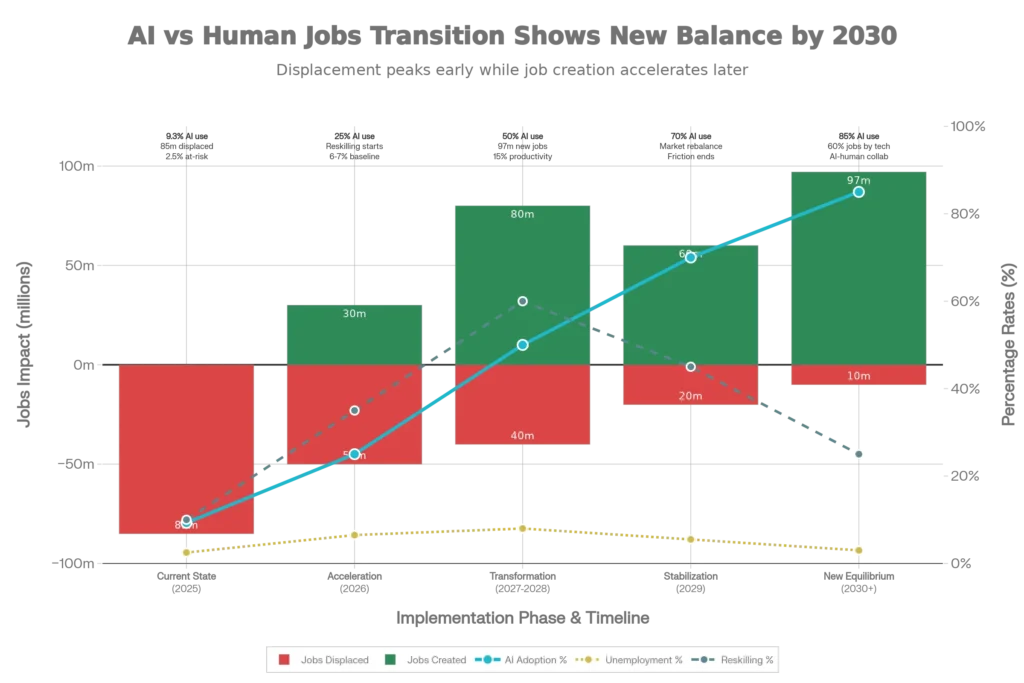
85 Million Jobs displaced globally by 2025 from labor-machine shift
97 Million New Jobs created across 26 countries by 2025
15% Labor Productivity gains with full AI adoption in developed markets
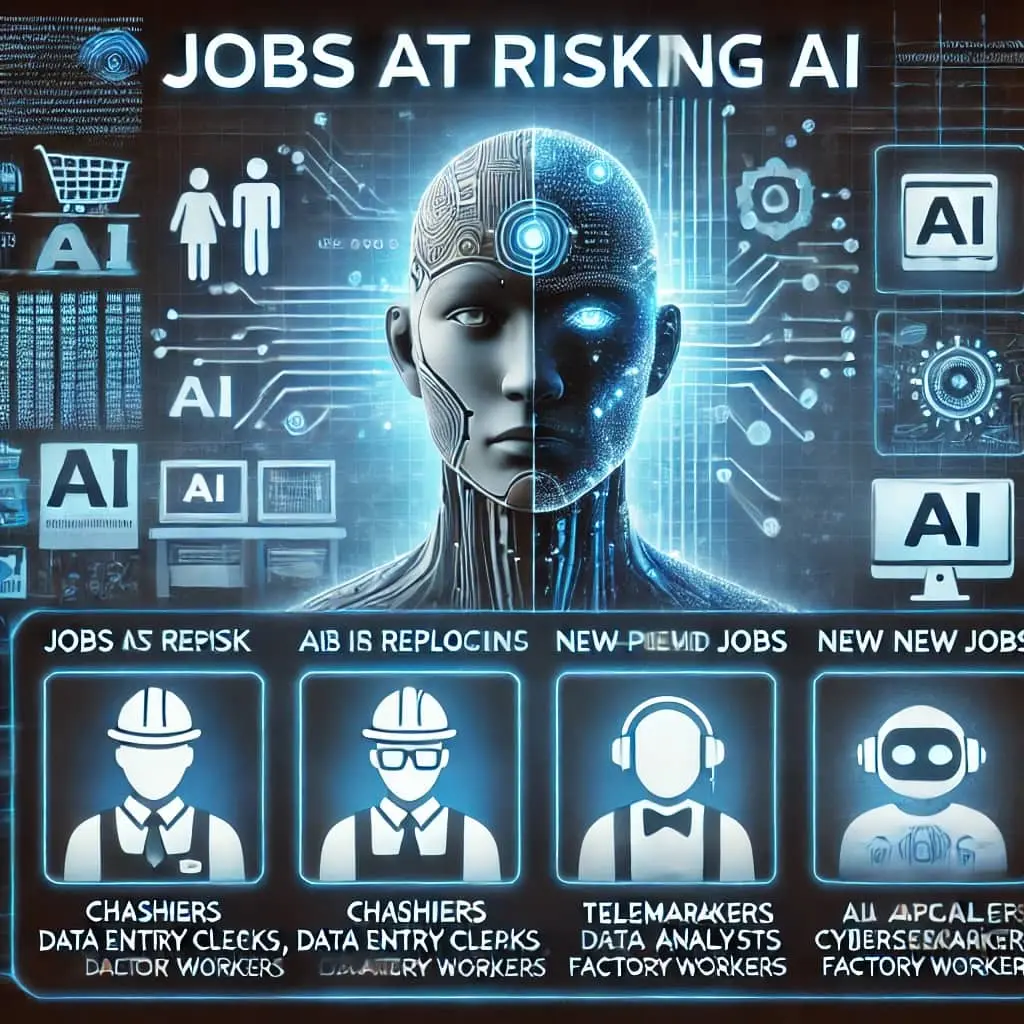
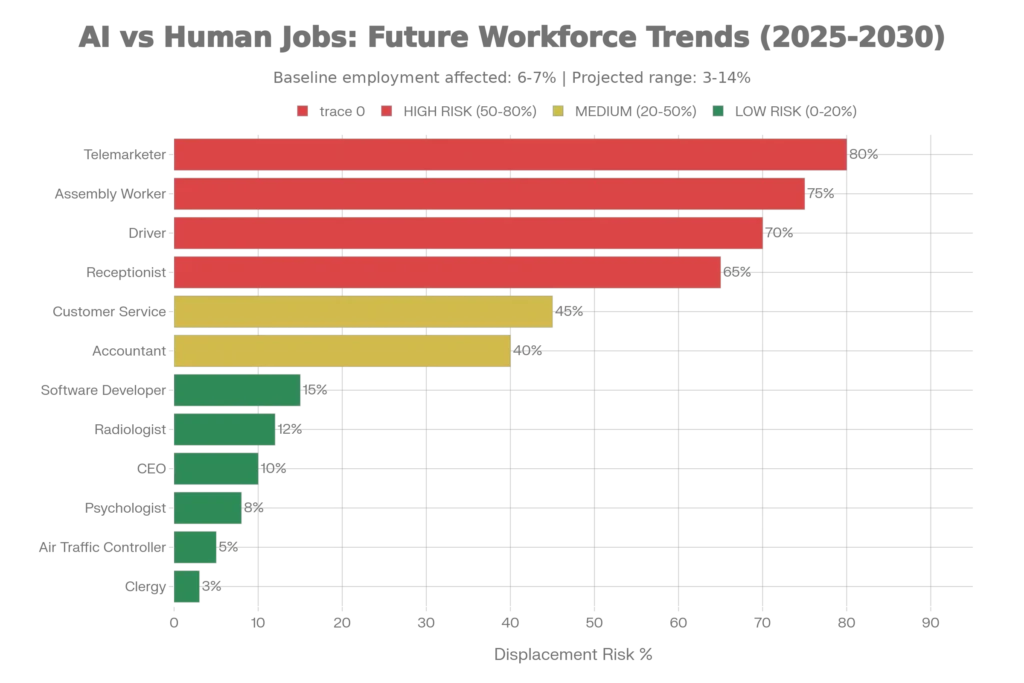
High-Risk Jobs: Drivers, assembly workers, telemarketers, receptionists, accountants
Safe Jobs: CEOs, psychologists, clergy, air traffic controllers, radiologists
New Job Demand: AI specialists, digital strategists, data analysts, software developers
Job Categories at Risk: AI vs Human Jobs High-Displacement Professions
AI vs human jobs analysis reveals clear patterns—roles emphasizing repetition, data processing, and routine decision-making face highest displacement risk. Conversely, positions requiring emotional intelligence, creative reasoning, and strategic judgment remain relatively secure.
High-Risk Occupations: Facing 50-80% Displacement Probability
Assembly Line & Manufacturing Workers: 🏭
Factory automation accelerates dramatically as AI-powered robotics replace human assembly, improving speed, consistency, and safety simultaneously. Millions of manufacturing jobs have already converted to automation; this trend accelerates through 2030. Modern factories increasingly operate 24/7 with minimal human staff managing logistics and quality oversight.
Professional Drivers (Taxi, Truck, Bus Operators): 🚗
Self-driving vehicle technology progresses toward commercial viability, threatening 3 million+ US professional driver jobs. Key advantages: AI vehicles eliminate fatigue-related accidents, reduce labor costs 40%+, operate continuously without breaks. However, full automation extends beyond 2030 for complex urban environments, creating transition period opportunities.
Receptionists & Administrative Support: 📞
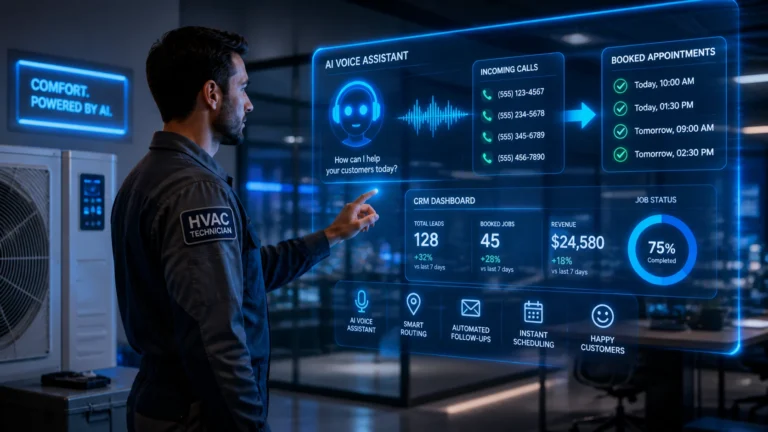
Automated scheduling, AI-powered chatbots, and digital communication eliminate receptionist functions entirely. Companies successfully replace human receptionists with virtual assistants handling phone routing, appointment booking, and visitor management.
Telemarketers, Proofreaders, Copy Editors: ✏️
AI-driven outreach, automated spell-check, and AI writing tools replace these roles systematically. Telemarketing automation achieves higher response rates with fewer compliance violations.
Medium-Risk Occupations: 20-50% Displacement Risk
Accountants, auditors, customer service representatives, and legal assistants face partial displacement—AI handles routine aspects (data entry, preliminary analysis, basic customer issues) while humans manage complex situations.
Jobs Remaining Safe: AI vs Human Jobs Low-Risk Professions
Despite displacement concerns, significant occupations remain fundamentally human-dependent through 2030 and beyond. Jobs requiring emotional intelligence, complex judgment, interpersonal connection, and creative strategy prove resistant to AI replacement.
Leadership & Complex Decision-Making Roles
Chief Executives: 🎯
AI cannot replicate leadership qualities—strategic vision, organizational culture building, employee inspiration, board relations, competitive judgment. CEOs develop enterprise strategy, make judgment calls with incomplete information, motivate teams through uncertainty—uniquely human capabilities.
Human Resource Managers: 👥
Recruiting, employee development, conflict resolution, retention strategy, and organizational culture management require emotional intelligence, negotiation skill, and contextual judgment AI systems cannot replicate. Even as HR tools become more sophisticated, human managers direct strategy.
Fields Requiring Human Empathy & Expertise
Psychologists & Psychiatrists: 🧠
Mental health treatment demands empathy, trust-building, nuanced understanding of individual psychology, and complex ethical reasoning—capabilities far beyond current AI. While assessment tools become AI-enhanced, human clinicians remain essential.
Clergy & Spiritual Leaders: ⛪
Counseling, community building, spiritual guidance, and existential questions require deep human connection, faith, and contextual wisdom—fundamentally human roles.
Technical Roles Requiring Innovation
Software Developers & AI Specialists: 💻
Ironically, building and maintaining AI systems itself creates jobs. Companies require AI researchers, machine learning engineers, AI ethicists, and automation specialists—entirely new categories emerging from technological change.
AI & Machine Learning Specialists: 🔬
Explosive demand for AI talent continues through 2030 and beyond. Creating, improving, and ethically implementing AI systems requires specialized expertise currently scarce and expensive.
High-Consequence Roles Requiring Human Judgment
Air Traffic Controllers, Radiologists, Pharmacists: ✈️
Roles where errors carry catastrophic consequences remain human-focused. While AI assists analysis (radiologist image interpretation, medication interaction checking), final judgment and accountability remain human responsibilities.
The Path Forward: Reskilling, Adaptation & New Job Creation
AI vs human jobs outcomes depend entirely on workforce adaptation, education investment, and strategic deployment choices. Historical evidence suggests technological disruption produces net positive employment long-term, but requires reskilling and patience through transition periods.
The Historical Pattern: Why Technology Creates Jobs
60% of current US jobs didn’t exist in 1940, proving that technological disruption consistently creates more new work than it destroys. Agricultural mechanization displaced millions of farmers, yet created entire industries (automotive, aviation, computers). Same dynamic unfolds with AI—different jobs, different locations, different skills.
Goldman Sachs projections confirm: 97 million new jobs emerge by 2025 across 26 countries. Growth concentrates in: digital marketing strategists, data analysts, AI specialists, software developers, cybersecurity experts, cloud engineers.
Workforce Adaptation: Urgency & Strategy Required
Critical skill gaps emerge as AI adoption accelerates:
Soft Skills Gaining Value: 📚
Emotional intelligence (irreplaceable by AI)
Complex problem-solving (contextual reasoning)
Creative thinking (novel solutions)
Leadership & communication (team dynamics)
Negotiation & persuasion (influencing outcomes)
Technical Skills Gaining Demand: 💻
AI/machine learning expertise
Data analysis & interpretation
Cloud computing architecture
Cybersecurity & risk management
Digital strategy development
Reskilling Timeline: When Job Transitions Occur
Goldman Sachs research documents that friction unemployment from tech disruption typically resolves within 2 years. Key insight: workers aren’t permanently unemployed—they transition to different roles with reskilling effort.
However, transition periods create genuine hardship, particularly for older workers (45+) with specialized skills suddenly obsolete. Government, companies, and educational institutions must coordinate aggressive reskilling programs.
Reskilling Investment Reality:
Individual responsibility: $3,000-$15,000 per skill certification
Employer investment: Major companies spending millions on employee reskilling
Government action: Varies dramatically by country and political commitment
The AI-Human Collaboration Model: Integration Over Replacement
Success emerges when organizations deploy AI augmenting human capability rather than replacing workers entirely:
Effective Implementation: ✅
Accountants: Keep humans, add AI data analysis automation
Customer service: Route simple questions to AI, escalate complex issues to humans
Project management: AI handles scheduling/resource allocation, humans handle strategy/team dynamics
Legal assistant work: AI handles document review, humans manage client relationships
This complementary approach maintains employment while improving productivity.
Conclusion: AI vs Human Jobs Requires Strategic Workforce Transformation 🎯
AI vs human jobs outcomes remain undetermined through 2030—dependent entirely on choices employers, governments, and individuals make. Historical precedent suggests net positive employment outcomes, but only following difficult transition periods requiring aggressive reskilling investment.
The mathematics appear positive: 97 million new jobs created by 2025 versus 85 million displaced, suggesting net employment growth. However, geographic mismatch, skill gaps, and demographic differences create concentrated hardship for some communities and age groups. Younger displaced workers adapt faster; older workers struggle significantly.
Critical success factors through 2030:
Aggressive education/reskilling investment before disruption accelerates
AI deployment prioritizing augmentation over pure replacement
Safety net support during transition periods (unemployment insurance, retraining programs)
Equitable access to reskilling opportunities across income/geography
Ethical AI governance ensuring fair human-AI collaboration
At StartupMandi, we recognize AI vs human jobs represents both challenge and opportunity. Explore our comprehensive workforce transformation guide covering career resilience, reskilling strategies, and emerging high-demand professions. Discover our detailed AI-ready career planning roadmap positioning professionals for 2025-2030 workforce evolution.
For workers concerned about AI vs human jobs impact, the path forward emphasizes proactive skill development, continuous learning, and strategic career pivots toward AI-complementary roles. Visit our complete AI-human collaboration masterclass teaching professionals to leverage AI tools rather than compete against them. Connect with our workforce transformation advisors developing customized career strategies aligned with 2025-2030 labor market shifts.
Frequently Asked Questions About AI vs Human Jobs & Future Workforce Trends
Q1: When will AI significantly impact employment—2025, 2026, or later?
AI adoption remains low (9.3% of US companies in 2025), limiting immediate disruption. However, Goldman Sachs projects 6-7% baseline employment displacement beginning 2026-2027 as adoption accelerates. Full impact extends through 2030 as technology matures.
Q2: Which professions should I avoid if worried about AI replacement?
High-risk: assembly workers, drivers, receptionists, telemarketers, proofreaders, customer service agents, accountants. Instead, pursue: AI specialists, software developers, data analysts, UX designers, strategic planners, leadership roles, healthcare workers, skilled trades.
Q3: How should I prepare my career for AI vs human jobs disruption?
Develop soft skills (emotional intelligence, creativity, problem-solving) that AI cannot replicate plus one valuable technical skill (data analysis, AI literacy, coding). Pursue roles emphasizing human judgment and relationship-building.
Q4: Will AI create enough new jobs replacing displaced ones?
Yes—97 million new jobs emerge globally by 2025. However, geographic mismatch and skill gaps mean not everyone can easily transition into new roles. Reskilling investment proves critical.
Q5: What’s the timeline for stable employment post-AI disruption?
Historical precedent: 2-year transition period with elevated friction unemployment, followed by return to normal labor market dynamics. However, some workers face permanent displacement if unable/unwilling to reskill.
Referring Blog / Fact Source

Mariyam Bandookwala
i am a professional content writer with a strong focus on clarity, strategy, and audience engagement—helping brands communicate smarter and grow faster.