


In 2026, your website design now directly influences how high you rank, how many visitors convert, and whether people trust your brand at all. Search engines read design signals the same way users feel them. If your layout is slow, confusing, or outdated, you quietly lose traffic, leads, and revenue every single day.
What Is Website Design in 2026?
Website design today is the strategic combination of layout, UX, content, SEO, and psychology that shapes how users behave on your site. It is no longer just about colors and fonts but about how easily visitors can complete tasks without friction.
Modern website design includes structure, navigation, responsiveness, performance, accessibility, and persuasive elements like social proof and CTAs that guide decisions. Core Web Vitals, mobile-first layouts, and clean information hierarchy are now fundamental design components, not “technical extras”.

How Does Website Design Affect SEO Rankings?
Website design affects SEO because search engines reward pages that load fast, are stable, and feel responsive to real users. Google’s Core Web Vitals measure loading, interactivity, and visual stability as direct ranking signals.
If your design triggers slow Largest Contentful Paint, layout shifts, or sluggish interactions, your pages are less likely to appear at the top of search results. In 2025 and beyond, Core Web Vitals continue to be a significant Google ranking factor, especially under mobile‑first indexing.
What Core Web Vitals Should You Focus On?
- Largest Contentful Paint (LCP): How quickly the main content appears, ideally under 2.5 seconds.
- Cumulative Layout Shift (CLS): How stable the layout remains during load, ideally below 0.1.
- Interaction to Next Paint (INP): How fast the page responds after an interaction, ideally under 200 ms.
A design that keeps 75% of users in the “good” range for all three metrics sends strong positive UX signals and tends to rank better.
“In 2025, Core Web Vitals remain one of the most critical ranking factors in Google’s algorithm, especially for mobile users.”
Why Does Page Speed Design Change Conversions?
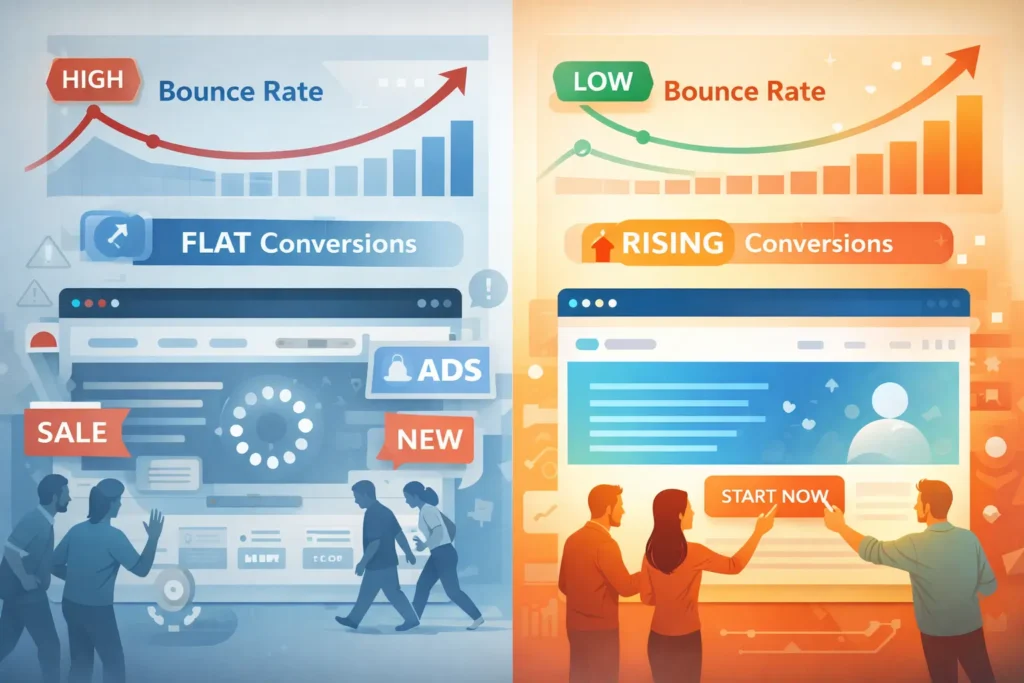
Page speed is now a design decision, not just a developer metric. Even a 2‑second delay can more than double bounce rates, destroying conversions before your content is even seen.
Studies show that when page load time increases from 2 to 5 seconds, the average bounce rate can jump from 9% to 38%, directly cutting into revenue potential. Fast, minimal, and focused designs that prioritize performance keep users engaged long enough to read, scroll, and convert.
How Does Load Time Impact Bounce Rate?
A streamlined design that avoids heavy scripts, oversized images, and cluttered layouts is now a primary driver of both SEO visibility and conversion performance.
You can pair such performance‑first design with tailored development, such as a custom website development package that optimizes structure and speed from day one, rather than patching issues later on.
How Does Mobile‑First Website Design Boost Conversions?
Mobile‑first design means you design for small screens first, then scale up. With mobile‑first indexing, search engines now evaluate your mobile experience before your desktop version.
Responsive websites consistently achieve higher conversion rates than non‑responsive designs, with studies indicating around 11% higher conversions and significantly better engagement on mobile devices. When navigation, forms, and CTAs are effortless on mobile, users stay longer and convert more frequently.
Why Do Users Prefer Responsive Design?
- Easier navigation and tap‑friendly buttons on smaller screens.
- Faster load times with mobile‑optimized assets and layout.
- Consistent experience across devices, improving brand recall and trust.
Ignoring responsive design leads directly to high bounce rates, low engagement, and missed conversions, especially since over half of users leave sites that take longer than three seconds to load on mobile.
If you are still validating demand and not ready for a full site, you can temporarily sell online without a website in 2026 using smart channels while planning a conversion‑focused responsive site in parallel.
How Does Website Design Influence Brand Trust?
Brand trust is largely emotional, but it is triggered by very specific design cues. Clean layouts, consistent branding, and professional UX make visitors feel that your business is credible and safe to buy from.
Research shows that users quickly abandon sites that feel unresponsive, confusing, or visually outdated, and many will never return after a poor performance experience. Elements like visible security badges, clear contact information, and transparent content structure all signal reliability and reduce purchase anxiety.
What Design Elements Build Brand Trust?
- Clear navigation and logical information hierarchy that reduce cognitive load.
- Consistent color palette, typography, and imagery that reinforce brand identity.
- Prominent testimonials, case studies, and reviews that provide social proof.
- Simple, visible CTAs that explain what happens next.
When these UX and psychological elements work together, your website becomes a digital “face‑to‑face meeting,” and visitors are far more likely to choose you over similar competitors.
For founders using WordPress, a structured WordPress website development service can ensure your design system, theme choice, and UX patterns align with brand trust and SEO from the start, instead of relying on random plugins and templates.
Why Do UX and SEO Need One Unified Strategy?
UX and SEO used to be managed as separate disciplines, but the algorithms have now fused them. Google’s ranking systems increasingly rely on real‑world behavior signals like engagement, scroll depth, and return visits, all of which depend on UX quality.
If your content is strong but your design is confusing, users do not stay long enough to send good engagement signals. Conversely, a beautiful site with thin content will not satisfy search intent and will underperform in rankings despite good design.
How Do UX, SEO, and Psychology Work Together?
- UX gets users to stay: Clear layout, readable typography, and intuitive navigation keep visitors on the page.
- SEO gets users to arrive: Structured content, keyword targeting, and technical health bring the right traffic.
- Psychology gets users to act: Scarcity cues, social proof, and authority triggers increase sign‑ups and sales.
“Responsive, fast, and intuitive websites are now rewarded twice: once by users through conversions, and again by search engines through higher rankings.” – Synthesis of multiple UX and SEO studies.
How Can You Measure Design Impact on SEO and Conversions?
You cannot improve what you do not measure. The fastest path to ROI is tracking how design changes affect traffic, engagement, and conversion metrics week by week.
Monitor Core Web Vitals and loading performance to understand UX signals, while simultaneously tracking bounce rate, conversion rate, and average session duration for business impact. This data reveals precisely which design elements are helping or hurting results.
What Metrics Should Business Owners Track?
- Core Web Vitals scores (LCP, CLS, INP) for SEO and UX health.
- Conversion rate on key pages like landing pages, product pages, and contact forms.
- Bounce rate and session duration across devices to assess engagement.
- Funnel progression from homepage to CTA completion to identify leaks.
If you lack technical bandwidth, consider a custom website development package that includes ongoing performance monitoring and UX improvements, instead of treating your site as a one‑time project.
How Do You Align Website Design With Buyer Psychology?
Buyer psychology focuses on how people perceive risk, value, and effort before making a decision. Your design should reduce friction, increase perceived value, and remove doubts using visual cues and content structure.
Key psychological principles in web design include clarity, social proof, authority, reciprocity, and loss aversion. For example, surfacing testimonials near the CTA and making your primary button color stand out can nudify action without feeling pushy.
Which UX Psychology Patterns Actually Work?
- Visual hierarchy: Place the most important message and CTA above the fold with clear contrast.
- Social proof: Show reviews, logos, and success metrics near decision points.
- Commitment & consistency: Use simple micro‑conversions like “Download guide” before asking for bigger actions.
- Scarcity and urgency: Highlight limited slots, time‑bound offers, or upcoming deadlines transparently.
When psychology is baked into the structure of your website design, you do not have to rely on aggressive sales tactics; the experience itself naturally leads visitors to act.
How To Redesign Your Website for SEO, Conversions, and Trust?
Direct answer: Start by auditing your current UX and performance, then redesign your information architecture, mobile experience, and on‑page elements around one clear conversion goal. Prioritize speed, clarity, and trust cues before visual flair.
Below is a practical HowTo framework you can adapt with your internal team or a specialist partner.
How To Plan a Conversion‑Focused Website Redesign?
Times Needed: 21 Days & 20 Hours
Estimated Cost: 1500 USD
Plan and execute a website redesign that improves SEO, conversion rates, and brand trust by combining UX best practices, performance optimization, and persuasive content.
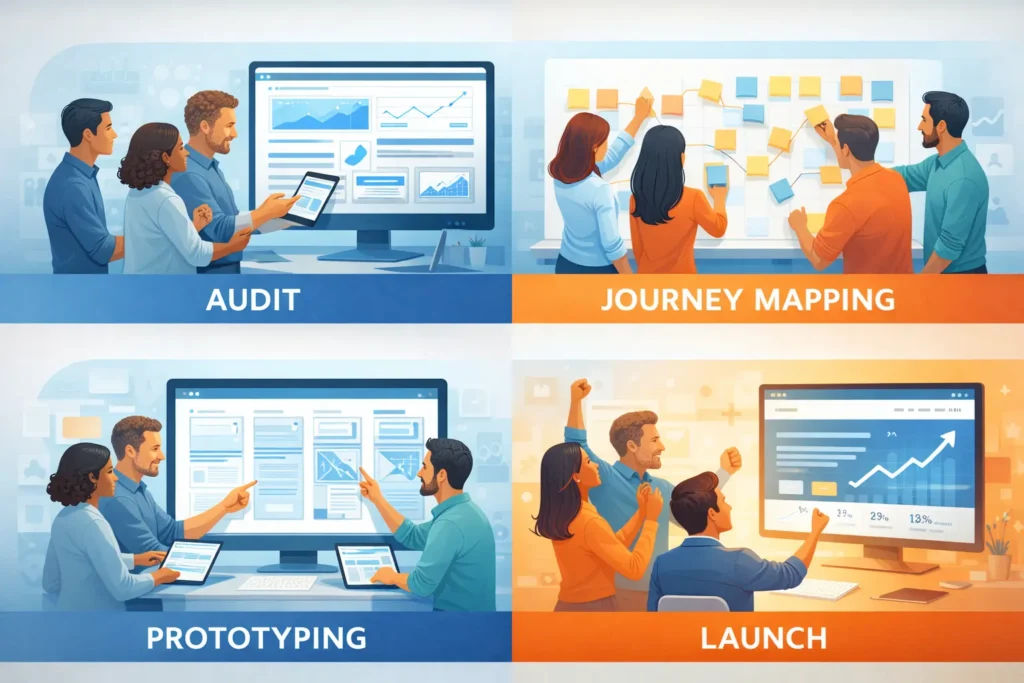
Steps-by-Step Process:
Step 1: Benchmark current SEO and UX performance
Use analytics and Core Web Vitals tools to measure traffic, bounce rate, conversions, and performance so you know exactly where design is hurting results.
Step 2: Map ideal customer journeys and site structure
Define who your primary users are, what they want to achieve, and design clear navigation paths and page templates that support those journeys end‑to‑end.
Step 3: Prototype mobile‑first layouts and key pages
Create wireframes for mobile and desktop views focusing on speed, clarity, and single‑focus CTAs per page before investing in visual polish or animations.
Step 4: Implement, test, and optimize new design
Develop the new design, run A/B tests on CTAs and layouts, then monitor metrics for at least 4 weeks to refine copy, visuals, and performance bottlenecks.
Tools Name: Google Analytics, Google Search Console, PageSpeed Insights, Figma
Materials Name: Brand style guide, content inventory, user personas, analytics reports
If you prefer an expert‑led approach, a specialized WordPress website development service can implement this full redesign using proven frameworks, while your team focuses on content and offers.
When Should You Get a UX Review Instead of a Full Redesign?
You do not always need a new website; sometimes you just need expert eyes. A UX review highlights specific friction points that are quietly killing your SEO and conversions, often in days instead of months.
Choose a UX review when your design is recent but underperforming, or when traffic is growing but leads are flat. Choose a full redesign when the visual language, tech stack, and information architecture are outdated and expensive to maintain.
What Does a UX Review Typically Cover?
- Navigation and information hierarchy clarity.
- Mobile usability, tap targets, and scroll behavior.
- Page speed bottlenecks and Core Web Vitals issues.
- Placement and clarity of CTAs, forms, and trust signals.

Key Takeaways
- Website design now directly influences SEO rankings, conversions, and brand trust through Core Web Vitals and user behavior signals.
- Mobile‑first, responsive layouts significantly improve engagement and conversions compared to non‑responsive designs, especially under mobile‑first indexing.
- Page speed and stability are essential design considerations because even a few seconds of delay can dramatically increase bounce rates and cut revenue.
- Blending UX best practices with buyer psychology—visual hierarchy, social proof, and trust cues—turns visits into leads without aggressive selling.
- A focused UX review or strategic redesign, supported by specialist WordPress and custom development services, is often the fastest way to unlock higher ROI from your existing traffic.
Next Steps
- Audit your existing website’s Core Web Vitals, mobile responsiveness, and key conversion flows using analytics and performance tools.
- List 3–5 pages that drive the most business value (home, services, pricing, key landing pages) and prioritize them for UX and speed improvements.
- Explore a UX‑first WordPress website development plan or custom website development package with StartupMandi to implement the highest‑impact design changes systematically, rather than piecemeal.
- If you are still validating your online business model, use smart methods to sell online without a website in 2026 while planning a scalable, conversion‑driven website architecture.
FAQs:
How does website design affect SEO in 2026?
Website design affects SEO through Core Web Vitals, mobile responsiveness, and user engagement metrics like bounce rate and time on page, which are all considered in modern ranking systems
Is responsive design really necessary for small businesses?
Yes, responsive design is critical because most visitors now browse on mobile, and non‑responsive sites often see higher bounce rates and lower conversion rates compared to responsive alternatives.
How fast should my website load to avoid losing visitors?
Aim for meaningful content to load within 2–3 seconds; beyond 3 seconds, bounce rates increase sharply, climbing to around 38% when load times reach 5 seconds in some studies.
Does improving Core Web Vitals guarantee higher rankings?
Improving Core Web Vitals does not guarantee top rankings alone, but it strengthens your overall SEO foundation and can provide an advantage when combined with strong content and backlinks.
What design changes have the biggest impact on conversions?
Simplifying navigation, speeding up load times, optimizing forms, and placing clear CTAs with visible social proof near decision points usually deliver the fastest conversion improvements.
Should I focus on aesthetics or performance first?
Focus on performance, clarity, and mobile usability first; once those are solid, enhance aesthetics so they support, rather than distract from, your conversion goals.
How often should I update my website design?
Minor UX and performance improvements should happen quarterly, while larger design refreshes usually occur every 2–3 years or when metrics show persistent declines in engagement or conversions.
Can I get good results with WordPress for serious SEO?
Yes, with a well‑built theme, optimized plugins, and a performance‑focused setup, WordPress can support excellent SEO and UX, especially when managed by experienced WordPress development partners.
A Few Link Suggestions for Research & Fact‑check
- Custom website development package for performance‑first design
- Smart ways to sell online without a website in 2026
- Conversion‑focused WordPress website development services
- Official Core Web Vitals documentation
- Core Web Vitals impact on rankings and UX in 2025
- Latest web design and responsive website statistics
- Page speed and bounce rate statistics
- Impact of mobile‑first design on conversion rates
Conclusion
Website design is no longer a cosmetic decision; it is a growth engine that dictates how easily you rank, convert, and earn trust in a crowded digital market. By combining UX, SEO, and psychology, you transform your site from a static brochure into a reliable system for qualified leads and sales.
If you are unsure where to start, request a UX review tailored to your business model and tech stack, then use those insights to upgrade your WordPress or custom website with a structured development package from StartupMandi for long‑term results.
Few Resources for Fact-Checking
- Core Web Vitals Overview – Official guidance on UX metrics and their role in search performance.
- Core Web Vitals and Rankings in 2025 – Deep dive into how these metrics impact visibility and UX.
- Web Design Statistics for Business – Data on responsive design, engagement, and user preferences.
- Page Speed and Bounce Rate Analysis – Detailed statistics on how load time affects user behavior and revenue.
- Mobile‑First and Responsive Design for Conversions – Practical tactics to improve mobile UX and sales.