



If you run a small business in India, GST compliance is no longer optional. Miss a return or file late and you face automatic late fees, 18% interest on unpaid tax, and blocked Input Tax Credit (ITC).
This guide gives you a practical GST compliance checklist and year-round calendar—so MSMEs and traders know exactly what to do each month, quarter, and year to stay fully compliant in 2025–26.
What Is GST Compliance for Small Businesses?
GST compliance means following all legal obligations under the Goods and Services Tax law: registration, correct invoicing, ITC management, timely return filing, tax payment, and record-keeping.
For MSMEs, non-compliance leads to late fees, interest, penalties, and loss of business relationships when buyers cannot claim ITC because your returns are not filed.
LegalWiz, Pro Analyser, and Cashweta outline similar pillars for GST compliance:
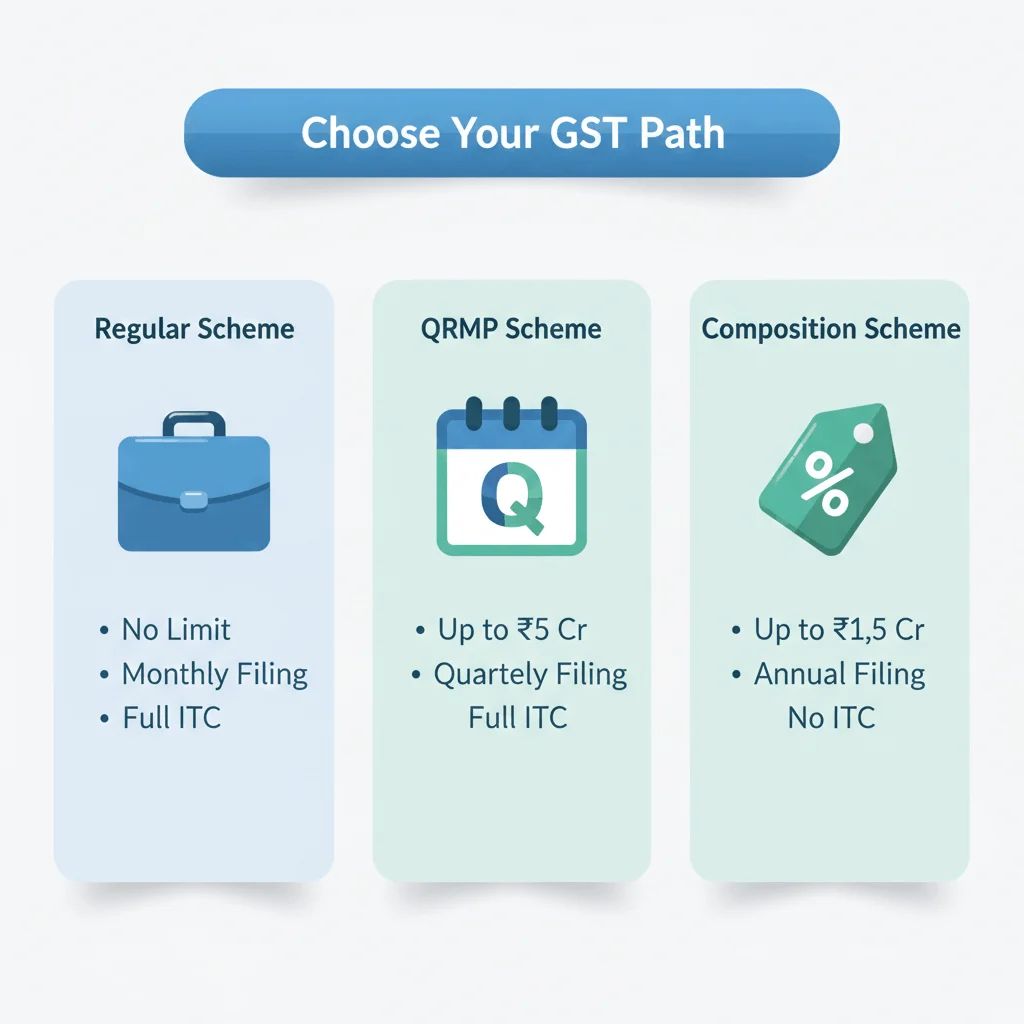
- Registration & scheme selection (regular vs composition vs QRMP).
- Invoicing and e-invoicing where applicable.
- ITC and Reverse Charge (RCM) management.
- Return filing and tax payment (GSTR‑1, 3B, 9, 9C, etc.).
- Year-end reconciliations and audits.
Key idea: GST compliance is not just filing GSTR‑3B—it’s a continuous, calendar-based process.
Who Needs GST Registration and Which Scheme Applies?
Before building your compliance calendar, confirm whether GST registration is mandatory and which scheme suits you.
1. What Are the Current Thresholds and Options?
Recent checklists for 2025–26 mention the following thresholds (always confirm state-specific rules):
Nricaservices and other sources highlight that micro and small startups can opt for composition or QRMP to simplify compliance.
2. What Schemes Can Small Businesses Choose?
- Regular scheme (monthly or QRMP):
- Composition scheme:
- QRMP scheme (Quarterly Return, Monthly Payment):
Tip: Many small businesses over‑complicate compliance by choosing the wrong scheme. Choosing the right scheme is your first compliance decision.

What Is the Year-Round GST Compliance Calendar?
A GST compliance calendar helps you map monthly, quarterly, and annual obligations so nothing slips through.
1. What Are the Core Returns and Their Frequency?
Cashweta, IndiaFilings, Motilal Oswal, and others summarize the main returns:
- Exact dates may shift slightly; always confirm latest notifications.
IndiaFilings and Motilal Oswal provide detailed month-wise calendars for FY 2025–26, which you can adapt for your business.
2. What Does a Sample Monthly/Quarterly GST Calendar Look Like?
For a regular monthly filer (non‑QRMP):
For a QRMP filer (turnover ≤ ₹5 crore):
- Monthly:
- Pay tax using PMT‑06 by the 25th (if using fixed sum/self assessment).
- Quarterly:
Year-end:
What Should Be on My GST Compliance Checklist?
A good GST compliance checklist covers daily, monthly/quarterly, and annual tasks.
1. What Are the Daily/Transactional Tasks?
- Issue GST-compliant invoices
- Collect and store purchase invoices
- Track cash, credit, and electronic ledgers
2. What Are the Monthly/Quarterly Tasks?
Pro Analyser and Cashweta list similar periodic tasks:
- Reconcile outward supplies
- Reconcile ITC with GSTR‑2B
- Compute tax liability and pay on time
- File returns timely
- Review RCM obligations
3. What Are the Year-End Tasks?
TaxGuru and Pro Analyser’s year-end checklists include:
- Full-year reconciliation
- Match annual turnover and ITC between books, GSTR‑1, GSTR‑3B, and GSTR‑9.
- Composition/QRMP decisions
- Export and refund compliance
- Prepare and file annual return
“Maintain a compliance calendar and perform monthly reviews. Dedicate one day a month to check outstanding filings and payments.” — TMWala compliance guide
What Are the Consequences of Missing GST Compliance?
Non-compliance with GST has immediate financial costs and long-term business impact.
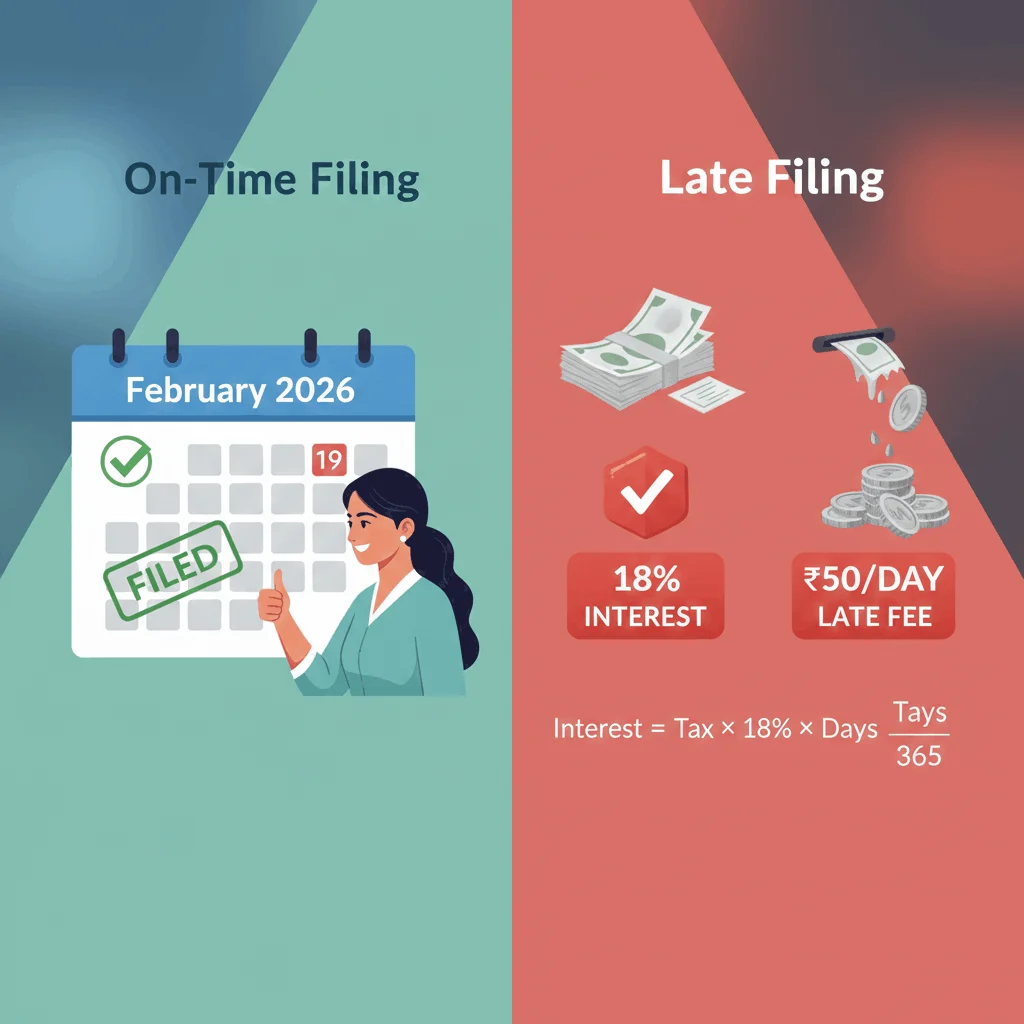
1. What Late Fees and Interest Apply?
Multiple sources confirm similar patterns:
- Late fees for returns (e.g., GSTR‑1, 3B):
- Interest on delayed tax payment:
DMI Finance notes that from July 2025, late fees for GSTR‑1 are ₹50/day with a limit of ₹5,000. ClearTax and SSCO add that 18% interest is mandatory on delayed tax regardless of late fee caps.
2. What Are Other Risks of Non-Compliance?
- Blocked ITC and vendor friction:
- Notices and penalties:
- Cash-flow pain:
Key takeaway: Staying compliant is cheaper than catching up after missing deadlines.
How To Implement a Practical GST Compliance System
Times Needed: Days: 07, Hours: 10, Minutes: 00
Estimated Cost: Currency: INR, Price: 3,000–15,000 (software + CA support)
Description: A 7‑day implementation plan to convert this GST checklist into a working system with tools, roles, and an internal compliance calendar for MSMEs and traders.
Step 1: Map Your GST Profile
Step Title: Identify Registration Type and Filing Frequency
Step Description:
Confirm whether you are a regular or composition taxpayer and whether you file monthly or under QRMP. List all GSTINs (multiple states, branches) and corresponding return types (GSTR‑1, 3B, 4, 7/8, 9, 9C) for each.
Tools Name: GST portal login, internal entity list, CA consultation
Materials Name: GST registration certificates, turnover summary, scheme selection records
Step 2: Set Up a GST Compliance Calendar
Step Title: Create a Shared GST Calendar with Due Dates
Step Description:
Use a spreadsheet or calendar app to mark all monthly, quarterly, and annual GST due dates (GSTR‑1, 3B, PMT‑06, 9, 9C). Add internal cut‑offs 3–5 days before each due date for data finalisation and approvals.
Tools Name: Google Calendar, Excel/Sheets, compliance software
Materials Name: Consolidated due date table, reminder rules, escalation contacts
Step 3: Standardise Invoicing, Books, and ITC Tracking
Step Title: Implement Uniform Invoicing and ITC Processes
Step Description:
Configure accounting or billing software to generate GST-compliant invoices and keep separate sales and purchase registers. Set a monthly ritual to reconcile ITC with GSTR‑2B and chase suppliers for missing or incorrect invoices.
Tools Name: Tally/Zoho Books/QuickBooks, e‑invoicing tool, shared drive
Materials Name: Invoice templates, ITC reconciliation sheet, supplier contact list
Step 4: Assign Roles and Review Mechanisms
Step Title: Define GST Responsibilities and Monthly Reviews
Step Description:
Assign clear ownership: who prepares data, who validates ITC, who files returns, and who authorizes tax payments. Block one day each month for a GST review meeting to verify filings, notices, and interest/late fee exposures.
Tools Name: Task management tool, internal SOP document, email alerts
Materials Name: RACI matrix, SOP for filings, monthly review checklist
FAQ Section
Do all small businesses in India need GST registration?
No. Registration is mandatory only if you cross threshold limits (e.g., around ₹60 lakh for goods and ₹20 lakh for services in FY 2025–26; check state-specific rules). Below thresholds, registration is optional but beneficial in many B2B contexts.
Which GST returns must a typical MSME file?
Most regular MSMEs file GSTR‑1 (sales), GSTR‑3B (summary and tax), and GSTR‑9 (annual return). Composition taxpayers file CMP‑08 quarterly and GSTR‑4 annually. TDS/TCS deductors file GSTR‑7/8.
What is the due date for GSTR‑1 and GSTR‑3B?
For monthly filers, GSTR‑1 is usually due on the 11th of the following month and GSTR‑3B by the 20th. QRMP filers submit quarterly returns by notified dates (such as 13th and 22/24th of the month after the quarter), plus PMT‑06 monthly payments.
What happens if I file GSTR‑3B late?
You will owe both late fees (e.g., ₹50/day, ₹20/day for nil returns) and 18% per annum interest on unpaid tax, calculated daily until payment is made.
How often should I reconcile ITC?
Experts recommend monthly reconciliation between your purchase register and GSTR‑2B to avoid wrong ITC claims and future notices or blocked credits.
Do I need to file GSTR‑9 if my turnover is below ₹2 crore?
Exemptions for GSTR‑9 for very small taxpayers have been notified in previous years, but conditions change; check the latest CBIC notifications or consult your CA. Many checklists still recommend annual reconciliation, even if filing is optional.
Can I switch between regular and composition schemes anytime?
Switching is allowed only at specific times and with proper declarations (e.g., CMP‑02 by 31 March to opt for composition from next FY). Wrong or late switching may trigger differential tax liability.
Is it safe to ignore small late fees or interest amounts?
No. Even small unpaid amounts accumulate interest and can trigger notices, block ITC, and complicate future compliance. It’s safer to clear all dues promptly.
Key Takeaways Section
- GST compliance is a year-round process, not just monthly GSTR‑3B filing. It spans invoicing, ITC reconciliation, returns, payments, and annual reconciliations.
- A clear GST compliance calendar with monthly, quarterly, and annual due dates prevents missed filings and reduces stress at year-end.
- Late fees of ₹50/day (₹20/day for nil returns) and 18% interest on unpaid tax make delays expensive—staying timely is always cheaper.
- Regular ITC reconciliation with GSTR‑2B and proper RCM management are essential to avoid penalties and cash-flow shocks.
- MSMEs can reduce compliance load by choosing suitable schemes (composition or QRMP) and using accounting software plus CA support.
Next Steps Section
- Use this article to build your own GST calendar in Google Calendar or Excel, aligning each task to your GSTIN and scheme.
- Implement monthly routines for ITC reconciliation, RCM review, and ledger checks, and block a fixed “GST day” each month.
- If your business is growing, consult your CA about moving to QRMP or composition and about managing annual tasks like GSTR‑9/9C ahead of time.
Conclusion
For Indian MSMEs and traders, GST compliance is often the thin line between smooth scaling and constant firefighting. A simple, documented checklist and calendar, backed by basic tools and clear internal ownership, can eliminate most last-minute panic, notices, and unnecessary penalties.
Treat GST as a routine business process—not a once-a-year event. When your returns, payments, and reconciliations run on autopilot, you free up time and mental bandwidth to do what matters most: serving customers and growing your business.
REFERENCE LINKS USED FOR RESEARCH
complete GST compliance checklist for MSMEs and small businesses
2025–26 GST calendar with detailed filing dates
year-end GST compliance checklist for businesses
guide to GST late fees and interest on delayed returns
ultimate GST compliance checklist for FY 2025–26