

Introduction
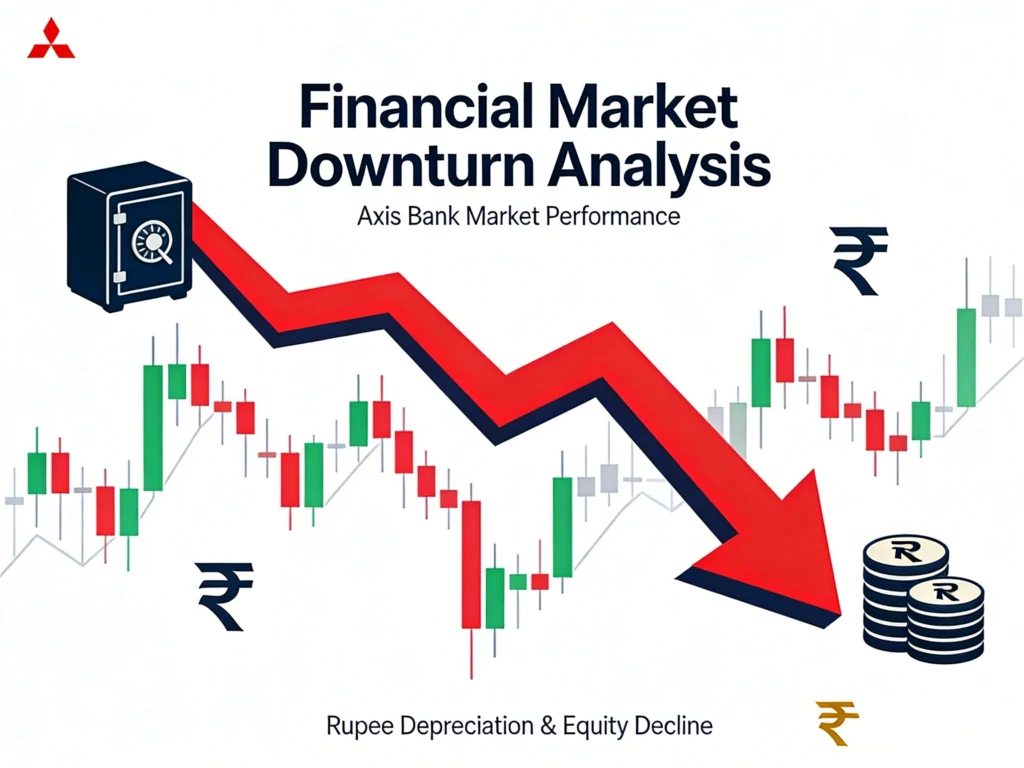
Axis Bank share price experienced a significant decline today on the National Stock Exchange. The stock fell 3.81% to trade around ₹1,235.80 per share during afternoon sessions. This sharp drop followed Citi Research’s recent report highlighting mounting net interest margin pressures. Investors watched as Axis Bank joined the broader market downturn affecting NSE India indices. The private lender’s weakness dragged down the entire banking sector performance significantly.
Summary: Axis Bank’s stock price plummeted 4% on NSE today as Citi warned about extending NIM pressures into Q3FY26. The Nifty 50 index fell alongside banking stocks amid rupee weakness and global uncertainty. Meanwhile, market participants seek clarity on recovery timelines and dividend yields for private banking sector investments.

WHAT TRIGGERED AXIS BANK’S SHARP DECLINE?
Multiple factors drove Axis Bank’s sharp 3.81% decline on NSE trading floor today. Citi Research’s negative outlook became the primary catalyst for aggressive selling pressure. The brokerage warned that net interest margin pressures would extend beyond Q3, contradicting management’s earlier guidance. Additionally, the Indian rupee slid past the 91 mark against the US dollar. This currency weakness further pressured financial stocks like Axis Bank significantly. Foreign investors sold Indian equities amid trade deal uncertainties, triggering broader market declines.
Citi’s NIM Pressure Warning
Citi Research released a concerning report about Axis Bank’s margin pressures today. The brokerage projected that NIM recovery would extend to Q4FY26 or even Q1FY27. This contrasts sharply with management’s previous Q3 recovery guidance provided earlier. Analysts cite deposit competition and rate cut transmission as primary headwinds. Net interest margins represent the gap between lending and borrowing rates for banks. Smaller margins directly impact bank profitability and shareholder returns negatively.
Rupee Weakness Impacts Financial Sector
The Indian rupee’s decline past 91 against the US dollar added pressure on the share price of Axis Bank. Currency weakness typically hurts financial institutions carrying dollar-denominated assets. Foreign institutional investors reduced equity holdings amid macro uncertainties. This selling pressure cascaded across NSE listed banking stocks throughout the trading session. The rupee’s depreciation reflects broader concerns about global trade dynamics ahead.


NIFTY 50 AND BROADER MARKET PERFORMANCE TODAY
The Nifty 50 index declined 0.5% during today’s trading session on NSE. This marks the second consecutive day of losses for India’s primary equity benchmark. Meanwhile, the Sensex fell 385 points alongside weakness in metal and IT stocks today. Information technology companies dropped 1.1% as US revenue concerns surfaced among investors. Small-cap and mid-cap indices proved more resilient compared to large-cap indices. Market breadth showed 13 of 16 major sector indices trading in the red zone today.
Banking Sector Bears Down the Index
Axis Bank led the Nifty 50’s decline alongside HDFC Bank and other lenders. The Nifty Bank index slumped 0.6% after Axis Bank shares crashed 4% on NSE today. Notably, 10 out of 12 banking constituents traded in negative territory throughout the session. Market analysts attributed weakness to disappointing earnings guidance and margin pressures. Banking stocks typically carry significant weight in the Nifty 50 composition and influence. Therefore, sector weakness directly pressured the broader index lower today.
Global Cues Weigh on Indian Markets
Uncertainty surrounding potential India-US trade deals dampened investor sentiment across NSE. Global markets showed weakness ahead of US non-farm payroll data releases. Inflation concerns and Federal Reserve rate action expectations influenced international flows. These external factors triggered substantial foreign investor selling pressure on Indian equities. US economic data releases this week may determine directions for Indian stock markets ahead.

AXIS BANK FUNDAMENTALS AND INVESTMENT PERSPECTIVE
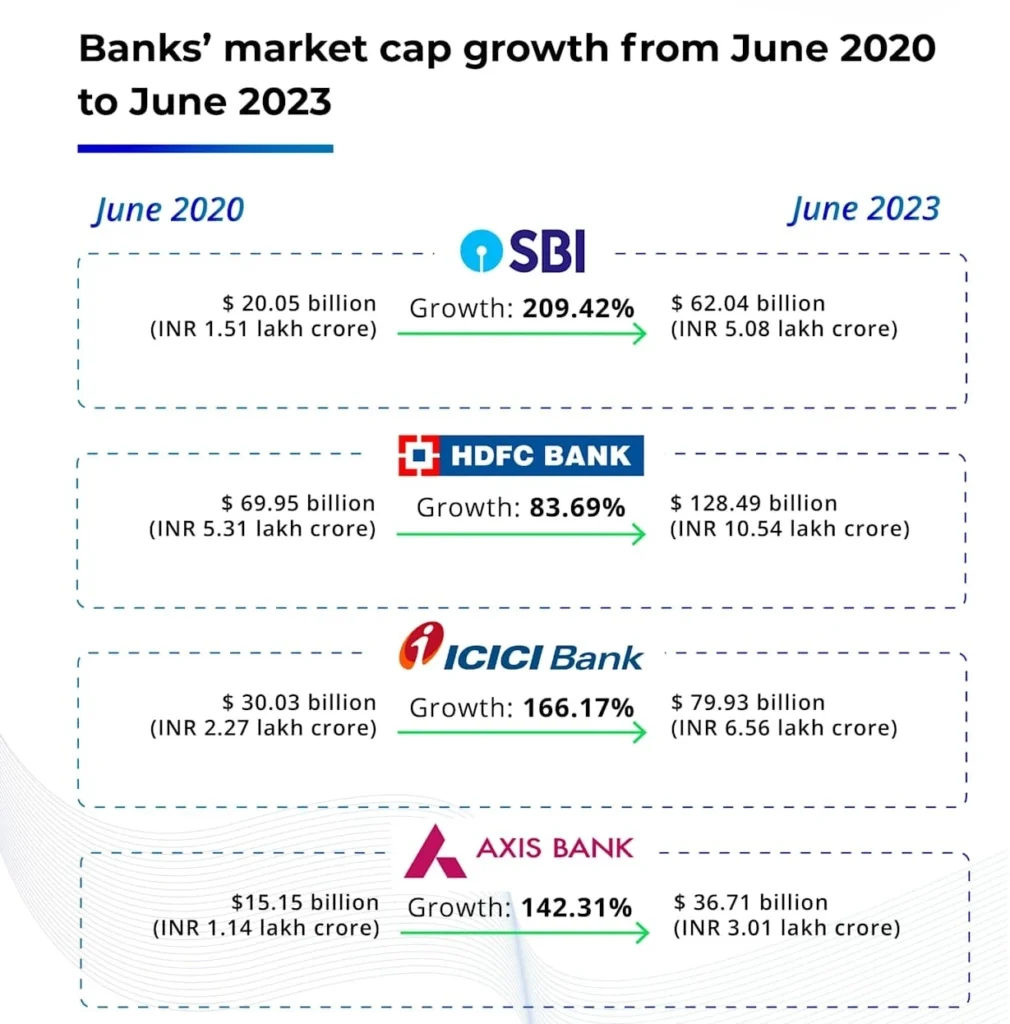
Axis Bank remains India’s fourth-largest private sector lender by market capitalization. The bank’s market cap stands at approximately ₹3,78,593 crores on NSE today. However, recent quarter profits declined 25.31% compared to prior year performance figures. Net Non-Performing Assets (NPA) ratio improved to 0.33% despite challenging economic conditions. The price-to-earnings ratio of 13.49 appears reasonable compared to historical valuations. Book value per share stands at ₹600.68, indicating solid asset backing today.
Profitability Challenges in Q2FY26
Axis Bank’s quarterly profit fell significantly on year-on-year basis during Q2FY26 results. Revenue growth remained modest at 2.24% while cost-to-income ratio deteriorated substantially. Net interest income pressures directly impacted bottom-line profitability for the quarter. Management attributed challenges to deposit competition and rate cut transmission delays. These headwinds suggest continued profitability pressures extending into Q3FY26 period. Investors should monitor margin trends closely in upcoming quarterly results carefully.
Credit Quality Concerns and Asset Quality
The bank’s Gross NPA ratio stood at 1.28% as of latest reported quarter. While this remains within acceptable banking standards, the trajectory deserves attention. Micro-finance segment stress has emerged across multiple private lenders recently. Axis Bank faces similar pressures from credit card and retail loan portfolios. Rising slippages across the banking sector reached ₹63,000 crores year-on-year. Private banks recorded sharper 41% increases in slippage rates versus public sector peers. This quality deterioration explains margin compression and profitability challenges ahead.
| Axis Bank Metrics | Current Value | Change |
|---|---|---|
| Share Price (NSE) | ₹1,235.80 | -3.81% |
| Market Cap | ₹3,78,593 Cr | ↓ |
| P/E Ratio | 13.49 | Higher |
| Book Value | ₹600.68 | Stable |
| Dividend Yield | 0.08% | Very Low |
| Cost to Income | 25.65% | ↑ (Worse) |
Blockchain India Challenge – Get Up to ₹50 Lakh
Ministry of Electronics and Information Technology (MeitY), Government of India (implemented by Centre for Development of Advanced Computing – C-DAC)
₹6,550,000.00- Idea Stage, Prototype Stage, MVP Stage
- March 27, 2026

Blockchain India Challenge – Get Up to ₹50 Lakh
Ministry of Electronics and Information Technology (MeitY), Government of India (implemented by Centre for Development of Advanced Computing – C-DAC)
₹6,550,000.00- Idea Stage, Prototype Stage, MVP Stage
- March 27, 2026
BIRAC–RDI Fund – Research, Development and Innovation Fund
Delta Change Challenge for Biotech Innovation – Biotechnology Industry Research Assistance Council (BIRAC), under Department of Biotechnology (DBT)
₹2,000,000,000.00- MVP Stage, Early Revenue Stage, Growth Stage
- March 31, 2026
PRIVATE BANKING STOCKS AMID MARKET UNCERTAINTY
HDFC Bank and ICICI Bank also faced selling pressure despite strong market positions. HDFC Bank’s ₹9,76,000+ crore market capitalization provides stability amid volatility. However, the lender trades flat to negative as deposit concerns mount across the sector. ICICI Bank similarly faced margin pressures reflected in recent analyst downgrades. PB Fintech shares crashed 5.5% after government proposed insurance commission caps. These regulatory uncertainties add complexity to private banking sector investment decisions currently.
Comparing Private vs Public Sector Banks
Private sector banks show superior profitability metrics compared to public sector counterparts. However, margin compression threatens private banks’ traditional competitive advantages going forward. HDFC Bank maintains premium valuations despite challenging microfinance segment pressures. SBI and other public banks show resilience with 10% projected NII growth rates. The comparative performance gap between private and public banks appears narrowing currently. Investors must reconsider historical private banking sector premium valuations accordingly.
Dividend Yields and Income Considerations
Axis Bank’s dividend yield of 0.08% remains extremely low for income-focused investors. Most banking stocks offer modest dividend yields ranging from 0.1% to 2.99% today. This low distribution reflects management’s preference for capital retention strategies currently. Rising loan defaults necessitate higher provisions, limiting dividend payout capacity. Investors seeking income should consider broader diversification beyond banking sector currently. SBI and Bank of Baroda offer comparatively higher dividend yields approaching 3% territory.
MARKET OUTLOOK AND RECOVERY TIMELINES
Analysts remain cautiously optimistic about banking sector recovery extending into 2026. However, near-term pressures appear likely to persist through Q4FY26 period. The RBI’s future policy stance will determine the pace of margin recovery substantially. Lower interest rate environment initially hurt bank profitability significantly. Recovery hinges on volume growth offsetting margin compression effects completely. Management guidance suggests full NIM recovery may take 12-18 months minimum.
When Will Axis Bank Margins Recover?
Citi’s Q4FY26 or Q1FY27 recovery timeline appears more realistic than management expectations. Rate cut transmission typically takes 2-3 quarters to flow through entire balance sheets. Deposit repricing lags loan rate adjustments, extending margin pressure periods typically. The current quarter results will signal whether recovery accelerates as projected. Positive commentary could trigger technical rebounding in share prices significantly. Disappointing guidance would likely trigger further selling pressure on banking stocks.
Regulatory and Macro Factors
The RBI’s accommodative policy stance supports longer-term banking sector recovery prospects currently. Proposed changes to Priority Sector Lending (PSL) norms may expand credit availability significantly. Higher loan limits and expanded eligibility criteria could drive credit growth acceleration. Union Budget 2025 proposals targeting credit expansion may benefit banking sector substantially. However, near-term currency volatility and trade uncertainties pose near-term headwinds clearly.
Conclusion
Axis Bank’s 3.81% share price decline reflects broader banking sector challenges emerging today. While the bank maintains solid fundamentals, margin pressures demand careful monitoring going forward. Citi’s revised recovery timeline suggests patience will be necessary for investors currently. The Nifty 50’s 0.5% decline reinforces market uncertainty despite selective opportunities. Strategic investors should evaluate risk-reward carefully before deploying capital today. Long-term fundamentals remain intact, but near-term volatility will persist substantially.
Disclaimer: StartupMandi is not a SEBI-registered research Analyst or Investment Advisor. This content is for educational and informational purposes only and should not be construed as financial or investment advice. Please consult a qualified financial advisor before making any investment decisions.
FAQs
1. Why Did Axis Bank Share Price Fall So Much Today?
Citi Research warned that Axis Bank’s net interest margin pressures would extend beyond Q3 expectations. This contradicted management guidance provided earlier about recovery timelines. Additionally, rupee weakness and broader market selling pressure affected financial stocks. Foreign investor exits and global uncertainty also contributed to the sharp decline. Currency depreciation particularly pressures financial institutions carrying dollar assets.
2. When Will Axis Bank Margins Recover Fully?
Based on Citi’s latest analysis, full NIM recovery may extend to Q4FY26 or Q1FY27. Original management guidance suggested Q3FY26 recovery, but current trajectory appears slower. Recovery depends on deposit repricing and loan rate adjustments aligning properly. Rate cut transmission typically requires 2-3 quarters flowing through balance sheets completely. Analysts will provide updated timelines with quarterly results in upcoming weeks.
3. Is Axis Bank a Good Investment at Current Prices?
At 13.49 P/E ratio and ₹1,235 share price, valuations appear reasonable for quality private banks. However, near-term margin pressures suggest patience will be necessary currently. Long-term recovery prospects remain intact if macro conditions stabilize gradually. Risk-averse investors should wait for margin recovery confirmation before accumulating positions. Growth-oriented investors may find selective opportunities at current depressed valuations.
4. How Does Axis Bank Compare to HDFC Bank and ICICI Bank?
HDFC Bank maintains premium valuations despite facing similar margin challenges currently. ICICI Bank trades at higher P/E multiples reflecting different risk profiles. Axis Bank appears relatively cheaper on valuation basis among top three private lenders. However, profitability trajectory matters more than absolute valuations currently. Comparative analysis suggests all three face similar sector headwinds extending into 2026.
5. Will NSE Nifty 50 Recover From Today’s Decline?
Technical support levels around 25,900 mark appear critical for Nifty 50 recovery. Global factors and US economic data releases will determine near-term directions. Banking stock strength will be essential for broader index recovery achieving traction. Positive corporate earnings could provide additional support to index recovery efforts. However, trade uncertainties suggest volatility will persist through upcoming weeks likely.
Referring Blog & Fact Sources
- NSE Nifty 50 Today – Latest Market Updates
- Axis Bank Share Price Falls Amid NIM Pressure Concerns
- Indian Shares Fall as Rupee Declines – Axis Bank Drops 4%
- Axis Bank Ltd Stock Price Live Today NSE
- Banking Sector Stocks Performance – Comparative Analysis
Read Other Blogs
- Meesho IPO Allotment Status: Check Date & How-To Guide
- Kaynes Technology Share Price: Current Trends & Analysis
- Corona Remedies Share Price: 38% Premium IPO Debut
- GST Site Not Working? How to Fix Your Portal Access Issues
- ITR Refund Delays: Why You’re Waiting Longer in 2025
KEY TAKEAWAYS FOR STARTUPMANDI READERS:
This market volatility presents learning opportunities for startup entrepreneurs. Understanding banking sector dynamics helps when seeking business loans and credit facilities. Axis Bank’s margin pressures could lead to stricter lending policies for startups. However, improved deposit yields may benefit startup founders with liquid savings currently. Monitoring Nifty 50 trends helps entrepreneurs understand broader economic health indicators ahead.
Swarnamba BA
A professional content writer who enjoys creating clear, meaningful, and well-crafted content for brands and businesses. I believe in honest work, thoughtful writing, and delivering content that truly supports what a brand stands for and connects with the intended audience.