

Introduction
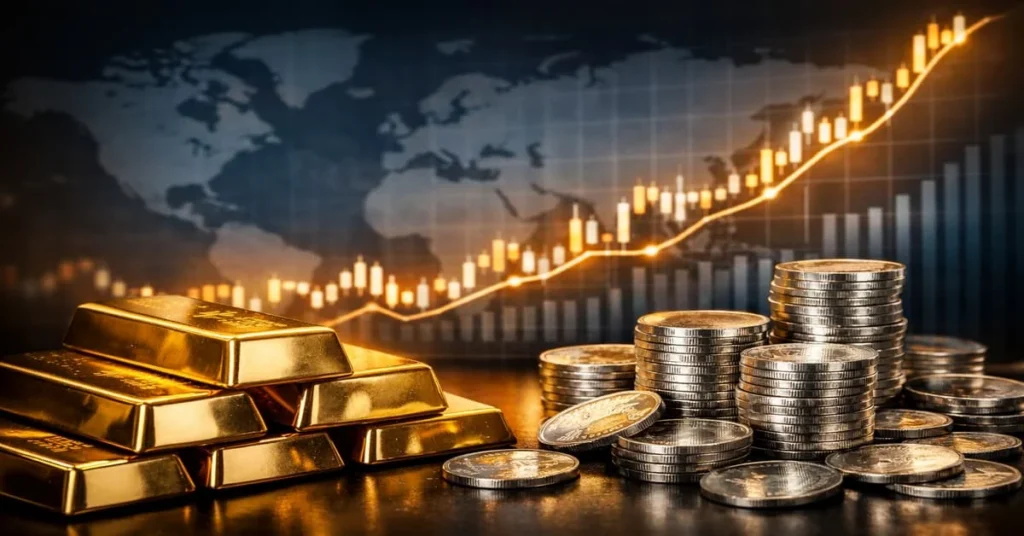
Gold and silver price outlook 2026 suggests both metals may continue to shine, but not without volatility. Analysts expect prices to be driven by inflation trends, central bank buying, interest rate decisions, and geopolitical risks. If you’re wondering whether to buy, sell, or hold gold and silver in 2026, this guide breaks down forecasts, data, and practical strategies to help you decide.
Let’s explore what’s shaping precious metal markets and how you can position yourself wisely.
What Is the Gold and Silver Price Outlook 2026?
The gold and silver price outlook 2026 refers to expert expectations about how precious metal prices may move throughout the year. These projections are based on macroeconomic indicators, supply-demand dynamics, and investor behavior.
According to coverage by Economic Times, India’s Economic Survey highlights that gold and silver are unlikely to lose their appeal as safe-haven assets despite global uncertainty. This reinforces their long-term relevance for investors.
A separate analysis on gold and silver price prediction today and outlook from Times of India explains how market participants are closely tracking inflation data and central bank signals.
Key Expectations for 2026
- Gold likely to remain strong as an inflation hedge.
- Silver may outperform gold due to industrial demand.
- Short-term volatility but positive long-term bias.
“Precious metals tend to perform best when real interest rates are low or falling.” – BullionVault Market Commentary
Why Do Gold and Silver Prices Move Together?
Gold and silver prices often move in the same direction because both are considered precious metals and inflation hedges. However, their underlying demand drivers differ.
Gold is primarily a store of value.
Silver has both investment and industrial usage.
Comparison Table: Gold vs Silver Drivers
| Factor | Gold | Silver |
|---|---|---|
| Safe-haven demand | High | Medium |
| Industrial demand | Low | High |
| Volatility | Lower | Higher |
| Long-term store of value | Strong | Moderate |
This explains why silver often experiences sharper price swings than gold.

How Does Inflation Affect Gold and Silver in 2026?
Higher inflation typically supports gold and silver prices. When purchasing power declines, investors look for assets that preserve value.
Recent global inflation cycles have already pushed gold prices to record highs in multiple markets. According to BullionVault’s AI-driven precious metal price forecasts, long-term models continue to show upward bias for gold and silver under persistent inflationary pressure.
Inflation Impact Summary
- Rising inflation → higher gold demand.
- Sticky inflation → strong silver investment interest.
- Falling inflation → potential short-term pullbacks.
What Role Do Central Banks Play in Gold Prices?
Central banks significantly influence gold prices through interest rate policies and gold reserves accumulation.
Many central banks have increased gold purchases to diversify reserves away from the US dollar. This structural demand creates a price floor for gold.
Key implications:
- Rate cuts → bullish for gold.
- Rate hikes → short-term pressure.
- Continued central bank buying → long-term support.
Will Silver Benefit From Industrial Growth in 2026?
Yes, silver is expected to benefit from renewable energy, EVs, and electronics manufacturing.
Silver is a critical component in:
- Solar panels.
- Electric vehicle batteries.
- Semiconductor production.
This dual role as both an industrial and precious metal gives silver strong upside potential.
According to Gold Survival Guide’s annual gold and silver review, silver’s industrial demand growth could outpace supply expansion, supporting higher prices.
What Are Experts Predicting for Gold Prices in 2026?
Most analysts expect gold prices to remain elevated or trend higher in 2026.
Broad forecast ranges discussed across financial media suggest:
- Conservative scenario: Flat to modest gains.
- Base case: 8–12% annual growth.
- Bullish case: New all-time highs.
Factors supporting gold:
- Geopolitical tensions.
- Currency debasement concerns.
- Strong ETF inflows.
What Are Experts Predicting for Silver Prices in 2026?
Silver forecasts are generally more aggressive than gold due to industrial tailwinds.
Typical outlook scenarios:
- Conservative: 5–10% growth.
- Base case: 12–18% growth.
- Bullish: 20%+ upside.
Silver’s higher volatility means higher risk, but also higher reward.
Should You Buy Gold or Silver in 2026?
Yes, if your goal is long-term wealth preservation and portfolio diversification.
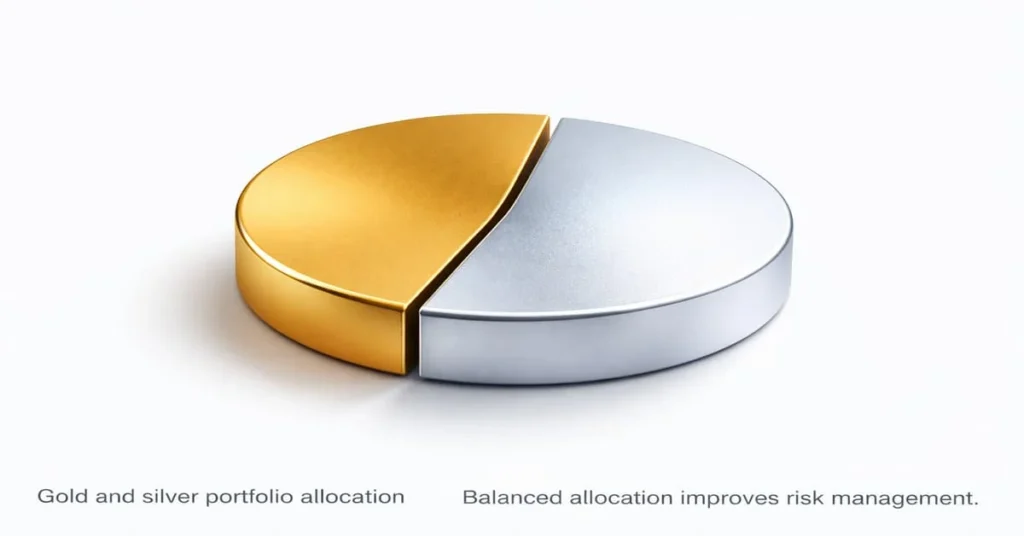
However, asset allocation matters.
Suggested Allocation Model
| Investor Type | Gold % | Silver % |
|---|---|---|
| Conservative | 80 | 20 |
| Balanced | 60 | 40 |
| Aggressive | 40 | 60 |
This mix balances stability and growth potential.
How Do You Decide Between Physical, ETF, or Digital Gold?
Your choice depends on convenience, cost, and investment horizon.
Option Comparison
| Format | Pros | Cons |
|---|---|---|
| Physical gold/silver | Tangible asset | Storage risk |
| ETFs | Easy trading | Management fees |
| Digital gold | Small-ticket investing | Platform risk |
If you’re new, ETFs or digital gold offer easier entry.
How Can Beginners Start Investing in Gold and Silver?
Start small, stay consistent, and diversify.
Step-by-Step Approach
- Set investment goal.
- Choose format (ETF, digital, physical).
- Select reliable platform.
- Invest monthly.
- Review annually.
Consistency matters more than timing.
How to Build a Simple Precious Metals Portfolio (HowTo)
Times Needed: 1 Day
Estimated Cost: 100 USD
Description: Build a diversified gold and silver portfolio using low-cost ETFs or digital gold with simple allocation rules.
Steps to Implement
Step 1: Define Investment Objective
Clarify whether your focus is safety, growth, or diversification.
Step 2: Choose Investment Format
Select ETF, digital gold, or physical metal based on comfort.
Step 3: Decide Allocation Ratio
Use 60:40 gold-to-silver as a starting point.
Step 4: Place First Purchase
Invest small amount to test process.
Step 5: Set Monthly SIP
Automate recurring investments.
Tools Name: Zerodha, Groww, Paytm Money
Materials Name: Bank account, KYC documents, Investment plan
What Are the Biggest Risks in 2026?
Precious metals are not risk-free.
Key risks:
- Sudden interest rate hikes.
- Strong US dollar rally.
- Regulatory changes.
Understanding risks improves decision quality.
How Does Gold Compare With Other Asset Classes?
Gold behaves differently than equities, bonds, and crypto.
| Asset | Volatility | Income | Crisis Protection |
|---|---|---|---|
| Gold | Low-Medium | No | High |
| Stocks | High | Yes | Medium |
| Bonds | Low | Yes | Medium |
| Crypto | Very High | No | Low |
Gold’s primary role is stability.
Key Takeaways
- Gold and silver outlook 2026 remains positive.
- Gold offers stability; silver offers growth.
- Inflation and central banks are key drivers.
- Balanced allocation reduces risk.
- Long-term holding works best.
Next Steps You Should Follow
- Review your current asset allocation.
- Decide your gold-to-silver ratio.
- Explore precious metals market trends on StartupMandi.
- Read our guide on commodity investing basics.
FAQ
Is 2026 a good year to buy gold?
Yes, especially for long-term investors seeking stability.
Will silver outperform gold in 2026?
Possibly, due to strong industrial demand.
Should I invest lump sum or monthly?
Monthly SIPs reduce timing risk.
Is physical gold better than ETFs?
Depends on storage preference and convenience.
How much gold should I hold?
Typically 5–15% of portfolio.
Are gold prices affected by interest rates?
Yes, inversely.
Can silver prices crash?
Yes, due to higher volatility.
Is digital gold safe?
Depends on platform credibility.
Resources
- Economic Times – Economic Survey Insight
- Times of India – Daily Price Outlook
- BullionVault – AI Price Forecasts
- Gold Survival Guide – Annual Review
- How to Use Digital Marketing to Increase Startup Revenue
- Profitable SaaS Startup Ideas 2026| High-Growth Niches
Conclusion
The gold and silver price outlook 2026 points toward continued relevance for precious metals in diversified portfolios. Whether you choose gold, silver, or both, disciplined investing and long-term perspective matter most. For more insights, explore our coverage on market outlook and investment strategies and stay updated with StartupMandi.
Disclaimer
StartupMandi & the author is not a SEBI Registered Research Analyst or Investment Advisor. This article is based on information available on the internet & for educational purposes only. Consult with your financial advisor before doing anything in the Financial Market.