

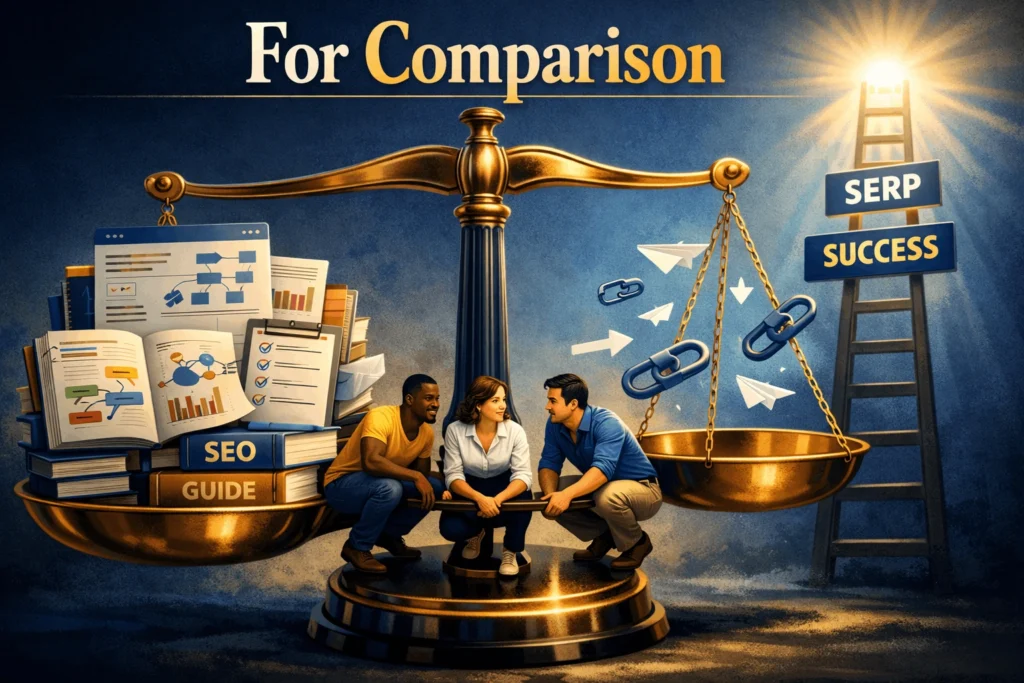
Both on-page and off-page SEO matter, but on-page (content quality, EEAT, structure) has faster, more direct impact on rankings today, while quality off-page (relevant backlinks) builds long-term authority. AI search amplifies on-page signals like topical depth over sheer link volume. Balance 60% on-page focus for quick wins.
SEO Quick Summary:
- On-Page Dominates Direct Signals: Content, titles, EEAT (23% weight).
- Off-Page Authority Multiplier: Quality links (13% weight).
- 2026 Shift: AI prioritises user satisfaction, structure over spam links.
- Integrated Wins: On-page content earns natural off-page links.
What Is On-Page SEO?
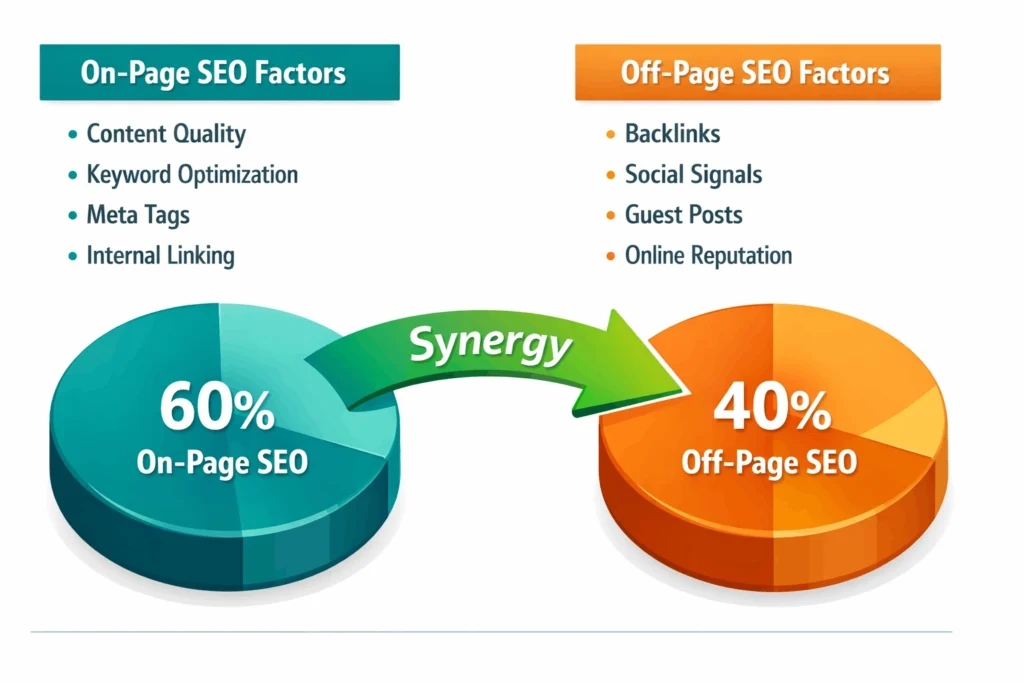
On-page SEO optimises individual pages: content, titles, headings, images, internal links, schema, and speed. Directly signals relevance and quality to Google.
- Content Elements: Keyword-optimised, in-depth, EEAT-rich (Experience, Expertise).
- HTML Signals: Title tags, H1-H6, meta descriptions.
- UX Factors: Core Web Vitals, mobile readability.
Off-page builds trust externally.
What Is Off-Page SEO?
Off-page SEO builds authority via external signals: backlinks, brand mentions, and social shares. Proves your site’s value beyond its content.
- Backlinks: Quality > quantity; relevant DA sites.
- Brand Signals: Mentions, shares without links.
- Social/Directories: Amplifies discovery.
Head-to-head comparison.
Which Matters More for Rankings Today?
On-page SEO edges out for direct, fast impact (content 23%, titles 14%); off-page (links 13%) multiplies authority, but quality trumps volume in the AI era.
| Factor | On-Page Weight | Off-Page Weight | 2026 Notes |
|---|---|---|---|
| Content Quality | 23% | N/A | EEAT critical |
| Backlinks | N/A | 13% | Relevance > DA |
| Title Tags | 14% | N/A | Intent match |
| Engagement | 12% (on-page UX) | N/A | Dwell time |
“On-Page SEO can have faster impact… Off Page is slower but long-lasting.” – ClickRank.ai
On-page deep dive.
Why Is On-Page SEO Critical in AI Search?
On-page delivers topical authority, EEAT, and structure AI crawlers prioritise for summaries/answers.
- EEAT Signals: Author bios, expertise proof.
- Semantic Depth: LSI, entities beyond keywords.
- AI Extractability: Schema, tables, lists.
Off-page is still essential.
How Do Off-Page Signals Boost Rankings?
Quality backlinks (relevant, authoritative) pass trust, amplifying on-page signals—1 high-DA link > 100 spam.
- Link Quality: Niche-relevant DA 50+.
- Diversity: Mix dofollow/nofollow, anchors.
- Brand Mentions: Unlinked signals authority.
2026: AI detects spam; relevance reigns.
Integrated approach.
How Do On-Page and Off-Page Work Together?
On-page creates linkable assets (in-depth guides); off-page validates via authoritative links—synergy yields top rankings.
- Content-First: Build cluster content.
- Earn Links: Guest posts, HARO.
- Monitor: Ahrefs for toxic links.
Balance checklist.
How To Balance On-Page and Off-Page SEO?
60/40 on/off-page audit and optimisation, balancing content authority with quality link profile.
Steps:
- Audit On-Page
Check titles, content depth, EEAT, CWV. - Optimise Core Pages
Update clusters with schema, internals. - Off-Page Analysis
Audit backlinks for relevance/spam. - Build Quality Links
5/month relevant sites. - Track Integrated
Monitor rankings, traffic via GSC/Ahrefs.
Tools Name: SEMrush, Ahrefs, Google Search Console
Materials Name: Content calendar, outreach list

Metrics guide.
What Metrics Show On-Page vs Off-Page Impact?
Track on-page: CTR, dwell time; off-page: DA growth, referral traffic. Combined: organic growth.
| Metric | On-Page Driven | Off-Page Driven |
|---|---|---|
| CTR | Titles, snippets | Brand authority |
| Dwell Time | Content depth | N/A |
| DA | N/A | Link profile |
FAQ: On-page or off-page
Is on-page or off-page SEO more important?
On-page for direct signals; both needed.
Backlinks still matter in 2026?
Quality, yes; spam no.
EEAT on-page or off?
Mostly on-page (expertise via content).
AI change SEO balance?
Boosts on-page structure/intent.
Fastest ranking wins?
On-page changes.
Is link building safe?
Relevant, natural only.
Tools for audit?
Ahrefs/SEMrush/GSC.
StartupMandi SEO?
Consultation.
Key Takeaways
- On-Page 60% Effort: Content/EEAT/structure.
- Off-Page Quality: Relevant DA links.
- AI Favours On-Page: Extractable depth.
- Synergy Wins: Assets earn links.
- Monitor Both: GSC/Ahrefs weekly.
Next Steps You Can Follow
- Week 1: On-page audit top 10 pages.
- Month 1: Fix EEAT, internals.
- Ongoing: 3 quality links/month.
- SEO consultation with StartupMandi.
- Quarterly: Full re-audit.
Conclusion
On-page SEO provides direct ranking signals via content and structure; off-page amplifies with authority—AI era tips balance to on-page. StartupMandi optimises both: SEO audit checklist, link building guide—rank higher now.
Disclaimer: Factors evolve; test strategies.
Few Links Suggestions for more Research & Facts Check: