

Why Do Blogs on Website Still Matter in 2026?
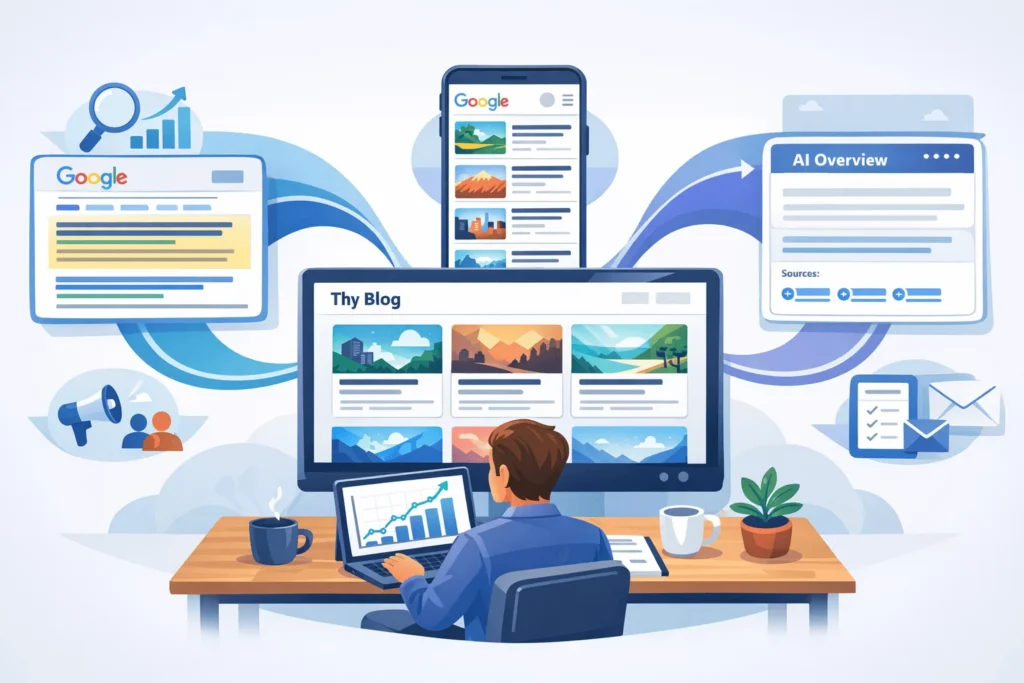
Blogs on website still matter because they create fresh, helpful content that search engines, Google Discover, and AI Overviews can actually show and cite.
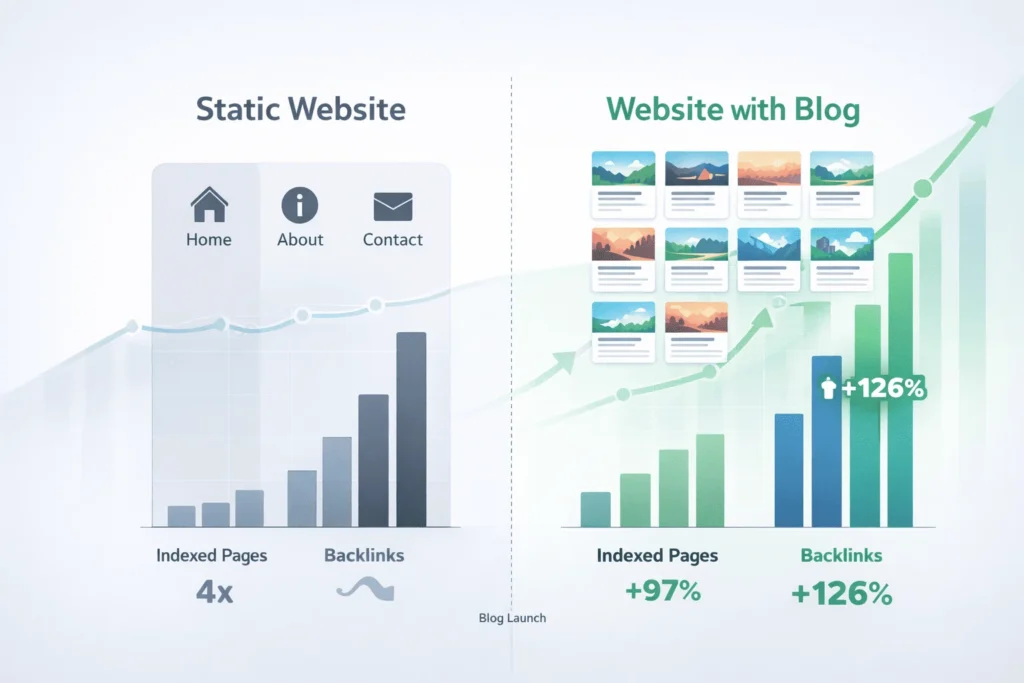
Studies show that companies using blogging and SEO get more indexed pages, more backlinks, and significantly higher lead volume compared to those without structured content.
In 2026, blogging is less about churning posts and more about building a high‑trust content library that matches search intent, powers Google Discover recommendations, and feeds AI systems with structured, source‑worthy answers.
What Is the Strategic Role of Blogs on a Website?
Blogs on website act as your owned, searchable knowledge base for prospects and algorithms alike.
From an SEO perspective, blogs help you:
- Publish fresh, relevant pages that keep your site active and broaden your keyword footprint.
- Target long‑tail and conversational queries (how‑to, comparisons, FAQs) that are easier to rank for but valuable over time.
- Attract backlinks naturally when others reference your guides, data, and frameworks.
From a brand perspective, a strong blog:
- Shows experience and expertise through in‑depth explanations and real examples (critical for E‑E‑A‑T).
- Keeps visitors on site longer and nudges them toward products, services, and lead magnets.
- Becomes a library that sales and customer success teams can link in emails, proposals, and pitches.
“In 2025 and beyond, blogging remains a cornerstone of strong organic strategy—as long as you treat it like a strategic asset, not an afterthought.”
How Do Blogs on Website Impact SEO Performance?
Data from multiple 2024–2025 analyses make the SEO impact of blogging hard to ignore.
Key blogging‑SEO statistics:
- Companies with active blogs can see 434% more indexed pages in Google, giving them more “lottery tickets” to rank.
- Businesses that blog report 97% more backlinks than those that don’t, strengthening domain authority.
- Active blogging can lead to 126% more lead growth for small businesses.
- Content marketing overall generates 3x as many leads at 62% lower cost than traditional methods.
These advantages exist because blogs help you systematically:
- Answer niche questions your product pages never will.
- Organize content into topic clusters that signal topical authority.
- Earn contextual links and brand mentions across the web.
Table: SEO Effects of Adding Blogs to a Website
How Do Blogs Help With Google Discover Visibility?
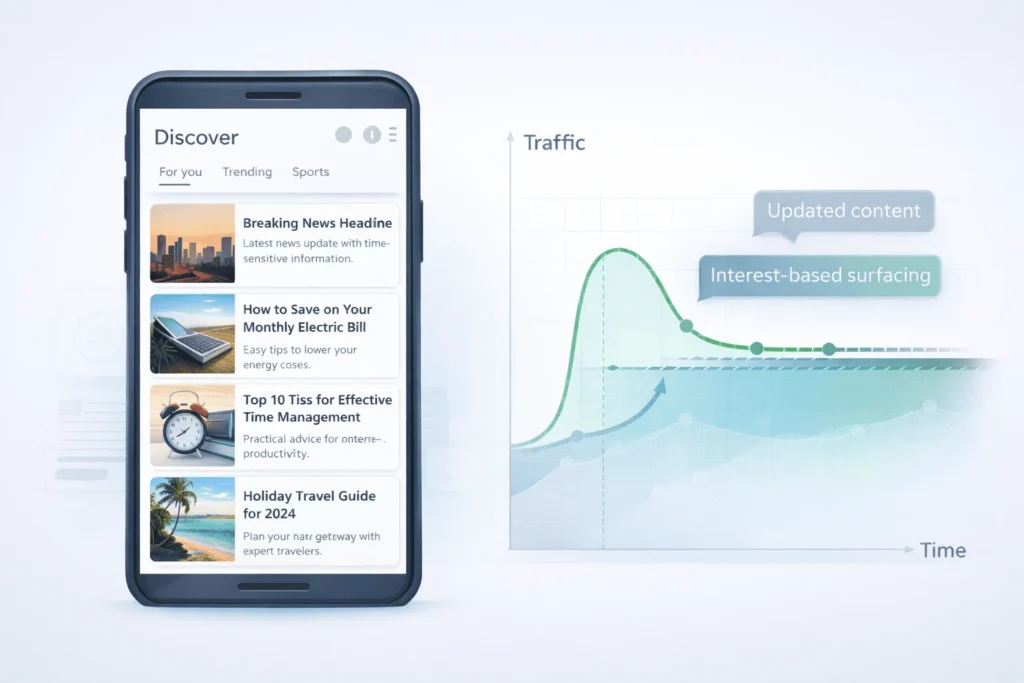
Google Discover is essentially a personalized content feed that surfaces articles based on user interests, behavior, and site trust—not just queries.
Blogs are ideal for Discover because they can be:
- Timely: reacting to trends, launches, and 2026 updates in your niche.
- Evergreen: long‑lasting “how‑to” and “best of” content that remains relevant for years.
Discover optimization best practices for blog content include:
- Publishing unique, high‑quality articles that provide real insights, not rehashed news.
- Balancing evergreen and timely topics, especially around trends where your site already has authority.
- Using compelling, non‑clickbait headlines that create curiosity while staying accurate.
- Including large, high‑resolution images (1200px+ and 16:9 ratio) and enabling the
max-image-preview:largemeta tag. - Maintaining niche consistency, doubling down on themes that already perform for your domain.
Google’s Discover documentation and independent tests show that high‑quality evergreen guides can keep generating Discover traffic long after publication, especially when regularly refreshed.
“Evergreen content that delivers long-lasting value can consistently perform well on Discover—especially when refreshed to maintain relevance.”
How Do Blogs Influence AI Overviews and Other AI Surfaces?
Google’s AI Overviews use a customized language model tightly integrated with core ranking systems, surfacing links that back up the generated answer.
Analysis of thousands of AI Overview examples and SEO tests shows content that gets cited tends to share specific traits:
- Clear question–answer structure: Directly answers queries, often in the first paragraph, and anticipates follow‑up questions.
- Strong E‑E‑A‑T signals: Author bylines with credentials, up‑to‑date content, and references to credible sources.
- Specific statistics and data points: AI systems feature content with hard numbers 3x more often than purely opinion posts.
- Structured formatting: Headings in question form, numbered steps, and summary tables are easier for AI to parse and quote.
Google itself emphasizes that AI Overviews identify “relevant, high-quality results from our index” and only show information backed by top web results.
In other words, if you don’t publish detailed, well‑structured blogs on your website, AI and Discover have nothing from your brand to surface or cite.
What Business Outcomes Do Blogs on Website Drive?
Beyond rankings and citations, blogs are a compound‑interest asset for leads and revenue.
Content marketing ROI studies highlight that:
- SEO‑originated leads have a close rate around 15%, higher than many outbound channels.
- Companies that publish 11+ blog posts per month can see more than 4x the number of leads.
- Brands with 400+ blog posts attract ~2.5x more traffic than those with smaller libraries.
- Content marketing overall yields 6x higher conversion rates and continues driving results long after publication.
HubSpot‑reported data cited in ROI summaries shows 75% of blog views and 90% of blog leads often come from posts published in previous months, proving the compounding effect of a strong content archive.
Well‑designed blogs also:
- Lower acquisition cost by reducing dependency on paid ads over time.
- Support sales enablement, giving reps articles to answer objections and nurture deals.
- Improve brand recall as readers repeatedly encounter your content across search, Discover, and social.
How Should You Structure Blogs on Website for SEO, Discover, and AI?
To maximize impact, structure your blog library so each post can stand alone and also strengthen a broader topic cluster.
1. Align Topics With Business Outcomes
- Start from core problems your product/service solves.
- Map search intents: informational (blogs), commercial (comparison pages), transactional (service/product pages).
- Build clusters: one pillar guide plus multiple supporting posts (how‑tos, FAQs, case studies).
2. Format for AI Extraction and Discover
Use question‑based H2s and structured lists so each section can be lifted by AI Overviews or used as a featured snippet.
For example:
- H2: “How Often Should I Update Blog Posts for SEO?”
- Immediate one‑paragraph answer.
- Followed by numbered steps or a table.
3. Bake in E‑E‑A‑T
- Add author bios with relevant experience.
- Cite data and authoritative sources (studies, industry reports).
- Keep last updated dates accurate for time‑sensitive topics.
4. Mix Evergreen and Timely Posts
- Evergreen: “How to Choose a CRM for a Small B2B Team”.
- Timely: “CRM Trends for Indian SMBs in 2026”.
Discover and AI surfaces perform best when this mix is present and old winners are refreshed regularly.
How To Start (or Restart) a Strategic Blog on Your Website
Times Needed: 7 Days
Estimated Cost: 0–500 USD(depending on in‑house vs outsourced writing and design)
Description: A one‑week, practical process to audit your current website, define a blogging strategy, and publish your first 3–5 high‑impact posts optimized for SEO, Discover, and AI Overviews.
Steps
- Clarify Business and Search Goals
Step Title: Define Content’s Job in Your Funnel
Step Description: Decide whether blogs should primarily drive traffic, educate leads, or support sales. Write 2–3 measurable goals (e.g., 30% more organic sessions, 20 qualified leads/month from blog CTAs) to guide topic choices. - Audit Existing Website and Content Gaps
Step Title: Identify Missing Topics and Weak Pages
Step Description: Review your current site: product pages, About, FAQs. Note questions prospects ask that aren’t answered anywhere. Use this as a starting topic list and validate against basic keyword research. - Design Topic Clusters and Publishing Cadence
Step Title: Plan Pillar and Supporting Blog Posts
Step Description: For each core theme, create one in‑depth pillar article and 3–6 supporting posts (how‑tos, comparisons, case studies). Set a realistic publishing rhythm (e.g., 4 posts/month) and focus on consistency for at least 6 months. - Create AI- and Discover-Friendly Drafts
Step Title: Write Posts With Clear Answers and Structure
Step Description: Use question‑based headings, direct answers in the first 50–60 words, numbered lists, and summary tables. Add specific statistics, examples, and external citations to strengthen E‑E‑A‑T and AI snippet potential. - Optimize Internal Linking and On-Page SEO
Step Title: Connect Blogs to Key Pages and Each Other
Step Description: In every blog, link to relevant product/service pages and other related posts. Craft descriptive anchor text and optimize titles, meta descriptions, image alt text, and URL slugs to align with target queries. - Publish, Promote, and Monitor Performance
Step Title: Launch Posts and Track SEO & Engagement
Step Description: Publish your first batch, share through email and social, and monitor organic clicks, time on page, scroll depth, and conversions. Every quarter, refresh top performers and improve underperforming posts with better structure or depth.
Tools Name: Google Search Console, basic keyword tool (e.g., free tier of a popular SEO tool), Google Analytics, your CMS or blog platform
Materials Name: List of customer FAQs, sales call notes, existing website pages, brand style and messaging guidelines

FAQ Section
Are blogs on website still worth it in the AI era?
Yes. Research from 2024–2025 shows blogging remains a core driver of organic traffic, backlinks, and leads, with content marketing delivering 3x more leads at 62% lower cost than traditional marketing. AI Overviews and Discover rely on existing high‑quality web content, so without blogs, you simply won’t appear.
How often should I publish new blog posts?
There’s no magic number, but studies show brands posting 11+ posts per month get dramatically more leads and traffic. For smaller teams, 2–4 high‑quality posts per month is often sustainable—and more effective than many thin posts.
Do I need long-form content for blogs on website?
Long‑form content (1,500+ words) tends to perform better for SEO and lead generation, especially when structured for readability and snippets. However, quality and intent match matter more than hitting an arbitrary word count.
How do blogs help with Google Discover?
Discover favors timely, unique, and visually rich content that matches user interests. Evergreen how‑tos and reviews can perform well when updated, especially with strong headlines and 1200px+ images and correct meta tags.
What makes a blog post attractive to AI Overviews?
Posts that answer questions directly, cite data, show author expertise, and include clear structure (H2 questions, lists, tables) are more likely to be used as sources. Including specific stats and authoritative references significantly boosts selection chances.
Should I update old blog posts or only publish new ones?
Both. Around 74% of bloggers update old posts to maintain rankings, and refreshed evergreen content can regain and grow traffic from both search and Discover. A good practice is to review top posts quarterly for updates.
How long does it take for blogs on website to show results?
SEO and content ROI compound over time. Many brands see meaningful traction in 4–6 months, with stronger compounding effects after 12+ months of consistent publishing and optimization.
Do all businesses need blogs on website?
Not every niche needs a high‑volume blog, but almost every business benefits from a focused library of 10–50 strong articles addressing customer questions, comparisons, and workflows. For B2B and complex B2C, blogs are often essential.
Key Takeaways Section
- Blogs on website remain a cornerstone of SEO and organic growth, driving more indexed pages, backlinks, and qualified leads than static sites alone.
- Consistent blogging helps you win long‑tail and conversational queries, which are increasingly important in voice and AI‑driven search.
- Google Discover and AI Overviews both favor high‑quality, well‑structured, and frequently updated content with strong E‑E‑A‑T signals and specific data.
- Content marketing, powered by blogs, delivers 3x more leads at significantly lower cost, with most leads and views coming from older posts—showing the compounding value of a content library.
- To benefit, you need a clear strategy, topic clusters, internal linking, and a regular publishing and refresh cadence, not just occasional, unplanned posts.
Next Steps Section
- Audit your current site for content gaps: list top 20–30 questions prospects ask that your website doesn’t yet answer well.
- Design 2–3 content clusters around your main services or products, each with a pillar guide and multiple supporting how‑tos and FAQs.
- Set a realistic publishing rhythm (e.g., 2–4 posts per month) and commit to it for at least 6–12 months.
- For each post, optimize for SEO, Discover, and AI with question‑based headings, direct answers, data points, and strong images.
- Add internal CTAs to key product or service pages, turning passive readers into leads and customers.
- After 3–6 months, review analytics to identify top‑performing posts to refresh and expand, and weaker ones to improve or merge.
Conclusion
Blogs on website aren’t a “nice‑to‑have” in 2026—they are the foundation layer that powers SEO, Google Discover visibility, and AI Overview citations. Without a consistent blogging strategy, your brand voluntarily sits out of many of the most important organic touchpoints.
Evidence from recent SEO and content marketing studies is clear: blogging still works when it’s strategic—focused on intent, structured for machines and humans, and supported by regular updates and promotion.
If you treat your blog as an owned media asset—built thoughtfully, refreshed regularly, and integrated with your broader funnel—it becomes one of the highest‑ROI channels for long‑term brand growth, even as search interfaces evolve.
Start with a handful of high‑impact posts that answer real customer questions, structure them for rich results and AI, and keep iterating. Your future traffic, leads, and brand authority will compound from the work you put in today.