

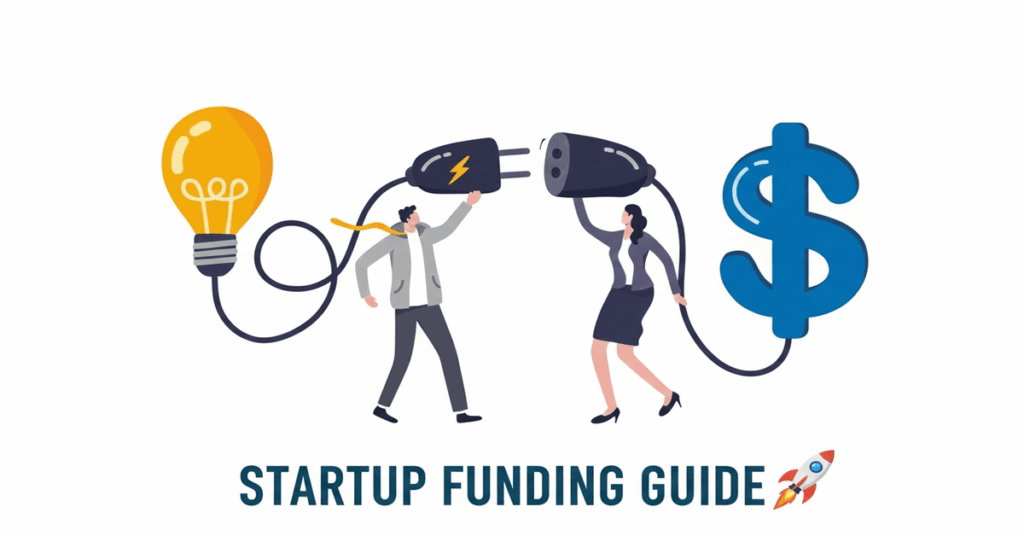

startupmandi-blog-background

Startup Funding Checklist India 2026: Documents & Legal Must-Haves ✅

Startup Funding in India: A Practical Legal-Smart Roadmap 💡

Startup funding in India is no longer reserved for a privileged few; structured capital is now available from pre-seed to growth rounds if founders understand stages, documents, and investor expectations. Moreover, investors increasingly demand clean compliance, a clear growth story, and disciplined fundraising strategies. Therefore, combining smart funding choices with strong legal hygiene has become a competitive advantage, not a formality.

​Read More: Startup Business Loans for First-Time Founders: Get Funded Fast in 2026 💸


In this blog, you will learn 👇

  1. Key funding stages in India from idea to IPO, with real-world use cases.

  2. Practical sources of capital: angels, VCs, banks, and government startup schemes.

  3. Crucial legal and compliance documents investors expect during due diligence.

  4. A simple fundraising checklist to stay investor-ready and avoid red flags.

  5. Actionable tips to pitch confidently and build trust in startup fundraising in India.


Are You Ready to Raise Funds ? If Not, Join our Fundraising Plan

Investors reviewing startup financials and legal documents

Startup Funding Stages in India

Startup funding in India generally follows a predictable path from pre-seed to growth rounds, each linked to specific milestones and typical investor profiles. When founders map capital needs to these phases, they avoid unnecessary dilution and improve valuation outcomes.

Pre-seed and Seed: Idea to Early Traction

At the pre-seed stage, founders usually validate the idea, build an MVP, and test market fit with very limited capital. Consequently, this phase often relies on bootstrapping, friends-and-family, and small grants or pitch competition prize money.

At seed stage, the focus shifts from idea validation to early customers, revenue experiments, and team building. Here, angel investors, micro VCs, incubators, and government seed schemes become important contributors in startup fundraising in India.

Typical Goals at Early Stages

Early funding should help founders prove problem–solution fit, not just pay salaries. Hence, funds are best spent on product development, customer validation, and basic brand visibility.

Series A and Beyond: Scale and Expansion

Once a startup demonstrates traction, clear revenue paths, and repeatable sales, Series A capital is used to scale operations. At this point, institutional venture capital in India becomes a primary driver of growth.

Later Series B and growth rounds typically support geographic expansion, product diversification, and deeper technology investments. Because expectations rise sharply, founders must show unit economics, governance discipline, and strong reporting systems.

Quick Snapshot of Funding Stages

StageTypical Capital UseUsual Investors
Pre-seedMVP, research, prototype validationFounders, friends & family, grants
SeedEarly customers, first hires, GTM experimentsAngels, seed funds, incubators
Series AScaling product, teams, and salesVenture capital firms
Series B+Expansion, acquisitions, new marketsLarge VCs, institutional funds
Checkout Our Latest Services

Major Funding Sources in India

Startup funding in India now combines traditional finance with a rich mix of angels, VCs, and government startup schemes. Nevertheless, each funding source carries specific expectations about control, risk, and reporting.

Equity-Based Funding: Angels and VCs

Angel investors usually back very early-stage startups with smaller cheques and high involvement. They often bring mentorship, industry access, and early credibility, which is invaluable in startup fundraising in India.

Venture capital firms step in when there is traction, a scalable model, and a large market opportunity. In exchange for significant capital, they expect governance rights, structured reporting, and aggressive growth.

Angels vs VCs at a Glance

AspectAngel InvestorsVenture Capital Firms
Typical StagePre-seed, SeedSeries A and later
Ticket SizeSmaller, flexibleLarger, institutional
InvolvementHands-on, mentoringStrategic, board-level oversight
SpeedOften faster decisionsMore process-heavy due diligence
 

Non-Dilutive and Debt Options

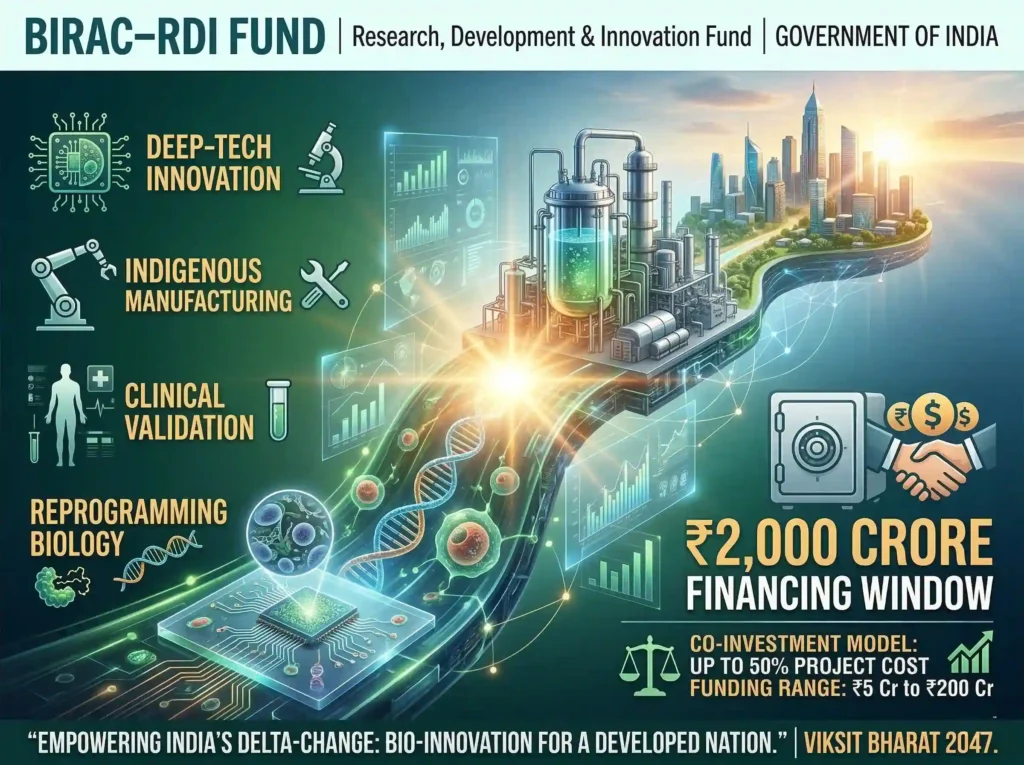
Government grants and schemes offer non-equity capital, often tied to innovation, sector priorities, or technology development. Examples include the Startup India Seed Fund Scheme, sectoral grants, and state-level innovation missions.

Beyond grants, bank loans, NBFC finance, and credit guarantee schemes support working capital and asset purchases without equity dilution. However, founders must be comfortable with EMIs, security, and compliance with bank covenants.

Role of Government Support

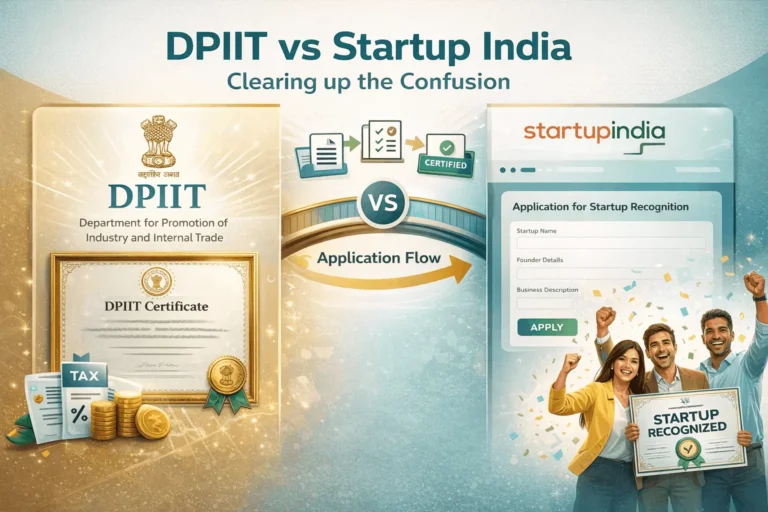
National and state programs under the Startup India umbrella provide incubation, mentorship, tax benefits, and funding support to eligible DPIIT-recognised startups. As a result, founders who align with policy priorities (deep-tech, sustainability, inclusion) often access blended capital faster.

market size, traction, and revenue metrics in an Indian funding pitch

Even strong traction can fail to convert into startup funding in India if legal and compliance basics are weak. Therefore, investor-ready documentation has become a core part of the fundraising playbook.

Core Company and Compliance Documents

Before any serious investor discussion, founders should maintain a clean corporate and regulatory file. Key components generally include:

  1. Certificate of Incorporation, MoA, AoA, and updated share capital details.

  2. Up-to-date ROC filings, board resolutions, shareholder registers, and ESOP records.

  3. Valid tax registrations, financial statements, and statutory compliance proofs (GST, TDS, labour laws, etc.).

These documents signal governance maturity and significantly reduce friction during due diligence.

Investment-Specific and Founder Documents

Once interest is confirmed, investors scrutinise deal and founder-level paperwork. Typical requirements include:

  1. A clear cap table, vesting schedules, and founder agreements establishing IP ownership and roles.

  2. Term sheet, shareholders’ agreement, share subscription agreement, and board resolutions approving the round.

  3. IP assignments, key customer or vendor contracts, and confidentiality/NDAs where relevant.

Because these documents define control, rights, and exit pathways, founders should seek experienced legal counsel.

Smart Fundraising Checklist for Founders

To stay ready for startup fundraising in India, many founders maintain a simple yet rigorous fundraising data room. A practical checklist often covers:

  1. Updated pitch deck, business plan, and 3–5 year financial projections.

  2. Clean cap table, ESOP pool details, and prior investment documents.

  3. Compliance tracker for ROC, tax filings, licences, and IP registrations.

  4. Key metrics dashboard: revenue, churn, CAC, LTV, burn, and runway.

Founders who treat documentation as a continuous discipline usually close rounds faster and on better terms.

Checkout Latest Grants Listed

Conclusion

Startup funding in India rewards clarity, compliance, and consistency more than hype. When founders align funding stages, right-fit investors, and tight legal documentation, they transform fundraising from a distraction into a structured growth lever.​​

FAQs

  1. What is the first step before approaching investors?
    Most investors expect a crisp pitch deck, clear market thesis, and basic legal hygiene (incorporation, cap table, and filings) before any serious discussion.

  2. How important are government schemes for early-stage startups?
    For innovation-driven startups, government grants and seed schemes can provide non-dilutive capital plus incubation support, reducing pressure to dilute too early.

  3. Do all startups need venture capital?
    No; many businesses grow sustainably through a mix of bootstrapping, angels, revenue, and debt rather than large VC rounds.

  4. Which documents usually slow down due diligence?
    Missing board resolutions, unclear ESOP records, incomplete financial statements, and IP ownership gaps often delay or derail funding conversations.

  5. How often should founders update their data room?
    As a rule of thumb, founders refresh financials, metrics, and compliance documents at least quarterly to remain investor-ready.


External Fact Source Links

  1. Startup India – Funding Guide
  2. FundTQ – How to Raise Startup Funding in India
  3. RegisterKaro – How to Raise Funds for Startup Business in India
  4. How to Use Digital Marketing to Increase Startup Revenue
  5. Profitable SaaS Startup Ideas 2026| High-Growth Niches

Disclaimer: This article is for information and education only and does not constitute legal, tax, or investment advice. Founders should consult qualified professionals before making funding or compliance decisions.

Shwetha Dilipkumar
Shwetha Dilipkumar
Articles: 29

Leave a Reply

Your email address will not be published. Required fields are marked *