


Digital marketing in 2026 is no longer about more channels or bigger budgets—it is about smarter systems. Within months, AI copilots, always-on automation, and stricter privacy laws will decide which brands grow and which get left behind.
This guide breaks down the digital marketing trends that will shape business growth in 2026, with a clear focus on how AI, automation, and privacy reshape strategy—not just tactics.
What Is Changing in Digital Marketing in 2026?
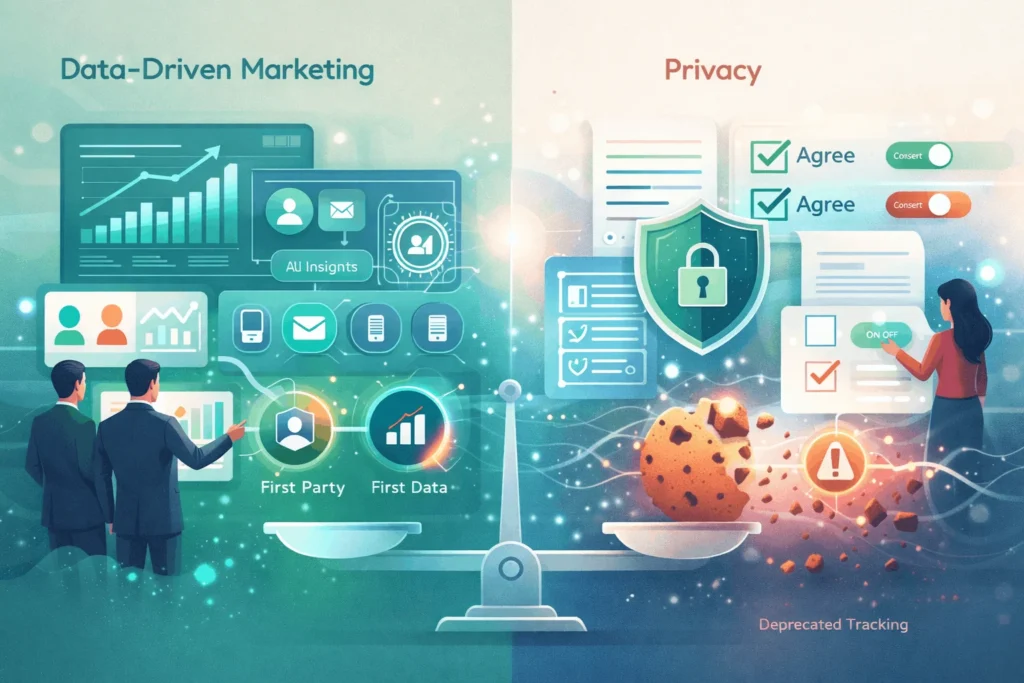
The biggest shift in 2026 is that digital marketing is moving from “channel management” to orchestrated, data-driven experiences powered by AI and privacy-compliant data.
- AI moves from experimentation to core infrastructure in planning, execution, and optimization of campaigns.
- Marketing automation becomes end-to-end, connecting acquisition, onboarding, retention, and win-back flows.
- Global privacy enforcement tightens, forcing brands to prioritize first‑party and zero‑party data.
“The gap in 2026 won’t be between brands using AI and brands not using AI. It’ll be between brands with rich customer data and brands guessing at what their customers want.” — Marketing automation leader insight
These changes mean CMOs must treat data, models, and consent as strategic assets—not back-office tasks.
How Is AI Transforming Digital Marketing in 2026?
AI in digital marketing has moved from isolated pilots to full-funnel copilots that analyze, predict, and optimize in near real-time.
1. What Is AI-Driven Campaign Orchestration?
AI-driven campaign orchestration means algorithms decide who sees what, when, and on which channel, based on probability of action.
- AI models score users on likelihood to buy, churn risk, and content affinity.
- The system allocates budget dynamically towards segments and creatives with the highest predicted ROI.
- Marketers move from manual A/B tests to AI-run multivariate experiments, then review and approve directions.
McKinsey reports that companies using advanced personalization and decisioning have seen 10–15% revenue uplift, with some cases adding hundreds of millions in value.
AI Marketing Stack (Conceptual)

Data Layer      → Events, CRM, web/app behavior, consent flags
Decision Layer  → AI scoring (LTV, churn, next-best-offer), experimentation
Delivery Layer  → Email, ads, SMS, in-app, web personalization
Analytics       → Incrementality testing, MMM, attribution models
2. How Will AI Personalization Evolve?
In 2026, personalization is less about “Hi <First Name>” and more about next-best-action across channels.
- AI predicts which products, articles, or offers each user should see next.
- Personalized calls-to-action convert significantly higher than generic CTAs, with leaders reporting 10–15% revenue lifts from personalization programs.
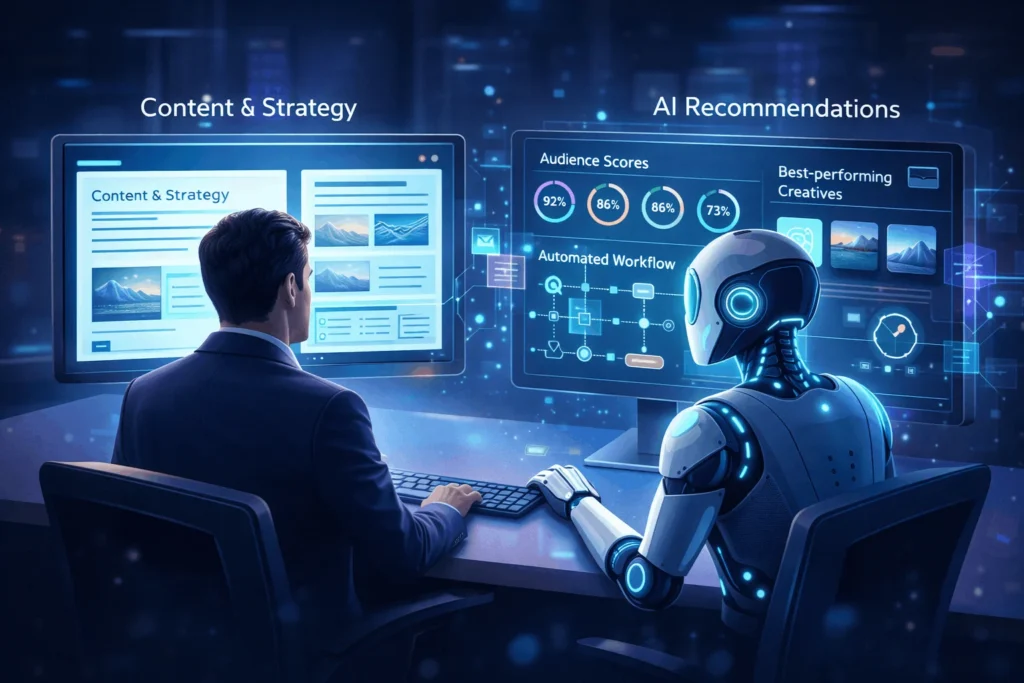
- AI optimizes subject lines, creatives, and send times, while humans control brand voice and guardrails.
Key takeaway: AI will handle the heavy lifting of personalization logic, but human marketers will own narrative, ethics, and brand risk.
Why Does Privacy Now Dictate Digital Marketing Strategy?
Privacy has become a growth constraint and differentiation lever at the same time.
1. What Are the Major Privacy Shifts Affecting Marketers?
By 2026, marketers face a fragmenting but stricter global privacy landscape.
- Stronger enforcement of GDPR, CCPA, and state-level privacy laws, with significant penalties for non‑compliance.
- Browser and platform restrictions accelerate the phase-out of third‑party cookies and device identifiers.
- New obligations such as data protection impact assessments for profiling and tighter consent rules for targeted advertising, especially for minors.
WARC notes that AI-driven automation and tightening privacy rules are reshaping every digital interaction and raising expectations around transparency.
2. How Does Privacy Change Targeting and Measurement?
The loss of third‑party cookies forces a move from rented data to owned, consent-based data.
- Brands shift from third‑party data to zero‑party (data users willingly share) and first‑party (behavioral and transactional data).
- Measurement relies less on user‑level tracking and more on media mix modeling, cohort analysis, and experiments.
- Consent banners, preference centers, and clear data value exchanges become crucial in conversion funnels.
Implication for CMOs: Privacy-first design is now a growth enabler, not merely a compliance checkbox.
Which Digital Marketing Channels Will Lead Growth in 2026?
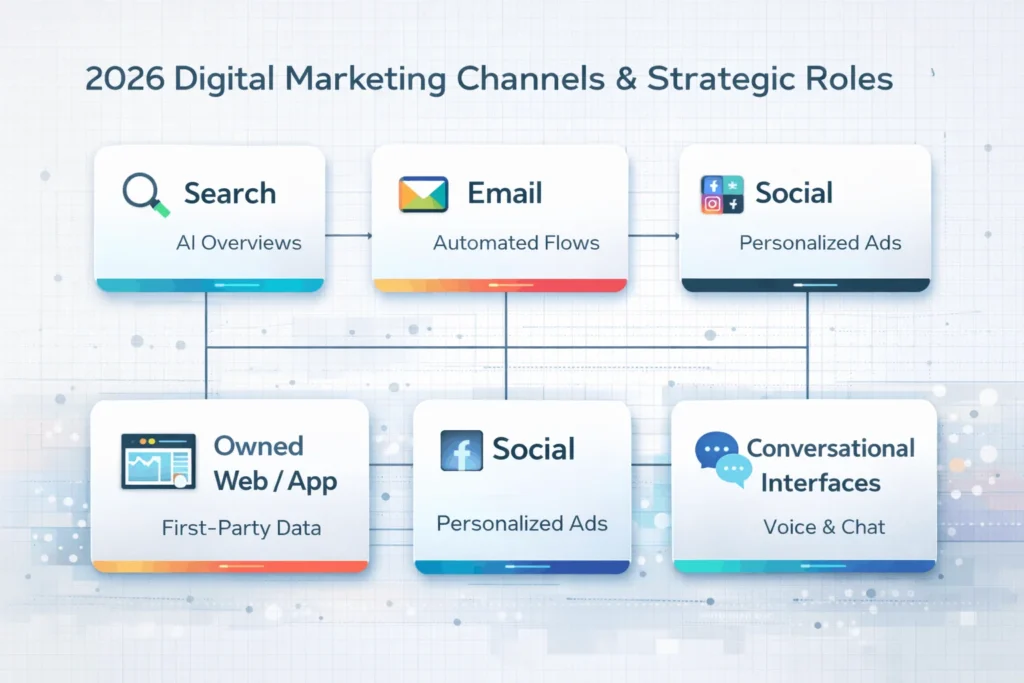
No single channel wins by itself; orchestration across channels will matter more than channel silos.
1. What Are the High-Impact Channels?
Email automation alone can generate a disproportionate share of orders, with automated emails showing significantly higher conversion than bulk campaigns.
2. How Does AI Change SEO and Content?
Mobile AI and AI overviews are becoming shopping and decision companions for consumers.
- Structured, question-based content and concise answers increase chances of being referenced in AI results.
- Brands that provide factual, up-to-date, and trustworthy content are more likely to be surfaced and cited.
- Content needs to be designed for multi‑format visibility: text, snippets, FAQs, and summaries that can be machine-read.
Key takeaway: SEO evolves from ranking blue links to powering answers, recommendations, and copilots.
How Will Automation Redefine the Marketing Operating Model?
Marketing automation in 2026 goes beyond “drip campaigns” to autonomous but supervised systems that act in real time.
1. What Is End-to-End Lifecycle Automation?
Lifecycle automation connects acquisition, engagement, and retention:
- Acquisition: AI optimizes audiences and creatives across search, social, and programmatic.
- Onboarding: Triggered flows educate and convert new users using personalized content and offers.
- Retention: Behavioral triggers re-engage users at churn-risk or after drop-offs.
- Advocacy: Referral and loyalty programs are automated based on engagement and LTV.
Klaviyo notes that brands with more collection points and automated flows are better positioned to turn consented data into meaningful personalization in 2026.
2. How Should Teams Work With Automation?
Automation alters roles instead of replacing them:
- Marketers move from campaign execution to system design and oversight.
- Creative teams focus on narratives and distinctive brand assets while using AI for variations.
- Data and privacy teams become embedded partners in marketing, ensuring compliant experimentation.
Insight: The winners will be brands that combine AI precision with human authenticity.
How Does a Privacy-First, AI-Powered Strategy Actually Look?
To make this concrete, imagine a mid-sized D2C brand in 2026.
- The brand relies on first‑party purchase and browsing data plus zero‑party preference surveys.
- AI models score customers on likelihood to buy and churn risk, then trigger journeys across email, SMS, and ads.
- Preference centers let users control topics, frequency, and channels, building trust while improving relevance.
- Measurement uses a blend of conversion tracking where consent exists and incrementality tests where it does not.
This model respects privacy, uses automation for scale, and keeps humans in control of strategic direction.
How To Build a 2026-Ready Digital Marketing Plan?
Times Needed: Days: 21, Hours: 15, Minutes: 00
Estimated Cost: Currency: USD, Price: 2,000
Description: A three‑week roadmap to modernize your digital marketing with AI, automation, and privacy-first foundations, without rebuilding your entire stack.
Step 1: Audit Data, Consent, and Tracking
Step Title: Map Your Current Data and Consent Flows
Step Description: List every data source (CRM, web analytics, ad platforms) and all points where you collect consent. Identify gaps where tracking occurs without clear permission or where data is siloed, and prioritize closing those risks first.
Tools Name: Google Analytics 4, CRM platform, consent management platform
Materials Name: Data inventory sheet, current privacy policy, tag/SDK list
Step 2: Prioritize One Lifecycle for Automation
Step Title: Choose One Journey to Automate End-to-End
Step Description: Start with a high-impact flow like new customer onboarding or abandoned cart recovery. Define key messages, incentives, and timing, then use automation tools to trigger personalized journeys based on behavior and consent.
Tools Name: Email automation platform, customer data platform, A/B testing tool
Materials Name: Message playbook, creative templates, journey map
Step 3: Implement AI Scoring and Personalization
Step Title: Deploy AI for Scoring and Content Decisions
Step Description: Use AI features in your CRM or CDP to score likelihood to buy or churn. Start with simple rules—like promoting best-sellers to high-intent segments—and review AI suggestions before full rollout to maintain brand standards.
Tools Name: CDP with AI, marketing cloud, BI dashboard
Materials Name: Historical performance data, segment definitions, KPI list
Step 4: Redesign Content for AI & Discover
Step Title: Restructure Content for Questions and Answers
Step Description: Rewrite key pages and blogs with question-based headings, concise answers in the first 2–3 sentences, and structured tables or lists. This improves visibility across AI overviews, voice search, and mobile AI companions.
Tools Name: CMS, SEO tool, content editor
Materials Name: Content inventory, priority topic list, FAQ bank
FAQ Section
What is the single most important digital marketing trend in 2026?
The most important trend is the convergence of AI-powered automation with privacy-first data practices, making consented customer data the core asset for growth.
How will AI affect marketing jobs?
AI will automate repetitive tasks like reporting and basic optimization, while marketers focus more on strategy, creativity, ethics, and cross‑functional collaboration.
Do small businesses really need AI and automation?
Yes, at a lightweight level. Even simple AI features in email tools or ad platforms can improve targeting and performance, and automation saves hours weekly.
How important is first-party data in 2026?
First‑party and zero‑party data are critical because third‑party cookies and identifiers are fading, and privacy regulations restrict opaque tracking.
Will SEO still matter if AI overviews dominate?
SEO will matter more, but the goal shifts from ranking links to powering trusted answers for AI copilots, search overviews, and voice experiences.
How can brands stay compliant with privacy regulations?
Brands must implement clear consent flows, data minimization, impact assessments for profiling, and robust security—especially when using AI.
Which metrics should CMOs prioritize in 2026?
Focus on incremental revenue, LTV, consented audience size, and journey-level performance, not just clicks or last-click ROAS.
Is full marketing automation realistic for most companies?
Full autonomy is rare. The realistic goal is human-supervised automation where systems recommend and execute, but humans set guardrails and strategy.
Key Takeaways Section
- AI shifts from experiments to infrastructure, powering scoring, orchestration, and creative optimization across channels.
- Privacy-first strategies become growth drivers, making first‑party and zero‑party data central to targeting and personalization.
- Automation extends across the customer lifecycle, from acquisition to loyalty, with email and triggered flows delivering outsized ROI.
- SEO evolves into answer optimization, with structured, question-led content feeding AI overviews and mobile AI companions.
- Human authenticity remains non-negotiable, as experts stress that technology should amplify—not replace—genuine brand relationships.
Next Steps Section
- Map your current data, consent, and tracking situation and close obvious compliance gaps first.
- Pick one high-impact lifecycle journey—like onboarding—to automate with personalization and clear KPIs.
- Invest in at least one AI-enabled tool in your stack (email, CDP, or analytics) and pilot scoring or creative optimization.
- Redesign priority pages into question-led, structured content with tables and FAQs to align with AI overviews.
Conclusion
Digital marketing in 2026 will reward brands that treat AI, automation, and privacy not as buzzwords, but as integrated capabilities. Leaders will build consented data assets, orchestrated journeys, and AI-supported decisioning, while keeping human judgment at the center.
If you start now—auditing data, automating key journeys, and restructuring content for AI—you position your brand to grow in a landscape where technology powers campaigns, but trust powers growth.
REFERENCE LINKS USED FOR RESEARCH
marketing automation trends for 2026
key digital marketing trends for 2026
global privacy and enforcement trends
AI marketing statistics to take into 2026
McKinsey on next-frontier personalization