

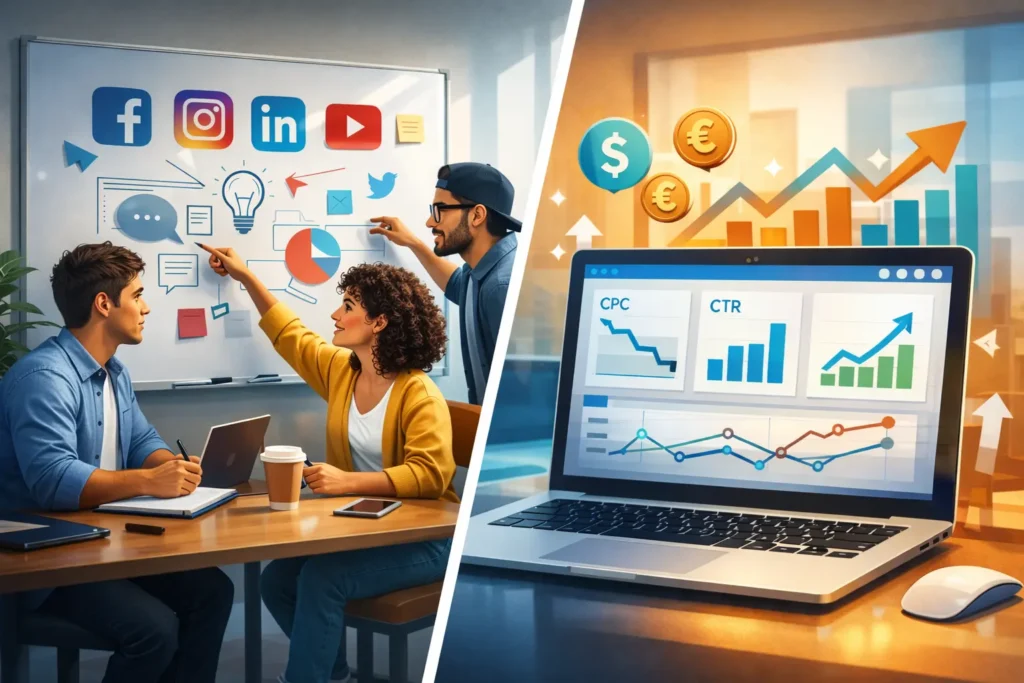
Organic vs paid social media marketing can either multiply your ROI or drain your budget if you pick blindly. For most MSMEs and startups, the right answer is not “either–or” but a smart mix where organic builds trust and paid accelerates reach and conversions. This guide helps you decide where to focus first, how much to invest, and when to combine both for maximum returns.
What Is Organic Social Media Marketing?
Organic social media marketing means posting content without paying the platform to boost or promote it. Your reach comes from followers, shares, recommendations, and algorithms on platforms like Facebook, Instagram, LinkedIn, and X.
- You publish content on your profiles or pages.
- People see it in their feeds based on relevance and engagement.
- They react, comment, share, or click through to your website or WhatsApp.
- Over time, this builds brand familiarity and trust that lowers your long-term acquisition cost.
“Organic social is where relationships are built; paid social is where you scale what already works.” – Adapted from Sprout Social insights
How Does Organic Social Media Work For MSMEs?
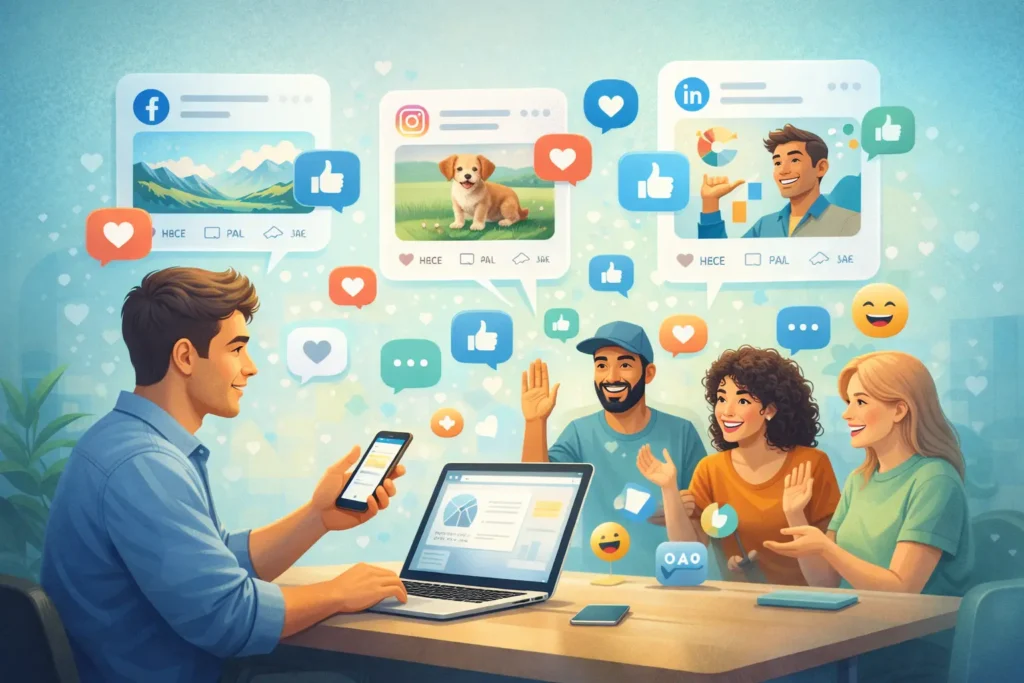
For MSMEs and startups, organic social acts like a slow but steady asset. You invest time and creativity instead of direct ad spend. This is crucial when budgets are tight but you still want to show up consistently in front of your audience.
- You create educational posts, reels, carousels, and stories.
- You reply to comments and messages within 24 hours (which 79% of consumers expect).
- Over months, you build a community that trusts your brand and is more likely to purchase, refer, and stay loyal.
A 2025 study found that brands focusing on consistent organic posting and conversations saw a 26% increase in lifetime customer value compared to ads-only strategies.
What Is Paid Social Media Marketing?
Paid social media marketing is when you pay platforms like Facebook, Instagram, or LinkedIn to show your content as ads to specific audiences. You choose objectives such as awareness, traffic, leads, or sales, and the algorithm optimizes delivery based on your budget.
- You set targeting (location, age, interests, behavior, job titles).
- You set a daily or lifetime budget.
- The platform runs your ads to people beyond your followers.
- You measure performance with metrics like CPC, CPM, CTR, and conversion rate.
Social media ad spend reached over 234 billion USD globally in 2024 and is projected to cross 345 billion USD by 2029, showing how central paid social has become for businesses worldwide.
How Fast Can Paid Social Media Deliver Results?
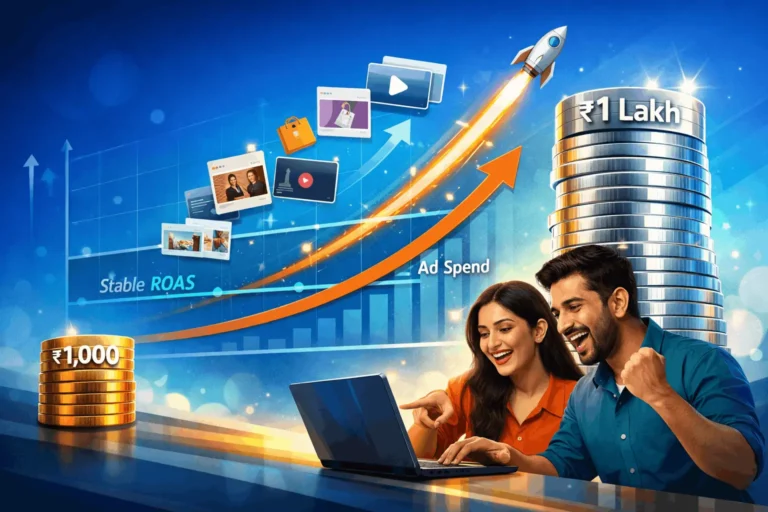
Compared to organic, paid social is immediate. Once your campaign goes live, you can reach thousands of relevant users in hours rather than months. The average ROI for social media ad campaigns is around 250%, and 96% of marketers say social delivers positive returns when done correctly.
- Paid campaigns can generate leads or website traffic from day one.
- MSMEs can test offers quickly, then scale only what works.
- You can pause, edit, or duplicate campaigns based on data, not guesswork.
However, average CPC across platforms has risen to roughly 1.23 USD, with Instagram CPC around 1.35 USD, so poor targeting or creatives can burn cash quickly.
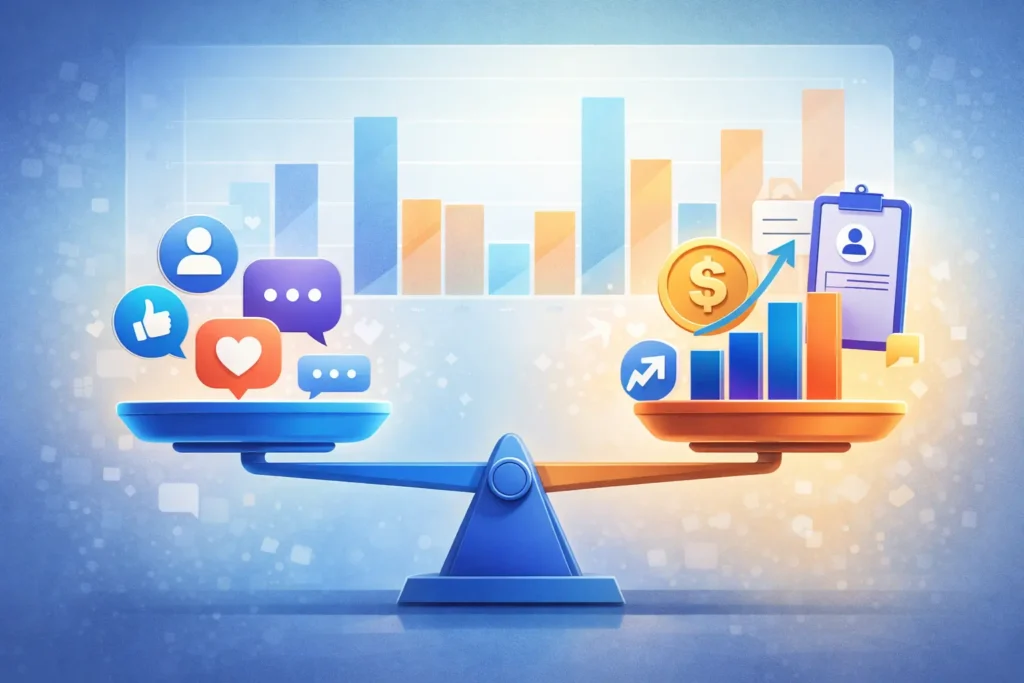
How Do Organic And Paid Social Media Compare?
Use this table to understand how organic vs paid social media differ on key ROI drivers.
Why Does Organic Social Media Still Matter In 2026?
Organic social media remains critical because 96% of small businesses use social as part of their marketing, and most consumers expect ongoing interaction, not just ads. Also, organic posts often shape the narrative that paid campaigns amplify later.
- Organic content feeds your social proof: reviews, DMs, testimonials, and user-generated content.
- Nielsen reports that 92% of consumers trust user-generated content more than traditional ads, making organic engagement a powerful trust engine.
- When someone sees your ad and then checks your profile, strong organic content increases the chance they convert.
For MSMEs and startups, organic is often the default starting point because budgets are low, but time and founder energy are relatively higher in the early phase.
When Should Startups Use Paid Social Media?
You should lean into paid social media when you want predictable, scalable results in a defined time frame. This is especially relevant during launches, seasonal offers, or fundraising milestones when you cannot wait months for organic reach.
- You have a validated offer (e.g., your product/service already sells organically).
- You know your target audience and can describe their age, location, and interests.
- You are prepared to invest at least a small test budget for 2–4 weeks to gather data.
In 2024, 85% of B2B marketers used social media advertising or promoted posts, making it the top paid content distribution channel for business audiences. That’s a strong signal that paid social is not optional once you want a consistent pipeline.
Which Drives Better ROI: Organic Or Paid Social Media?
ROI depends on your time horizon, goals, and ability to execute. Paid social often wins for short-term leads and sales, while organic wins for long-term trust, lower CAC, and brand equity. The strongest results usually come from a hybrid approach where both channels support each other.
- Short-term (0–3 months): Paid social typically delivers better measurable ROI for campaigns tied to specific offers or launches.
- Medium-term (3–12 months): Hybrid strategies combining retargeting ads with consistent content see up to 34–47% higher engagement compared to single-channel approaches.
- Long-term (12+ months): Brands that invest in community and conversation through organic see a 26% lift in lifetime customer value.
How Can MSMEs Make ROI-Based Channel Decisions?
A simple rule: Use paid social to amplify what organic proves. This means you first validate messaging and creatives organically, then scale the best-performing ones with ad spend.
- Test different hooks and formats in organic posts and reels.
- Pick the top-performing content based on saves, shares, and comments.
- Turn those posts into paid ads targeted at lookalike audiences and warm traffic.
How Much Should MSMEs Spend On Paid Social Media?
Your social media marketing budget should usually be a percentage of revenue, then split between organic and paid. While exact numbers vary, many small businesses allocate 5–15% of revenue to marketing, and a portion of that goes to social ads.
- Start with a test budget (for example, 200–500 USD over a month) to validate channels and creatives.
- Optimize based on CPC, cost per lead, and cost per acquisition.
- Scale gradually once you see a positive return, keeping a portion of the budget for experimentation.
Average CPC for social ads was around 1.23 USD in 2025, with Facebook at 0.94 USD and Instagram at 1.35 USD, so you must track your numbers closely to avoid overspending.
How Should Startups Balance Organic And Paid Social Media?
For most MSMEs and startups, a phased hybrid model works best, so you don’t bet everything on one side.
- Phase 1 – Organic-first (0–3 months): Focus on content pillars, posting consistency, and basic engagement.
- Phase 2 – Test paid (3–6 months): Run small-budget campaigns for traffic, leads, or remarketing.
- Phase 3 – Hybrid scaling (6–12 months): Use organic for community and education, paid for acquisition and retargeting.
Hootsuite and Sprout Social data indicate that businesses combining organic and paid see 34–47% higher engagement than single-channel strategies.
How Can You Optimize For Google Discover With Social Content?
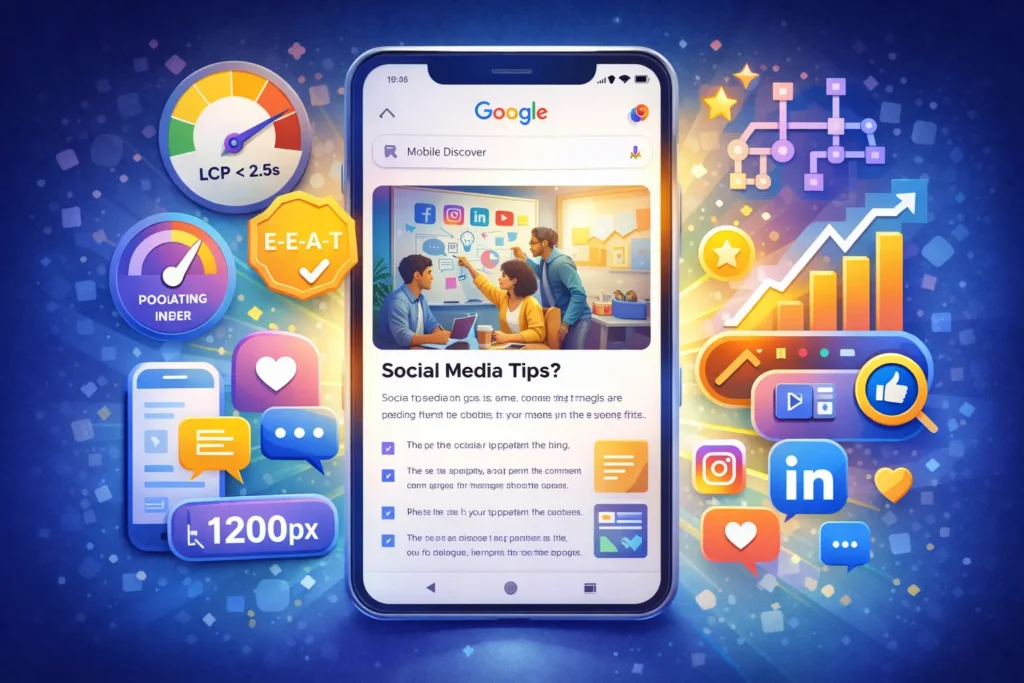
Google Discover favors content that is people-first, visually rich, and entity-based, not clickbait or keyword-stuffed articles. Your social media marketing content can get Discover traction when it’s helpful, authoritative, and tied to trending topics or entities.
- Write posts and blog content that answer specific questions clearly, with expertise and first-hand insights.
- Use large, high-quality images and short, mobile-friendly paragraphs (just like your social captions).
- Avoid misleading headlines and low-quality pages with thin content or excessive ads.
Discover especially responds to rising trends, so publishing around timely topics (e.g., new ad formats, platform updates, or seasonal campaigns) increases your eligibility.
How To Choose Between Organic And Paid Social Media Marketing?
Use this simple decision framework to decide where to put your next 1 unit of effort or budget.
- If you have time but a limited budget → prioritize organic content and community.
- If you have a budget but need quick results → prioritize paid campaigns with clear offers.
- If you want compounding ROI → build organic first, then layer paid on top of proven content.
“Paid social is jet fuel; organic is the runway. You need both to take off safely.” – Adapted marketing analogy
Steps To Build An ROI-Driven Social Media Mix
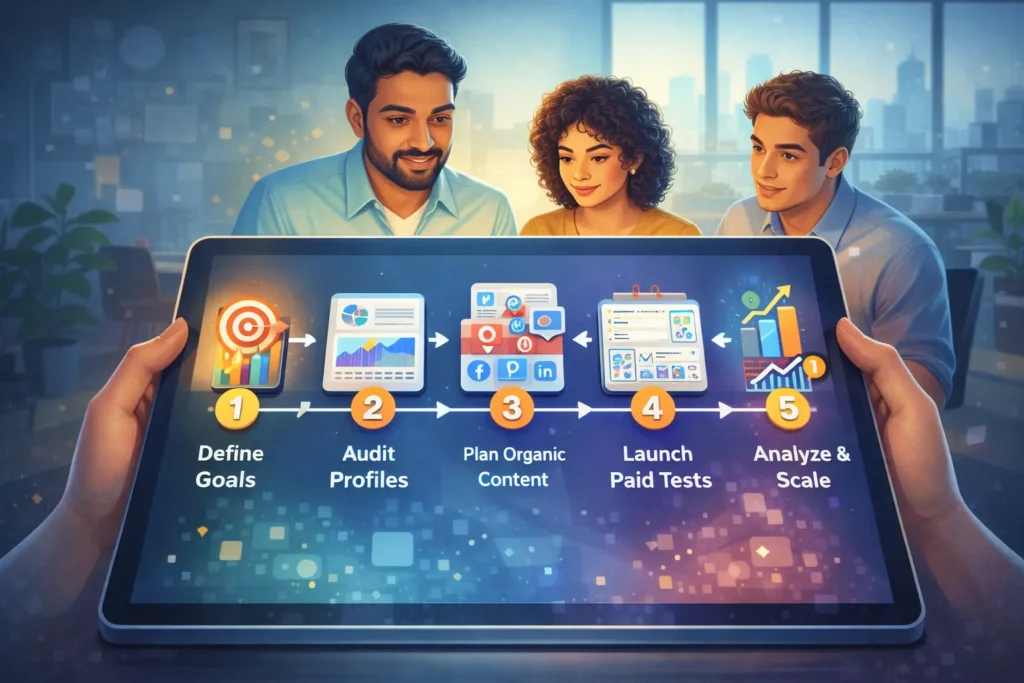
Times Needed: 21 Days
Estimated Cost: 300 USD
Description: Learn how to design a practical social media mix where organic content builds trust and paid campaigns drive measurable leads and sales for MSMEs and startups.
- Step 1: Define clear business and social media goals.
- Description: Decide if you want awareness, leads, sales, or retention so you can link every social activity to a measurable, ROI-focused outcome.
- Step 2: Audit existing profiles, content, and analytics.
- Description: Review your current follower base, top-performing posts, and basic metrics to understand what already resonates before spending on paid campaigns.
- Step 3: Plan organic content pillars and posting rhythm.
- Description: Create 3–5 content themes and a consistent posting schedule so your brand shows up regularly with useful, trust-building information.
- Step 4: Launch small paid experiments with clear offers.
- Description: Run 2–3 low-budget campaigns targeting warm and cold audiences, and track CPC, cost per lead, and cost per acquisition from day one.
- Step 5: Analyze results and rebalance budget monthly.
- Description: Shift budget toward the best-performing platforms and creatives, while continuing to invest in organic content that provides compounding benefits.
Tools Name: Meta Ads Manager, Google Analytics, Social media scheduling tool
Materials Name: Brand guideline document, Content calendar, Creative assets.
How Can StartupMandi Help With Social Media Decisions?
StartupMandi can support MSMEs and founders who want an ROI-focused social media marketing plan rather than random posting. You can use our social media strategy guides, ad campaign breakdowns, and startup-focused resources to build a practical hybrid model.
- Learn structured Meta Ads strategies tailored for startups via our Meta advertising guides and breakdowns.
- Use our Instagram and Facebook content playbooks to align your organic posting with your funnel.
- Explore our resources on targeting, budgeting, and analytics that help reduce paid media waste.
Key Takeaways
- Organic social media marketing is your trust engine, building relationships, community, and long-term brand equity at low direct cost.
- Paid social media marketing is your growth accelerator, delivering fast reach, leads, and sales when you have a clear offer and targeting.
- Hybrid strategies that align organic content with paid amplification can drive 34–47% higher engagement and better ROI than using a single channel.
- Budget decisions should be ROI-based: start with small experiments, measure cost per acquisition, and scale only what proves profitable.
- For MSMEs and startups, the smartest move is to let organic validate your message, then use paid social to scale the winners strategically.
Next Steps
- Map your current social media presence: list platforms, posting frequency, and top-performing content.
- Define 1–2 primary business goals for the next 90 days (leads, demo bookings, online sales).
- Design a minimal content calendar with 3–5 core content pillars and consistent posting slots.
- Allocate a small test budget for paid social (even 200–300 USD) to run 2–3 experiments on your best-performing platforms.
- If you want a structured, startup-focused plan, reach out to StartupMandi for a tailored social media marketing roadmap and channel mix.
Conclusion
For MSMEs and startups, the real question is not “organic vs paid social media marketing” but how to combine both to create a predictable, compounding ROI. Organic content builds credibility and lowers acquisition costs over time, while paid social lets you scale proven offers quickly and reliably. When you design a hybrid strategy grounded in numbers, not guesswork, social media becomes a growth engine instead of a cost center, and platforms like StartupMandi can guide you through that decision-making.
FAQs
Q1. Is organic social media marketing enough for a new startup?
A1. In the very early stage, organic social media marketing can be enough to validate your offer and messaging, but you will usually need paid campaigns later to scale reliably.
Q2. When should I start running paid social media ads?
A2. Start running paid ads once you have a clear target audience, a validated offer, and at least some organic traction, so you do not waste budget testing from zero.
Q3. Which platforms are best for MSME social media marketing?
A3. Data shows that Facebook and Instagram remain top platforms for small businesses, with around 84% and 67% adoption, respectively, in 2024, while LinkedIn is strong for B2B
Q4. How do I measure ROI from social media marketing?
A4. Track metrics like leads generated, sales, cost per acquisition, and lifetime value instead of just likes or followers, then compare them against your total time and ad spend.
Q5. Are social media ads getting more expensive?
A5. Yes, average CPC across platforms has increased to about 1.23 USD, with Instagram often more expensive than Facebook, so optimization is critical.
Q6. Can organic social media help with SEO or Google Discover?
A6. Yes, high-quality, helpful content promoted via social can earn links, engagement, and signals that help your site appear in Google Search and Discover feeds.
Q7. How often should startups post on social media?
A7. Most startups see better results by posting consistently (for example, 3–5 times per week) on key platforms rather than posting daily without a strategy.
Q8. What is the biggest mistake in social media marketing for MSMEs?
A8. The biggest mistake is running paid ads without a strong offer, landing experience, or organic presence, which leads to high costs and low trust.
A Few Internal Links For Further Reading